
About Ki no Haseo
Lived 845 – 912 (aged 66–67). Ki no Haseo was a Japanese poet, writer, scholar and politician.
Ki no Haseo (紀長谷雄; 845-912) was a Japanese scholar, poet and diplomat active in the Heian period. He belonged to the , which was politically influential in the Nara period, but lost its original position before his birth. He was an acquaintance of poets such as Miyako no Yoshika and Sugawara no Michizane, but was not closely affiliated with any political factions. In 894 he was appointed as a vice-ambassador during preparations to an ultimately canceled mission to China. He remained active as both a scholar and an official through the rest of his life. Many of works have been compiled in the collection Kikashū. While only one chapter survives, multiple poems and prose fragments which originally belonged to it have been identified. A second collection, Zoku Kike Shishū, is entirely lost. It is additionally sometimes proposed that he was also the author of Taketori Monogatari, but this remains uncertain. After his death a number of legends arose around him. Most notably, multiple variants of a tale in which he encounters an oni at Suzakumon are known.
Biography Family background and early life Haseo was born as a member of the , which unlike many other families of Heian period scholars was already considered politically influential in the preceding Nara period, though in the ninth century it was weakened and its members most likely held no hereditary positions. Haseo's father was Ki no Sadanori (紀貞範). Nothing else is known about his close relatives.
As a teenager Haseo studied under Miyako no Yoshika and , but his career in the subsequent decade of his life remains poorly known, and he only entered the academy in 876. He became a student of literature. A year later he met Sugawara no Michizane, who remained his close friend through the rest of his life. Over the course of 882 and 883, he was among officials appointed to accompany envoys from Balhae during their stay in the capital and on the journey back to Kaga.
Graduation In 884 Haseo was declared a graduate student at the recommendation of Michizane, who in his evaluation favorably compared him to Yan Hui, the favorite disciple of Confucius. He was subsequently appointed to the position of secretary of Sanuki; in 886 he was promoted to junior secretary in the Council of State, in 890 to the director of the Bureau of Books and Drawings and in 891 to professor of history and literature. He became a renowned scholar of Chinese literature. His writings indicate he valued the works of Pan Yue and Xie Lingyun, but regarded Wang Bi and He Yan unfavorably.
As a scholar Haseo for the most part abstained from factional disputes, though he was viewed unfavorably by Miyoshi no Kiyoyuki due to positive treatment he received from Michizane. According to an anecdote preserved in the , Kiyoyuki criticized his appointment to the position of a professor. The same source states that Haseo worried about the Fujiwara clan gaining control over scholarly circles, and that he sided with Miyako no Yoshika during a conflict sparked by Fujiwara no Sukeyo's intent to undergo examination as the first of its members to enter the academy.
Appointment as vice-ambassador to China In 894 Haseo was supposed to accompany Michizane during a diplomatic mission to China as a vice-ambassador, but this project was canceled at the request of the latter. The reasons behind this decision are unclear, though it is possible the high cost of official missions and the proliferation of contacts with private Chinese traders granting Japan access to luxury goods without the need to send envoys to the continent were among the factors. Furthermore, piracy became a major issue starting with 893. Despite the abandonment of the plans to send him to China, Haseo continued to use the title of vice-ambassador for seven years, presumably due the prestige of this appointment. In 895 as a diplomat he took part in a poetic exchange organized for the ambassador of Balhae.
Later career In 895 Haseo was appointed a junior assistant head of the Shikibu-shō; a year later he became the head of academy, though he continued to fulfill his duties in the ministry as well, and in 896 was promoted to senior assistant head.
In 903 Michizane entrusted Haseo with his new poem collection, Kanke Kōshū (菅家後集, "The Later Sugawara Collection"), which was entirely written after his exile to Dazaifu. It has been suggested that its popularization in the following years was one of the factors leading to the posthumous rehabilitation of Michizane. Haseo might have also been responsible for interceding with the imperial court on behalf of Michizane's sons.
In 907 Haseo was appointed as the governor of Sanuki. In 908 he participated in the compilation of Engi kyaku (延喜格), a collection of official documents of the daijō-kan and imperial edicts. In 911 he became a middle counselor, and in this capacity acted as one of the advisors of emperor Daigo.
Descendants Ki no Yoshimochi was Haseo's son. His grandson was , who held the position of a professor of literature. His more distant relatives include Ki no Tsurayuki and Ki no Tomonori, the compilers of the Kokin Wakashū, who belonged to a different branch of the Ki clan.
Works Poetry Ki no Haseo was considered one of the leading kanshi poets of his times. He started composing at the age of eighteen. Like many other middle Heian poets, including Miyako no Yoshika, , Ono no Takamura and Sugawara no Michizane, he was influenced by the works of Bai Juyi. Many of his poems are preserved in the Honchō Monzui'''; additionally, four of his waka can be found in Gosen Wakashū. His various kanbun writings were collected in a volume known as Kikashū (紀家集), "the Ki family collection". It is poorly preserved, with only one of the original twenty chapters surviving. However, 56 poems originally belonging to it have been identified in other sources. A second collection of his poetry, Zoku Kike Shishū (續紀家詩集), is entirely lost.
Other genres In addition to poems, examples of Haseo's prose also survive, including 52 fragments originally collected in the Kikashū. He was also the author of Engi Igo Shijo (延喜以後詩序; "A Preface to My Sinitic Poems Composed Since the Beginning of the Engi Era") in which he criticizes scholars in the court of emperor Daigo for their inability to express personal feelings through poetry. Some of his other prose works, including Bai Hakucho ō jo ("Introduction to the ") and Shiraishi Sensei den (白石先生伝; "Account of the Master of the White Stone"), reflect his interest in legends about Daoist immortals. In Honchō Shinsen-den (本朝神仙伝; "Accounts of Japanese Immortals"), Ōe no Masafusa states that the included version of the former story is merely an abridged retelling of Haseo's.
A number of prayers attributed to Haseo are also known. One example is the Honmyō Saimon (本命祭文), which focuses on Chinese deities invoked to extend a person's lifespan, such as Siming, Silu (司禄), Tiancao (天曹), Difu (地府), Hebo (河伯) and Shuiguan (水官).
Taketori Monogatari authorship theory It is sometimes proposed that Haseo was the author of Taketori Monogatari. Richard H. Okada points out that he was well versed with kanbun and familiar with literary motifs pertaining to Daoist immortals, assumed to be an influence on this tale. He also highlights that some of his works, like the poem Song of a Destitute Woman, show an unusual degree of concern for the position of women in society, which he argues to be an element visible in Taketori Monogatari as well. However, other candidates have also been suggested, including Minamoto no Shitagō, Minamoto no Tōru, Henjō and Ki no Tsurayuki. No theory found universal acceptance so far, leaving the identity of the author uncertain.
Legends Encounter with an oni
Don’t just read it —
keep it.
Full-length biographies made to live with: read them, listen on the way to work, watch them tonight.
- E-book
- Audio
- Video
Instant download · yours to keep · every purchase keeps this site free
Important facts
People in Ki no Haseo's life
Named in this biography and alive at the same time
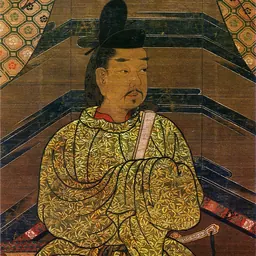

Related people
Same field, nearest in time



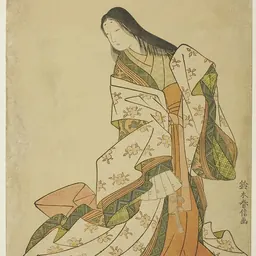

Contemporaries
People whose lives overlapped Ki no Haseo's
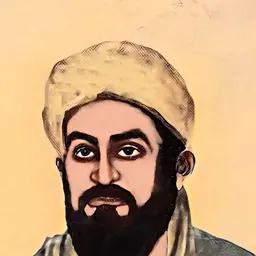




Frequently asked questions
Who was Ki no Haseo?
Japanese poet and writer
When was Ki no Haseo born?
Ki no Haseo was born in 845.
When did Ki no Haseo die?
Ki no Haseo died on 1 March 912.
What was Ki no Haseo's occupation?
Ki no Haseo was a poet, writer, scholar and politician.
What nationality was Ki no Haseo?
Ki no Haseo was Japanese.
Sources & further reading
Cite this page
APA: Biography.guide. (2026). Ki no Haseo. https://biography.guide/ki-no-haseo/
MLA: "Ki no Haseo." Biography.guide, https://biography.guide/ki-no-haseo/.
Chicago: "Ki no Haseo." Biography.guide. https://biography.guide/ki-no-haseo/.
Data last updated: 2026-09-20 · Spot an error? Report a correction.
Page generated 2026-09-27 05:30 UTC