
About Sufi Muhammad
Lived 1933 – 2019 (aged 85–86). Sufi Muhammad was a Pakistani soldier and ulema.
Sufi Muhammad bin Alhazrat Hassan (Urdu: ; born 1933 – 11 July 2019) was a Pakistani Sunni Salafi Wahhabi cleric and militant, and the founder of Tehreek-e-Nafaz-e-Shariat-e-Mohammadi (TNSM), a militant group (declared a terrorist outfit and banned in 2002) vying for implementation of his version of Sharia in Pakistan. It operated mainly in the Dir, Swat, and Malakand districts of Khyber Pakhtunkhwa. However, he was freed in 2008 after he renounced violence.
He was the father-in-law of Fazlullah, another militant, who assumed the leadership of TNSM during Sufi's imprisonment.
He was described by BBC as a "follower" of Saudi Arabia's Wahhabi Salafist Islamic school of thought, and by the Jamestown Foundation as one of the "active leaders" of Jamaat-e-Islami in the 1980s.
His son, Matiul Haq, would become an influential ideologue of Pakistani terrorist group Tehreek-e-Taliban, which would at one time be led by his son-in-law Mullah Fazlullah.
Career
Early activities
During the 1980s, Sufi Muhammad actively participated in Jamaat-e-Islami, an Islamist political party of Pakistan. From its stronghold of Malakand Division districts in northwestern Pakistan, Sufi Muhammad and his group engaged in violent agitation for the enforcement of Sharia law. He agreed to travel to Swat to discuss peace with Fazlullah and his followers. He told reporters, "We will soon open dialogue with the Taliban. We will ask them to lay down their weapons. We are hopeful that they will not let us down. We will stay here in the [Swat] valley until peace is restored."
In early April 2009, Sufi Muhammad ended support for peace negotiations stating that the government was stalling the implementation of sharia courts in the Swat valley. President Asif Ali Zardari refused to sign any agreement until peace had been restored in the valley but failed to elaborate on how those conditions would be achieved.
However, the president signed the Nizam-e-Adl-Regulation law for Swat, after it was hurriedly pushed through the national Parliament a few hours earlier on 13 April 2009.
On 19 April 2009, Sufi Muhammad declared that "democracy was un-Islamic" and that decisions made in the qazi courts could not be appealed in Pakistan's central judicial system. According to the cleric, Western-style democracy had led to divides among Pakistanis and the judicial system had contributed to the factionalism. He ordered the central government to withdraw all judges from Malakand within four days and to set up a Darul Qaza, an Islamic supreme court, to hear appeals from local Sharia courts.
Arrest On 3 June 2009, while engaging in Operation Black Thunderstorm against the Taliban, the Pakistani Army arrested senior aides to Sufi Muhammad in the Amandara region in Lower Dir. Among those aides arrested were Muhammad's deputy, Mohammad Alam, and his spokesperson, Ameer Izzat Khan. Initial reports indicated that Sufi Muhammad himself and possibly two of his sons had also been detained, though government sources would not confirm and would only say they knew of his whereabouts. TNSM sources confirmed that Sufi Muhammad and his sons were missing, but suggested that he had gone into hiding. On 2 August 2009, police announced that he had been charged with sedition, aiding terrorism and conspiracy.
In January 2011, Sufi Muhammad denied to an anti-terrorism court that he had any links to the anti-state Tehreek-i-Taliban Pakistan (TTP) and that he only sought enforcement of sharia in Malakand. He was indicted on sedition charges by an anti-terrorism court on 7 February 2015. He was released on bail on medical grounds in January 2018 by the Peshawar High Court.
Writings Some of his writings include:
Urdu Haakimiyat Allah Taala Shariat-e Muhammadi kay Aayaynah mayn, 1998.
Pashto Wajuhat-e-Arbaa Ashrah li Marifat-e Haqiqat-e al-Shariat-e al-Muhammadiah; Yani Swaarlas Wajuhaat da Pijandalu da Shariat-e-Muhammadi, 2008.
Don’t just read it —
keep it.
Full-length biographies made to live with: read them, listen on the way to work, watch them tonight.
- E-book
- Audio
- Video
Instant download · yours to keep · every purchase keeps this site free
Important facts
People in Sufi Muhammad's life
Named in this biography and alive at the same time
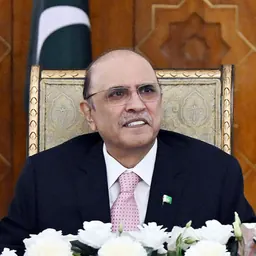



Related people
Same field, nearest in time
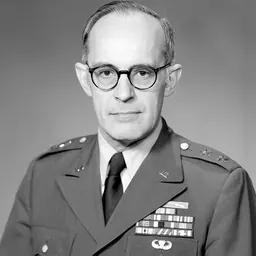



Contemporaries
People whose lives overlapped Sufi Muhammad's
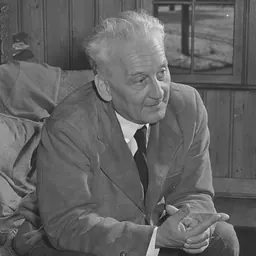

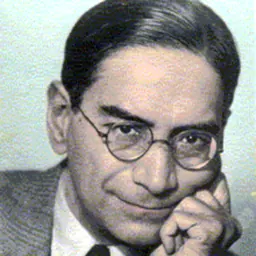


Frequently asked questions
Who was Sufi Muhammad?
founder of Tehreek-e-Nafaz-e-Shariat-e-Mohammadi (TNSM), a Pakistani militant organisation
When was Sufi Muhammad born?
Sufi Muhammad was born in 1933 in Dir District.
When did Sufi Muhammad die?
Sufi Muhammad died on 11 July 2019 in Swat District.
What was Sufi Muhammad's occupation?
Sufi Muhammad was a soldier and ulema.
What nationality was Sufi Muhammad?
Sufi Muhammad was Pakistani.
Sources & further reading
Cite this page
APA: Biography.guide. (2026). Sufi Muhammad. https://biography.guide/sufi-muhammad/
MLA: "Sufi Muhammad." Biography.guide, https://biography.guide/sufi-muhammad/.
Chicago: "Sufi Muhammad." Biography.guide. https://biography.guide/sufi-muhammad/.
Data last updated: 2026-09-20 · Spot an error? Report a correction.
Page generated 2026-09-27 05:27 UTC