
Sucharit Bhakdi
Thai microbiologist (born 1946)
About Sucharit Bhakdi
Born 1946. Sucharit Bhakdi is a Thai and German university teacher, non-fiction writer, microbiologist, physician and epidemiologist, known for Microbiology.
Research career
The immune system From 1972, Bhakdi researched the functioning of the body's non-specific defenses at the Max Planck Institute for Immunobiology in Freiburg. He contributed to a better understanding of the mechanisms with which the large molecules of the complement system in the blood render exogenous substances harmless. In 1978 Bhakdi discovered a protein that attacks and damages cells by sinking into the cell membrane, resulting in the formation of a pore (see membrane attack complex). This was the enforcer molecule of the complement system, which is formed on the surface of foreign cells as a result of a chain reaction involving the immune system. This was followed by the discovery that bacteria, in turn, can also produce pore-forming proteins. Today it is known that the vast majority of pathogenic bacteria produce pore formers that damage host cells. In 1984 the Royal Society in London invited Bhakdi to present the concept of cell membrane damage by pore formers. From then on, Bhakdi concentrated on research on this topic.
Atherosclerosis Investigation of the complement system led Bhakdi to the area of atherosclerosis. In 1989 he discovered through animal experiments that the complement component 5 is activated in the vessel walls where low density lipoprotein (LDL) is deposited.
According to current understanding, atherosclerosis is a polygenic disease caused by a complex interplay of several environmental and genetic factors, especially cholesterol. This is transported in the blood via LDL and absorbed by the cells that need it via cellular receptors. However, it can accumulate in the blood vessel walls during transport and oxidize there or even beforehand. This attracts monocytes, which take up the oxidized LDL and turn into "foam cells". These then trigger chronic inflammatory reactions that damage the vascular wall.
In 1998, Bhakdi and his team of colleagues put forward the "Mainz hypothesis" that atherosclerosis is only caused monocausally by the lack of removal of LDL. According to Bhakdi's hypothesis, LDL is generally not oxidized, but cholesterol is also absorbed by monocytes and foam cells are formed. However, the high density lipoprotein (HDL) can remove cholesterol again. If, however, a certain amount of LDL accumulates locally on the vascular wall and cannot be removed, part of the immune system causes inflammatory reactions that lead to atherosclerosis. In this way, early-stage atherosclerosis could be reversed if the LDL blood level (and blood pressure) was lowered and the HDL level increased. Bhakdi's hypothesis, however, is not reflected in current opinion. The purpose of the association is to take action against the German government's measures to contain the corona pandemic.
He was Editor in Chief of Medical Microbiology and Immunology from 1990 to 2012.
Prominence during COVID-19 pandemic
During the COVID-19 pandemic, Bhakdi started a YouTube channel proposing that the number of deaths stemming from SARS-CoV-2 infection had been overstated. In November 2020 his account was terminated for violating YouTube's community guidelines. One of his first videos was published 18 March 2020; it went viral, with 300,000 views by 23 March.
He has been otherwise criticised for his theses on the COVID-19 pandemic; according to , they are considered unscientific by a majority of experts.
Bhakdi's criticisms of the COVID-19 pandemic response
His criticisms of states' (most particularly Germany's) reactions to the COVID-19 pandemic have included:
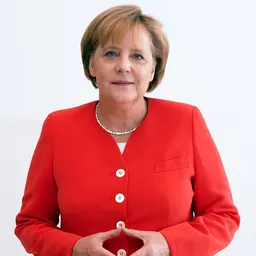
Writing an open Letter in March 2020 to German Chancellor Angela Merkel regarding the "socio-economic consequences of the drastic containment measures which are currently being applied in large parts of Europe" Posting videos on YouTube claiming, for example, that the government was overreacting because the virus posed no more threat than influenza, and that any COVID-19 vaccine would be "pointless". The Federal Ministry distanced itself from the position, calling the paper a "private opinion" circulating on official letterhead, and released the chief government councilor Stephan Kohn from duty. He is the co-author of Corona, False Alarm? Facts and Figures (2020), German: ('Corona Fehlalarm?') and Corona Unmasked. Neue Daten, Zahlen, Hintergründe. (Goldegg, Berlin/Wien 2021. An earlier book of his was published in 2016, Schreckgespenst Infektionen – Mythen, Wahn und Wirklichkeit (tr. "Bogeyman Infections - Myths, Delusions and Reality") . He published these books together with his wife, , a biologist and biochemist at the Quincke Research Center, Christian-Albrechts-Universität zu Kiel. Describing Germany in December 2020 as a "health dictatorship", saying he wanted to emigrate to Thailand because of this.
Responses to Bhakdi's claims Bhakdi's claims, in particular in his YouTube videos and in the book Corona Fehlalarm?, have been extensively fact-checked and found to be variously unsubstantiated, misleading, or false.
In Germany, fact-checking activity has included articles at ZDF, the Austrian independent fact-checkers Mimikama, dpa, SWR3 and the German non-profit correctiv.org.
On the basis of fact checks by Correctiv, ZDF, die Welt, Der Spiegel and Bayerischer Rundfunk, the Süddeutsche Zeitung summed up in April 2020: "What Wodarg and Bhakdi say is not completely wrong, but they mix facts with speculation and disinformation." Writing for Foreign Policy, in September 2020 Tyson Barker (Head of DGAP's Technology & Global Affairs Program) described Bhakdi as a prominent example from a "crop of debunked but credentialed so-called experts minting conspiracy theories and undermining fact-based information".
In October 2020 the University of Mainz issued a statement to the effect that it does not support Bhakdi's views. In April 2021, the antisemitism commissioner for the state of Baden-Württemberg identified the Querdenken movement as providing space for antisemitic conspiracy theories, noting that Bhakdi singled out the German-Jewish minister of education in Schleswig-Holstein, Karin Prien, as "poisoning our children with CO2".
In a video released as part of his campaign, Bhakdi articulated antisemitic views, saying Israel is "even worse" than Nazi Germany, adding that "that’s the bad thing about Jews: They learn well...There is no people that learns better than they do. But they have now learned the evil — and implemented it. That is why Israel is now...a living hell". The Austrian publisher of three of Bhakdi's books on the pandemic, , said that it was severing ties with the author. Bhakdi was criticised by antisemitism commissioners for the states of Berlin and Baden-Württemberg. In 2022, he was investigated for Volksverhetzung related to his 2021 statements, particularly the claim that the vaccine mandate was "a second Holocaust", but charges were dropped as it was concluded that the statement had multiple meanings.
Awards Professional awards 1979 Justus Liebig University Giessen Prize 1980 Konstanz Medicine Prize 1988 Dr. Friedrich Sasse Prize 1991 Gay-Lussac Humboldt Prize 2001 Aronson Prize for „wegweisende Arbeiten auf dem Gebiet des Komplementsystems und bakterieller Toxine“ tr. "pioneering work in the field of the complement system and bacterial toxins" 2005 H. W. Hauss Award 2005 Verdienstorden des Landes Rheinland-Pfalz 2009 Rudolf-Schönheimer Medal of the
Negative award Following the publicity accorded to Bhakdi's statements and publications regarding COVID-19 during 2020, the Gesellschaft zur wissenschaftlichen Untersuchung von Parawissenschaften (English: Society for the Scientific Investigation of Pseudosciences) named him as winner of the 2020 Goldenes Brett, awarded to Bhakdi as the "most astonishing pseudo-scientific nuisance" of the year.
Don’t just read it —
keep it.
Full-length biographies made to live with: read them, listen on the way to work, watch them tonight.
- E-book
- Audio
- Video
Instant download · yours to keep · every purchase keeps this site free
Important facts
People in Sucharit Bhakdi's life
Named in this biography and alive at the same time


Related people
Same field, nearest in time

Contemporaries
People whose lives overlapped Sucharit Bhakdi's


Frequently asked questions
Who is Sucharit Bhakdi?
Thai microbiologist (born 1946)
When was Sucharit Bhakdi born?
Sucharit Bhakdi was born on 1 November 1946 in Washington, D.C..
What is Sucharit Bhakdi's occupation?
Sucharit Bhakdi is a university teacher, non-fiction writer, microbiologist, physician and epidemiologist.
What is Sucharit Bhakdi known for?
Sucharit Bhakdi is known for Microbiology.
What nationality is Sucharit Bhakdi?
Sucharit Bhakdi is Thai and German.
Sources & further reading
Cite this page
APA: Biography.guide. (2026). Sucharit Bhakdi. https://biography.guide/sucharit-bhakdi/
MLA: "Sucharit Bhakdi." Biography.guide, https://biography.guide/sucharit-bhakdi/.
Chicago: "Sucharit Bhakdi." Biography.guide. https://biography.guide/sucharit-bhakdi/.
Data last updated: 2026-09-25 · Spot an error? Report a correction.
Page generated 2026-09-27 05:12 UTC