
About Steven Sykes
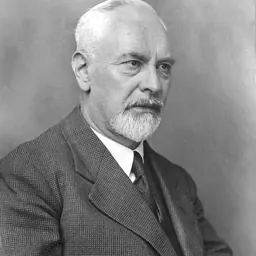
Lived 1914 – 1999 (aged 84). Steven Sykes was a British artist.
Steven Barry Sykes (30 August 1914 – 22 January 1999) was a British artist, known for his Gethsemane Chapel in the rebuilt Coventry Cathedral. He was active in the British desert camouflage unit in the Second World War, and was responsible for the dummy railhead at Misheifa and for the effective camouflage and large-scale military deception in the defence of Tobruk in 1942.
Early life
Sykes was born in Formby, Lancashire. His father was a family doctor, A. B. Sykes of Ashhurst, Formby. He went to the Oratory School at Caversham Park and studied stained glass design at the Royal College of Art. He won a travel scholarship to France and Italy in 1936 and on his return he joined Herbert Hendrie's stained glass studio in Edinburgh.
Sykes married artist Jean Judd in February 1940.
Sykes contributed artwork to many churches in the UK and had an association with architects such as Basil Spence and Gerard Goalen. Sykes worked with Spence on Coventry Cathedral, while Goalen commissioned works from Sykes in churches he was reordering or designing.
Sykes' career as an artist began when his wife Jean taught him pottery. He became an expert in making relief tiles and Picasso-like vases. He showed these at the 1951 Festival of Britain. Sykes was invited to contribute to the cathedral by its architect, Basil Spence, who had himself also been a camouflage officer during the war. The figure of the "consciously Byzantine" angel, St Michael, and Jesus's disciples asleep at Gethsemane are modelled like his pottery figures in reverse relief, but then cast in concrete. The background is covered in gold leaf and blue tesserae, forming a mosaic. According to Tanya Harrod in The Independent, "The result was dazzling."
St Gregory, South Ruislip
In 1965 Sykes co-operated with the architect Gerard Goalen on the re-ordering of Grade II St Gregory the Great in South Ruislip, for which he produced a lintel sculpture. The scholar of architecture Robert Proctor says: "Goalen commissioned Sykes to make a bold sculptural lintel in bronze over the entrance."
Proctor goes on to comment that Patrick Reyntiens, who made the stained glass at St Gregory, and Ralph Beyer who carved inscriptions had both worked with Sykes at Coventry. In its listing of this church, Historic England says: "reflective of a culture of sacred art within the Catholic Church, and Goalen’s interest in the use of contemporary art in combination with architecture, St Gregory’s contains several notable works of art by a number of highly regarded C20 artists, including Patrick Reyntiens, Stephen Sykes, Dom Charles Norris and Willi Soukup".
British Pavilion
Basil Spence, who Sykes worked with on Coventry Cathedral, later invited Sykes to design the fountain sculpture for the British Pavilion at Expo 67 in Montreal.
War Memorial Chapel, National Cathedral, Washington DC
The chapel honours people who have served in the US military. Above the altar is an artwork called "The Suffering Christ" which was designed and executed by Sykes. The torn sheets of brass in the halo simulate brass cannon shells. The spikes inside the halo are cast aluminium-coloured to remind the viewer of barbed wire. The copper rays of light in the halo look like bayonets.
Phoenix School, Tower Hamlets
This Grade II* listed special school by Farquaharson and McMorran (1951–52) in Tower Hamlets includes four reliefs by Sykes which are noted in its listing.
Other works
In 1968, Sykes produced a large metal sculpture of Christ (Christus Resurrexit) to hang on the sanctuary wall of St Joseph Church, Retford, Nottinghamshire, which was being re-ordered by Gerard Goalen.
Sykes's artworks include several contributions to 'Pictures for Schools: Art, Education and Reconstruction in Post-war Britain'. Natalie Rose Bradbury notes: "He regularly submitted both drawings and works on paper to the scheme, as well as reliefs and sculptures. Many of them were themed around animals, and proved to be popular with child visitors".
His other works include:
Tiles for the Dorchester Hotel A tapestry for Hammersmith and West London College Library Decorative relief panels for Sainsbury's in Braintree which depict the themes of food and drink Panels for the Pallant House Gallery in Chichester Two large murals for New Century Hall, Manchester which depict musicians (1963)
Don’t just read it —
keep it.
Full-length biographies made to live with: read them, listen on the way to work, watch them tonight.
- E-book
- Audio
- Video
Instant download · yours to keep · every purchase keeps this site free
Important facts
People in Steven Sykes's life
Named in this biography and alive at the same time







Related people
Same field, nearest in time




Contemporaries
People whose lives overlapped Steven Sykes's

Frequently asked questions
Who was Steven Sykes?
Artist, Camoufleur (1914–1999)
When was Steven Sykes born?
Steven Sykes was born on 30 August 1914 in Formby.
When did Steven Sykes die?
Steven Sykes died on 22 January 1999.
What was Steven Sykes's occupation?
Steven Sykes was an artist.
What nationality was Steven Sykes?
Steven Sykes was British.
Sources & further reading
· DBpedia: Steven Sykes (artist)
Cite this page
APA: Biography.guide. (2026). Steven Sykes. https://biography.guide/steven-sykes/
MLA: "Steven Sykes." Biography.guide, https://biography.guide/steven-sykes/.
Chicago: "Steven Sykes." Biography.guide. https://biography.guide/steven-sykes/.
Data last updated: 2026-09-20 · Spot an error? Report a correction.
Page generated 2026-09-27 05:02 UTC