
Stephen Vincent Benét
American poet, short story writer, novelist
About Stephen Vincent Benét
Lived 1898 – 1943 (aged 44). Stephen Vincent Benét was an American screenwriter, poet, novelist, writer and journalist.
Stephen Vincent Benét ( ; July 22, 1898 – March 13, 1943) was an American poet, short story writer, and novelist. He wrote a book-length narrative poem of the American Civil War, John Brown's Body, published in 1928, for which he received the Pulitzer Prize for Poetry, and the short stories "The Devil and Daniel Webster", published in 1936, and "By the Waters of Babylon", published in 1937.
In 2009, Library of America selected his story "The King of the Cats", published in 1929, for inclusion in its two-century retrospective of American Fantastic Tales, edited by Peter Straub.
Early life and education Benét was born on July 22, 1898, in Fountain Hill, Pennsylvania, in the Lehigh Valley region of eastern Pennsylvania to James Walker Benét, a colonel in the U.S. Army, and his wife, Frances Neill (née Rose). Benét was the brother of writers William Rose Benét and Laura Benét. His grandfather and namesake led the Army Ordnance Corps from 1874 to 1891 as a brigadier general and served in the Civil War. His paternal uncle Laurence Vincent Benét was an ensign in the U.S. Navy during the Spanish–American War who later manufactured the French Hotchkiss machine gun.
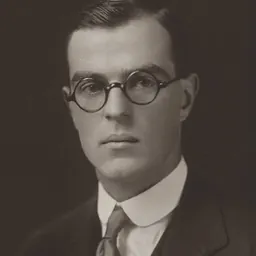
Around the age of ten, Benét was sent to the Hitchcock Military Academy in San Rafael, California. He graduated at the top of his class from Summerville Academy in Augusta, Georgia, and from Yale University, where he was "the power behind the Yale Lit", according to Thornton Wilder, a fellow member of the Elizabethan Club. As a Yale University student, he also edited and contributed light verse to the campus humor magazine The Yale Record.
His first book was published when he was aged 17, and he was awarded an M.A. in English upon submission of his third volume of poetry in lieu of a thesis. He was also a part-time contributor to Time magazine in the magazine's early years.
In 1920 and 1921, Benét was in France on a Yale traveling fellowship, where he met Rosemary Carr; the couple married in Chicago in November 1921. Carr was also a writer and poet, and they collaborated on some works.
In 1926, he received a Guggenheim Fellowship award and, while living in Paris, wrote John Brown's Body.
Career Benét helped solidify the place of the Yale Series of Younger Poets Competition and Yale University Press during his decade-long judgeship of the competition. He published the first volumes of James Agee, Muriel Rukeyser, Jeremy Ingalls, and Margaret Walker.
In 1929, Benét was elected a member of the American Academy of Arts and Letters.
Two years later, in 1931, he was awarded a fellowship by the American Academy of Arts and Sciences.
Benét won the O. Henry Award three times for his short stories: in 1932, for An End to Dreams; in 1937, for The Devil and Daniel Webster; and in 1940, for Freedom's a Hard-Bought Thing.
His fantasy short story "The Devil and Daniel Webster" inspired several unauthorized dramatizations by other writers after its publication, which prompted Benét to adapt his own work for the stage. Benét approached composer Douglas Moore to create an opera of the work with Benét serving as librettist in 1937. He is buried in Evergreen Cemetery in Stonington, Connecticut, where he owned the historic Amos Palmer House.
Legacy On April 17, 1943, NBC Radio broadcast a special tribute to his life and works, which included a performance by Helen Hayes. He was awarded a posthumous Pulitzer Prize in 1944 for Western Star, an unfinished narrative poem on the settling of the United States.
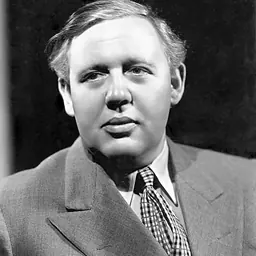
Benét adapted the Roman myth of the rape of the Sabine Women into the story "The Sobbin' Women". That story was adapted as the musical film Seven Brides for Seven Brothers (1954), then as a stage musical (1978) and then TV series (1982). His play John Brown's Body was staged on Broadway in 1953 in a three-person dramatic reading featuring Tyrone Power, Judith Anderson, and Raymond Massey, directed by Charles Laughton. The book was included in Life magazine's list of the 100 outstanding books of 1924–44.
Dee Brown's Bury My Heart at Wounded Knee takes its title from the final phrase of Benét's poem "American Names": "You may bury my body in Sussex grass, You may bury my tongue at Champmédy. I shall not be there. I shall rise and pass. Bury my heart at Wounded Knee." The last two lines are used as an epigram at the beginning of Brown's book.
Selected works Five Men and Pompey, a series of dramatic portraits, Poetry, 1915 The Drug-Shop, or, Endymion in Edmonstoun, his Yale University Prize Poem, written in 1917 Young Adventure: A book of Poems, 1918 Heavens and Earth, 1920 The Beginnings of Wisdom: A Novel, 1921 Young People's Pride: A Novel, 1922 Jean Huguenot: A Novel, 1923 The Ballad of William Sycamore: A Poem, 1923 King David: A two-hundred-line ballad in six parts, 1923 Nerves, 1924, a play co-authored with John C. Farrar That Awful Mrs. Eaton, 1924, a play co-authored with John C. Farrar Tiger Joy: A Book of Poems, 1925 The Mountain Whippoorwill: How Hill-Billy Jim Won the Great Fiddler's Prize: A Poem., 1925 The Bat, 1926, ghostwritten novelization of the play by Mary Roberts Rinehart and Avery Hopwood Spanish Bayonet, 1926 John Brown's Body, 1928 The Barefoot Saint: A Short Story, 1929 The Litter of Rose Leaves: A Short Story, 1930 Abraham Lincoln, 1930, a screenplay co-authored with Gerrit Lloyd Ballads and Poems, 1915–1930, 1931 A Book of Americans, 1933, co-authored with Rosemary Carr Benét, his wife James Shore's Daughter: A Novel, 1934 The Burning City, 1936, includes 'Litany for Dictatorships' The Magic of Poetry and the Poet's Art, 1936 The Devil and Daniel Webster, 1936 By the Waters of Babylon, 1937 The Headless Horseman: one-act play, 1937 Thirteen O'Clock, 1937 We Aren't Superstitious, 1937, an essay on the Salem Witch Trials Johnny Pye and the Fool Killer: A Short Story, 1938 Tales Before Midnight: Collection of Short Stories, 1939 The Ballad of the Duke's Mercy, 1939 The Devil and Daniel Webster, 1939, an opera libretto with Douglas Moore A Song of Three Soldiers, 1940 Elementals, 1940–41 (broadcast) Freedom's Hard-Bought Thing, 1941, a broadcast Listen to the People, 1941 A Summons to the Free, 1941 William Riley and the Fates, 1941 Cheers for Miss Bishop, 1941, a screenplay written with Adelaide Heilbron and Sheridan Gibney The Devil and Daniel Webster, 1941, a screenplay written with Dan Totheroh Selected Works, 1942 (2 vols.) Short Stories, 1942 Nightmare at Noon: Short Poem, 1942, in The Treasury Star Parade, edited by William A. Bacher A Child is Born, 1942, a broadcast They Burned the Books, 1942 They Burned the Books, 1942, a broadcast
These works were published posthumously: Western Star, 1943 (unfinished) Twenty Five Short Stories, 1943 America, 1944 O'Halloran's Luck and Other Short Stories, 1944 We Stand United, 1945, a series of radio scripts The Bishop's Beggar, 1946 The Last Circle, 1946 Selected Stories, 1947 From the Earth to the Moon, 1958
Don’t just read it —
keep it.
Full-length biographies made to live with: read them, listen on the way to work, watch them tonight.
- E-book
- Audio
- Video
Instant download · yours to keep · every purchase keeps this site free
Important facts
People in Stephen Vincent Benét's life
Named in this biography and alive at the same time




Related people
Same field, nearest in time


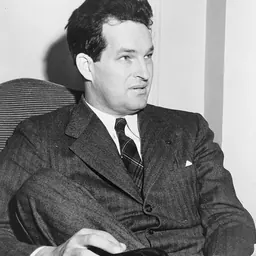
Contemporaries
People whose lives overlapped Stephen Vincent Benét's


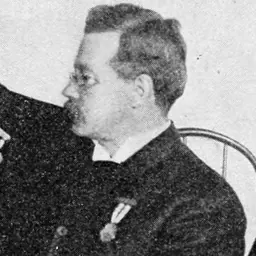


Frequently asked questions
Who was Stephen Vincent Benét?
American poet, short story writer, novelist (1898–1943)
When was Stephen Vincent Benét born?
Stephen Vincent Benét was born on 22 July 1898 in Fountain Hill.
When did Stephen Vincent Benét die?
Stephen Vincent Benét died on 13 March 1943 in New York City.
What was Stephen Vincent Benét's occupation?
Stephen Vincent Benét was a screenwriter, poet, novelist, writer and journalist.
What nationality was Stephen Vincent Benét?
Stephen Vincent Benét was American.
Sources & further reading
· Wikipedia: Stephen Vincent Benét
· DBpedia: Stephen Vincent Benét
Cite this page
APA: Biography.guide. (2026). Stephen Vincent Benét. https://biography.guide/stephen-vincent-benet-screenwriter/
MLA: "Stephen Vincent Benét." Biography.guide, https://biography.guide/stephen-vincent-benet-screenwriter/.
Chicago: "Stephen Vincent Benét." Biography.guide. https://biography.guide/stephen-vincent-benet-screenwriter/.
Data last updated: 2026-09-20 · Spot an error? Report a correction.
Page generated 2026-09-27 05:30 UTC