
About James Walker
Lived 1863 – 1935 (aged 72). James Walker was a British chemist and university teacher.
Sir James Walker FRS FRSE FCS LLD (6 April 1863 – 6 May 1935) was a Scottish chemist. He worked mainly on inorganic and physical chemistry. His major contribution was in the study of chemical reaction kinetics based on a study of the reactions converting ammonium cyanate to urea which was published in 1895 along with Frederick J. Hambly (1878-1960).
Life
Walker was born at Logie House, in north-west Dundee the son of James Walker of J & H Walker, jute and flax spinners and weavers, and owners of the Dura Works. His mother was Susan Hutchison Cairns.
He was educated at the High School of Dundee, and attended some evening science classes by Frank W. Young. He had passed the entrance examination for the University of St Andrews, but instead joined his father's company. He stayed there for three years, then entered the University of Edinburgh to study sciences in 1882. Here he was inspired by Crum Brown's lectures in organic chemistry. He graduated with a BSc in 1885 and studied under Thomas Carnelley and wrote a thesis on the dehydration of metallic hydroxides by heat for which gained a doctorate in 1886. He worked as a demonstrator in 1886-86 and then spent three years in Germany, working with Ludwig Claisen, Adolf von Baeyer and Wilhelm Ostwald. Following Ostwald he joined the University of Leipzig and worked on affinity (disassociation) constants for which he received a PhD in 1889, he returned to Britain, working in Edinburgh and University College, London, before being appointed professor of chemistry at the University College, Dundee in 1894.
Walker's main research interest was in physical chemistry. He investigated methods of electrolysis in the synthesis of dicarboxylic acids, the dissociation constants of acids and bases, and measured molecular weights by freezing point depression. While he is personally credited with no truly major discoveries, his most important role was as a populariser of the new and controversial physical chemistry theories of Ostwald, van't Hoff and Arrhenius in the English speaking world. This he did through his 1890 translation of Ostwald's Grundriss der allgemeinen Chemie (Outlines of General Chemistry), and his own textbook Introduction to Physical Chemistry (1899), which became a set text in many British universities.
During the First World War he oversaw the production of explosives on a remote site at Roslin south of Edinburgh. He was President of the Chemical Society 1921/23. Walker was elected a Fellow of the Royal Society in 1900, and was awarded a Davy Medal in 1926. He was knighted by King George V in 1921. In that year, she was a research student under Norman Collie at University College, London, where she met Walker. From 1895 to 1897, she was assistant to Ida Freund and Resident Lecturer in Natural Science at Newnham College, Cambridge. She then worked as an assistant in physiology at the Balfour Biological Laboratory for Women from 1897–8. After their marriage, she co-authored a paper on tetraethylsuccinic acid with Walker. They were parents to the geologist Frederick Walker FRSE (1898-1968).
Don’t just read it —
keep it.
Full-length biographies made to live with: read them, listen on the way to work, watch them tonight.
- E-book
- Audio
- Video
Instant download · yours to keep · every purchase keeps this site free
Important facts
People in James Walker's life
Named in this biography and alive at the same time

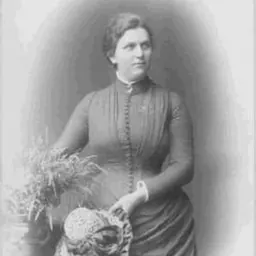
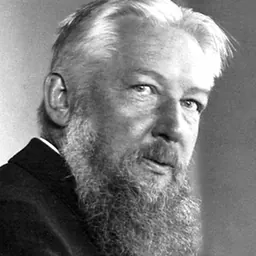


Related people
Same field, nearest in time
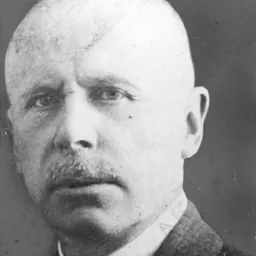


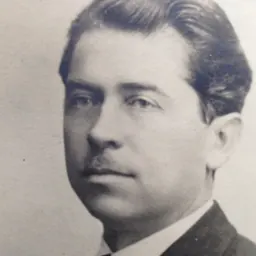
Contemporaries
People whose lives overlapped James Walker's



Frequently asked questions
Who was James Walker?
chemist from Scotland
When was James Walker born?
James Walker was born on 6 April 1863 in Dundee.
When did James Walker die?
James Walker died on 6 May 1935.
What was James Walker's occupation?
James Walker was a chemist and university teacher.
What nationality was James Walker?
James Walker was British.
Sources & further reading
· DBpedia: James Walker (chemist)
Cite this page
APA: Biography.guide. (2026). James Walker. https://biography.guide/james-walker-chemist/
MLA: "James Walker." Biography.guide, https://biography.guide/james-walker-chemist/.
Chicago: "James Walker." Biography.guide. https://biography.guide/james-walker-chemist/.
Data last updated: 2026-09-20 · Spot an error? Report a correction.
Page generated 2026-09-27 05:29 UTC