
About Stephen S. Harding
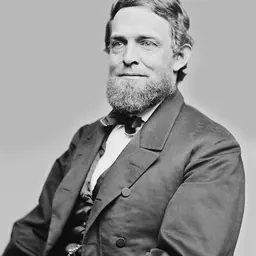
Lived 1808 – 1891 (aged 82). Stephen S. Harding was an American lawyer, judge, politician, governor, jurist and consul.
Stephen Selwyn Harding (February 24, 1808 – February 12, 1891)
Harding studied law in the office of William R. Morris in Brookville, Indiana, and became licensed to practice law on March 17, 1828, at the age of twenty.
Early Mormon connection Shortly after his return to Indiana in 1829, Harding left for an extended trip to the East, where he spent the summer in Palmyra, New York. During his visit, Harding was an overnight guest at the home of Joseph Smith Sr. who was the father of Joseph Smith Jr., the founder of Mormonism, a religious movement of which the Church of Jesus Christ of Latter-day Saints (LDS Church) is the largest denomination. Harding also met with several early Mormon leaders including Martin Harris and Oliver Cowdery. In addition, nearly sixty years earlier, in 1829, he and Harris listened as Cowdery read from a few of the yet unpublished manuscripts of the Book of Mormon in the candlelight of Joseph Smith Sr.'s log home. Harding also recalled that he had been given the first sheet of the freshly-printed Book of Mormon title page, which he gave to a saint named Robert Campbell, who later donated it to the LDS Church at Salt Lake City. During his visit to Palmyra, Mormon leaders also asked Harding to become a Mormon missionary in London, England, but he declined the request and returned to Indiana in late 1829.
Indiana lawyer and abolitionist Harding opened a law practice in Versailles, Indiana, in December 1829, and by 1830, was an active abolitionist. He began delivering anti-slavery speeches at gatherings near his home in southeast Indiana, which included active pro-slavery and anti-slavery factions. In the 1830s and 1840s, Harding's interest in the anti-slavery issue continued to increase and as he became a leader in the abolition movement in Indiana. Harding, who believed that slavery was unconstitutional, had anti-slavery views similar to other moderate abolitionists such as Salmon P. Chase, William Jay, Joshua Reed Giddings, and James G. Birney; unlike those of radical abolitionists like William Lloyd Garrison. Indiana historian Jacob Piatt Dunn Jr. reports that the Harding home in Milan, Indiana, was used as a station on the Underground Railroad.
Even though his views on slavery were not popular in some of the areas where he spoke in Indiana, Harding continued to deliver anti-slavery speeches. Harding, a subscriber to several anti-slavery journals, was well-informed on the issue. In 1844, he predicted in a speech he gave at Versailles, Indiana, that twenty years later slavery would not exist in the United States.
Indiana politician Harding, a member of the Whig Party, left the party in 1840 to join the Liberty Party. He was nominated as the Liberty Party's candidate for lieutenant governor of Indiana in 1842 and 1846, but lost both races. In 1844, Harding served as a presidential elector of the Liberty Party's candidate, James G. Birney. After the Liberty Party had dissolved by 1848, Harding joined the Free Soil Party. In July 1848, while Harding attended the national Free-Soil convention in Buffalo, New York, the Free-Soil Party of Indiana was established at Indianapolis. Harding was among the speakers at the Free-Soil Party's second state convention in Indianapolis. Representing the 4th Congressional District, Harding was also one of eleven presidential electors on the Free-Soil ticket in 1852.
Governor of Utah Territory (1862–63) At the recommendation of Indiana politicians Schuyler Colfax and George Washington Julian, Abraham Lincoln appointed Harding governor of the Utah Territory in 1862. Harding began his overland journey west in May and arrived at Salt Lake City to assume his new duties on July 7, 1862.
In March 1863, after a mass meeting was held in Salt Lake City to discuss the issue, territorial citizens petitioned President Lincoln to remove Harding from office, but instead of recalling him, Lincoln appointed Harding to the post of U.S. consul at Valparaíso, Chile. Harding resigned the position as territorial governor in fall of 1863, intending to accept the diplomatic post, but due to his wife's ill health and other domestic reasons, he had to resign the appointment on the eve of his departure to Chile.
Chief Justice of Colorado (1863–1865) Lincoln appointed Harding to serve as Chief Justice of the Colorado Territory's Supreme Court in July 1863, and remained in that position until May 1865. One of his responsibilities as Chief Justice was to serve as a committee member responsible for certifying the results of ballots cast in 1865 to request that Colorado be admitted as a state in the Union. Believing that the results had been altered in favor of statehood, Harding refused to approve the results.
Later years Harding left Colorado in 1865 and resumed his private law practice in Indiana. He retired from practicing law in 1881 due to blindness.
Personal life Stephen Harding married Avoline Sprout of Chautauqua County, New York, on October 31, 1830. They were the parents of nine children (five sons and four daughters).
Harding died on February 12, 1891, at Milan in Ripley County, Indiana, and was buried in the Greendale Cemetery at Greendale, Indiana.
Don’t just read it —
keep it.
Full-length biographies made to live with: read them, listen on the way to work, watch them tonight.
- E-book
- Audio
- Video
Instant download · yours to keep · every purchase keeps this site free
Important facts
People in Stephen S. Harding's life
Named in this biography and alive at the same time



Related people
Same field, nearest in time





Contemporaries
People whose lives overlapped Stephen S. Harding's





Frequently asked questions
Who was Stephen S. Harding?
American jurist (1808–1891)
When was Stephen S. Harding born?
Stephen S. Harding was born on 28 February 1808 in Palmyra.
When did Stephen S. Harding die?
Stephen S. Harding died on 12 February 1891 in Milan.
What was Stephen S. Harding's occupation?
Stephen S. Harding was a lawyer, judge, politician, governor, jurist and consul.
What nationality was Stephen S. Harding?
Stephen S. Harding was American.
Sources & further reading
· Wikipedia: Stephen S. Harding
Cite this page
APA: Biography.guide. (2026). Stephen S. Harding. https://biography.guide/stephen-s-harding/
MLA: "Stephen S. Harding." Biography.guide, https://biography.guide/stephen-s-harding/.
Chicago: "Stephen S. Harding." Biography.guide. https://biography.guide/stephen-s-harding/.
Data last updated: 2026-09-20 · Spot an error? Report a correction.
Page generated 2026-09-27 05:22 UTC