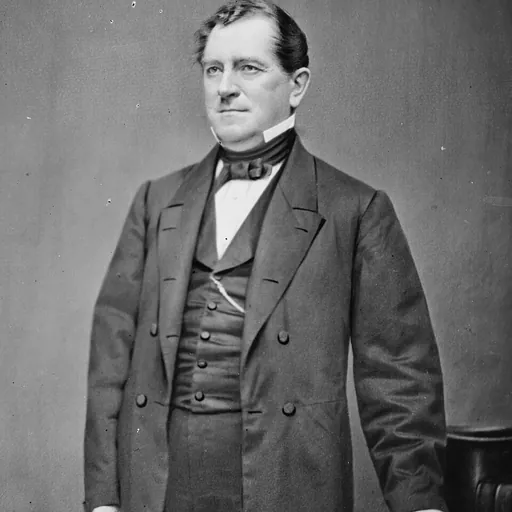
About Joshua Reed Giddings
Lived 1795 – 1864 (aged 68). Joshua Reed Giddings was an American politician, lawyer, abolitionist and human rights defender.
Joshua Reed Giddings (October 6, 1795 – May 27, 1864) was an American attorney, politician and abolitionist. He represented Northeast Ohio in the U.S. House of Representatives from 1838 to 1859. He was at first a member of the Whig Party and was later a Republican, helping found the party.
Giddings is noted as a leading abolitionist of his era. He was censured in 1842 for violating the gag rule against discussing slavery in the House of Representatives when he proposed a number of Resolutions against federal support for the coastwise slave trade, in relation to the Creole case. He quickly resigned, but was overwhelmingly re-elected by his Ohio constituents in a special election to fill the vacant seat. He returned to the House and served a total of nearly twenty more years as representative. Lincoln named Giddings Consul to Canada after his term ended in the House of Representatives. While in Canada he wrote “History of the Rebellion: Its Authors and Causes”. He lived in Quebec until his death in 1864. His body was returned to Jefferson, Ohio for burial.
Giddings is one of the main reasons that the Western Reserve was, before the Civil War, one of the most anti-slavery regions of the country.
Early life and education Joshua Reed Giddings was born in Bradford County, Pennsylvania, at Tioga Point, now Athens, on October 6, 1795. His family moved that same year to Canandaigua, New York, where they spent the next ten years. In 1806 his parents Elizabeth (née Pease) and Joshua Giddings moved the family to Ashtabula County, Ohio, which was then sparsely settled. Here they settled on Ohio's Western Reserve, which "provided him with the occupational and social mobility so characteristic of the early nineteenth-century frontier",
The Panic of 1837, in which Giddings lost a great deal of money, caused him to cease practicing law. He ran for federal office and was elected to Congress, "with instructions to bring abolition into national focus in any way possible". and finally as a Republican. From 1838 until 1843, his district included the city of Youngstown. From 1843 to 1853, the boundaries were shifted northwest to include Cleveland and Youngstown was subtracted from his constituency; from 1853, Cleveland was again swapped for Youngstown.
For the start of the 1841 session Giddings and some of his colleagues, Seth M. Gates of New York, William Slade of Vermont, Sherlock J. Andrews of Ohio, and others, constituted themselves a Select Committee on Slavery, devoted to driving that institution to extinction by any parliamentary and political means, legitimate or otherwise. Not being an official committee, they met their operating expenses out of their own pockets. The expenses included the board and keep of Theodore Dwight Weld, the prominent Abolitionist lecturer, who researched and helped prepare the speeches by which the members excited public opinion against slavery at every opportunity. Their headquarters was in Mrs. Sprigg's boarding-house, directly in front of the Capitol, where Gates, Slade, Giddings, Weld, and the influential abolitionist minister Joshua Leavitt, lived during sessions of Congress; others gradually joined them.
On March 21, 1842, before the case was settled, Giddings introduced a series of resolutions in the House of Representatives. He asserted that in resuming their natural rights of personal liberty, the slaves violated no law of the U.S. He contended the U.S. should not try to recover them, as it should not take the part of a state. For offering these resolutions, Giddings was attacked by numerous critics. The House formally censured him for violating the gag rule, and he was not permitted to speak in his own defense. That was the widest margin of victory that had ever been achieved in a contest for a seat in the House of Representatives, in any Congress. The House abandoned any thought of disciplining Giddings, and his colleagues on the Select Committee on Slavery discovered that his impunity extended to them. With increasing anti-slavery agitation, the House repealed its "gag rule" three years later on December 3, 1844.
Giddings's daughter Lura Maria, an active Garrisonian, convinced her father to attend the meetings held by Garrison's followers, which heightened his anti-slavery position. William Lloyd Garrison was a spiritual as well as political leader. In the 1850s Giddings also adopted other progressive ideas, identifying with perfectionism, spiritualism, and religious radicalism. He claimed that his antislavery sentiments were based on a higher natural law, rather than just on the rights of the Constitution. Giddings called the caning of Senator Charles Sumner in the Senate by an opponent a crime "against the most vital principles of the Constitution, against the Government itself, against the sovereignty of Massachusetts, against the people of the United States, against Christianity and civilization." Many of these views were reflected in his noted "American Infidelity" speech of 1858.
Giddings often used violent language, and did not hesitate to encourage bloodshed. He talked about the justice of a slave insurrection and the duty of Northerners to fully support such an insurrection. He opposed the Fugitive Slave Act of 1850 and advised escaping slaves to shoot at their potential captors.
Giddings led the Congressional opposition by Free State politicians to any further expansion of slavery to the West. Accordingly, he condemned the annexation of Texas, the Mexican War, the Compromise of 1850, and the Kansas–Nebraska Act, all of which contributed to expansion of slavery in the West. Following the war with Mexico, Giddings cast the only ballot against a resolution of thanks to General Zachary Taylor.
With increasing political activism related to slavery, Giddings shifted from the Whig party to the Free Soil Party, "which undoubtedly cost him a seat in the United States Senate", with the Whigs opposing him. He is buried at Oakdale Cemetery in Jefferson, Ohio.
Honors and legacy Joshua R. Giddings Elementary School in Washington, D.C., was constructed in 1887 and named in his honor. It closed in the 1990s and now is a sports club and gym.
His law office in Jefferson, Ohio, has been preserved as a National Historic Landmark.
A life-size bronze depiction of Giddings is featured inside the Cuyahoga County Soldiers' and Sailors' Monument.
Published works
Speeches in Congress (1853) Reprinted with introduction by Arthur Thompson, University of Florida Press, 1964. History of the Rebellion: Its Authors and Causes (1864).
Archival material The Indiana State Library has a collection of his correspondence and memoirs. "The collection consists primarily of memoirs of Joshua R. Giddings. Also included are family correspondence (mainly between father and daughter Laura Giddings), journal entries by the elder Giddings, diaries of Laura, photographs, and a biography of Giddings by his daughter."
Don’t just read it —
keep it.
Full-length biographies made to live with: read them, listen on the way to work, watch them tonight.
- E-book
- Audio
- Video
Instant download · yours to keep · every purchase keeps this site free
Important facts
People in Joshua Reed Giddings's life
Named in this biography and alive at the same time





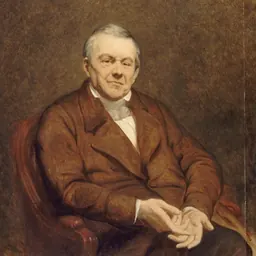
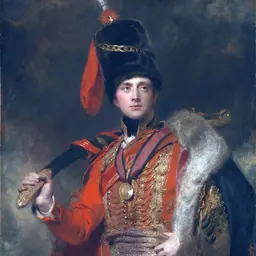
Related people
Same field, nearest in time

Contemporaries
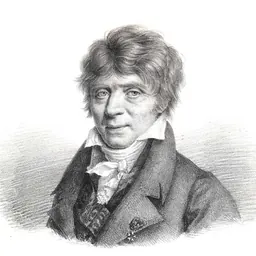
People whose lives overlapped Joshua Reed Giddings's





Frequently asked questions
Who was Joshua Reed Giddings?
American politician (1795–1864)
When was Joshua Reed Giddings born?
Joshua Reed Giddings was born on 6 October 1795 in Athens.
When did Joshua Reed Giddings die?
Joshua Reed Giddings died on 27 May 1864 in Montreal.
What was Joshua Reed Giddings's occupation?
Joshua Reed Giddings was a politician, lawyer, abolitionist and human rights defender.
What nationality was Joshua Reed Giddings?
Joshua Reed Giddings was American.
Sources & further reading
· Wikipedia: Joshua Reed Giddings
· DBpedia: Joshua Reed Giddings
Cite this page
APA: Biography.guide. (2026). Joshua Reed Giddings. https://biography.guide/joshua-reed-giddings/
MLA: "Joshua Reed Giddings." Biography.guide, https://biography.guide/joshua-reed-giddings/.
Chicago: "Joshua Reed Giddings." Biography.guide. https://biography.guide/joshua-reed-giddings/.
Data last updated: 2026-09-21 · Spot an error? Report a correction.
Portrait: Wikimedia Commons · author & licence
Page generated 2026-09-27 05:01 UTC