
About Stephen Richards
Lived 1856 – 1879 (aged 22). Stephen Richards was an American serial killer.
Stephen Decatur Richards (March 18, 1856 – April 26, 1879), known by the nicknames The Nebraska Fiend and The Ohio Monster, was an American mass murderer, outlaw, and serial killer who committed nine to twelve murders in Nebraska and Iowa between 1876 and 1878.
Richards was born in West Virginia (then part of Virginia) in 1856. His family later moved to Ohio, and eventually settled in the Quaker village of Mount Pleasant. In 1876, Richards left his home and headed westward to seek his fortune. For a time, he found work at a local asylum; he claimed that during his time there, he lost all empathy for other people. When Richards later confessed to his crimes, he claimed to have committed his first murder sometime in late 1876, two weeks after arriving in Kearney, Nebraska. He went on to commit several other murders, which he later claimed were done in self-defense. Richards fled after murdering Mary L. Harlson and her three children, but was captured in Mount Pleasant. In 1879, he was convicted of the murders of the Harlson family, as well as the killing of neighbor Peter Anderson, and hanged.
Richards was regarded as handsome and charismatic by some contemporary chroniclers, who described his appearance and behavior as completely obscuring his nature as a cold-blooded killer. Many observed that he displayed a complete lack of remorse for his crimes and indifference toward his execution. Modern-day forensic psychologist Katherine Ramsland has written that these characteristics were also displayed by serial killer Ted Bundy, and she has referred to Richards as The Old West's Ted Bundy.
The nature of Richards' crimes and his behavior after his capture led to a brief period of notoriety, as Richards was widely talked about in the media at the time. Richards has been featured in a handful of books and periodicals, including a posthumous biography, based on an interview conducted after his final arrest. The biography, which also included entries on other criminals of the time, was published in 1879 by the Nebraska State Journal. In modern times he is known as Nebraska's first documented serial killer in Nebraska and the first person to be executed by the state.
Background In the mid-19th century, Nebraska experienced a period of territorial expansion in the wake of the Kansas-Nebraska Act of 1854, which saw the creation of Nebraska and Kansas territories to facilitate the construction of the Transcontinental railroad. In 1867, Nebraska was admitted into the Union as the 37th state, two years after the conclusion of the American Civil War. Nebraska's newfound statehood led to an influx of settlers; among the growing population and political controversies incited by the state's first governor David Butler, renewed calls for a state constitution were made in 1871. During Richards' crime spree and trial, Nebraska's law and justice system had only recently been developed, with the state's criminal code written into state law in 1871. Before his execution, the state had only one recorded execution, in 1863, four years before its inclusion into the United States.
Early and young adult life Stephen Decatur Richards was born in Wheeling, Virginia, on March 18, 1856. He was said to have had five sisters and a brother. When Richards was six, his family relocated to Ohio; first to Monroe County, and then to Noble County. The family later settled in the Quaker village of Mount Pleasant in Ohio when he was eleven. Richards described his mother as a devout Methodist, and his father, a farmer, as having "made no profession of religion". Richards attended school in Mount Pleasant; he claimed that the teachers considered him well behaved. At his mother's insistence, he also attended Sunday school and church regularly.
Up until the age of twenty, Richards lived with his parents, working for farmers and other locals in the area. On September 16, 1871, Richards' mother died of an unknown cause. At the age of 20, Richards met and became engaged to a young woman named Anna Millhorne, with whom he corresponded with during his later travels. Richards also met men whom he described as being of "questionable occupation"; he began passing counterfeit bills he obtained from a man in New York City. In February 1876, he left Mount Pleasant, heading west for better career opportunities.
For a short time, Richards lived in Iowa, and worked as a farmhand in Burlington and Morning Sun. He was later hired as an attendant at the Iowa Lunatic Asylum in Mount Pleasant, Iowa; tasked with burying deceased patients. The New York Times wrote that Richards' time working at the asylum was a significant event in his life that shaped his own humanity and view of the human race. While he denied witnessing any abuse of the asylum's patients, he later reflected that during his tenure of handling and disposing of deceased patients, he became accustomed to viewing people as 'nothing more than meat'.
Richards left the asylum in October 1876, and began drifting around the Midwestern United States, finding intermittent work and occasionally consorting with train robbers. He stayed in Kansas City briefly before he moved to Nebraska, where he passed through Hastings before arriving in Kearney, residing there for two to three weeks before leaving for Cheyenne County. According to Richards, he became involved in several gunfights during his stay, that resulted in him shooting each individual, although he stated he was unaware of their condition after each confrontation. During this period, Richards went under the name William Hudson, and later discarded this once he reached Kansas City.
Murders Early murders In a confession written after his final arrest, Richards admitted to having killed four men during his travels around Nebraska and Iowa between 1876 and 1877. He described committing his first murder sometime in late 1876, two weeks after arriving in Kearney.
According to Richards, he met a man while traveling on horseback through the Nebraska countryside, and the pair decided to camp for the night near Dobytown. (Several newspapers reported that the two men's campsite was instead near Sand Hills.) Settling down for the night, the two began gambling in a game of cards, with Richards winning most of the stranger's money. As the two set off for Kearney the following morning, the other man turned on Richards and demanded his money back. Richards refused, whereupon, he claimed, the other man became belligerent. Richards then shot him above the left eye, killing him instantly. After confirming the man was dead, he disposed of the body in the Platte River.
Several days later, as he continued his trek to Kearney, Richards encountered another man fifteen miles from an area called Walker's Ranch. The man had seen Richards and the previous traveler together, and the stranger asked what had become of that man. While talking to him, Richards realized that this man and the deceased were friends and business partners. Richards denied any knowledge of the dead man, but his friend continued to hound Richards with questions, which caused Richards to become increasingly anxious. Believing the man knew too much, Richards decided to kill the stranger to prevent any discovery of the murder. When the stranger turned his back to Richards, he was shot in the back of the head. He disposed of the corpse and sold the man's horse in a nearby town. Before reaching Kearney, Richards stopped at the home of Jasper Harlson, who, according to Richards, was a train robber. Mary, Jasper's wife, noticed upon his arrival that Richards' shirt was stained with blood, and commented on it. Richards had not noticed blood on his clothes, and claimed to have replied, as if in jest, that it must have come from the men he had murdered. That ended the conversation.
After his stay, Richards traveled to Cedar Rapids, Iowa, where he used counterfeit money to purchase a horse and buggy from an unidentified man. After he left, the seller discovered the bills were not genuine. Tracking Richards down, the seller demanded that Richards give him real money or return his horse and buggy. With Richards refusing both demands, the man threatened to have him arrested, and Richards responded by shooting him. He then buried the body and left the area.
In March 1877, Richards and a young man with the surname Gemge left Grand Island, Nebraska, on horseback and headed towards Kearney. As they neared their destination, they stopped and camped for the night between Lowell and Kearney, along the Platte River. Richards woke up at about 3:00a.m. and roused his partner, telling him it was nearly morning and they should get back on the road. Gemge, infuriated at being awakened so early, began arguing with Richards. The argument continued, as Richards later recounted:
After leaving the area, Richards arrived at Kearney, registering under the name F.A. Hoge at the local hotel. During his stay, Richards reunited with several old acquaintances George "Dutch Henry" Johnson, and his companion Hurst, as well as a man who went by the name Mr. Burns. On March 21, Richards was arrested along with Burns, whom he had been spending most of his time with. At the time, both men were not told as to the reason for their arrest, although Richards came to suspect that it was for the murder of Gemge. It was only later that they were notified by the authorities that they were under suspicion for murder of a man named Peter Geteway, whom Richards claimed his innocence over. Although Richards was soon acquitted, Burns was held in custody because of a testimony of a "sporting lady" whom he had previously been acquainted with. Burns would also be acquitted sometime later after no evidence was found linking him to the crime.
Murders of the Harlson family
In June 1878, while in Kearney, Richards was arrested and jailed for larceny. He later claimed that this charge was unfounded. During his time in jail, he reunited with Mary L. Harlson. Shortly before Richards' arrival, she had been arrested under suspicion of having aided the escape of her husband and another prisoner, named Underwood or Nixon, from the Kearney jail. Richards and Mary Harlson agreed that she would sell him the deed to her property six months later, for $600 ($ in ).
After Richards was released from jail, he traveled around Nebraska for several months. He did business in Hastings, Bloomington, and Grand Island before arriving at the Harlsons' Kearney County homestead on October 18, 1878. Mary Harlson transferred the property to Richards upon his arrival, and he stayed there for several weeks. The New York Daily Herald later reported that Richards had married Harlson on November 2, in what the newspaper alleged was a scam to acquire ownership of Harlson's land. A month later, Richards decided to kill Harlson and her three children—ten-year-old Daisy, four-year-old Mabel, and two-year-old Jasper, nicknamed "Jesse". In his confession, Richards claimed that Harlson had discovered that he was guilty of murder, and he feared that she might betray his presence to the authorities. To silence Harlson, and ensure that his previous crimes remained hidden, Richards resolved to murder the entire family.
On November 3, 1878, Richards got up early in the morning, along with another man named Brown, who had been staying at the house. Brown left to feed the horses and complete other chores around the farm. Richards found a spade and dug a hole, then sneaked back into the house and murdered Mary, Daisy, Mabel, and Jesse with an ax. According to one report, Mary and one of the children were murdered with a smoothing iron, while the other two were physically assaulted. This claim was also reported by some modern-day sources, who graphically described Richards killing Jasper by bashing his head against the wall. However, these alternate details of the murders were refuted by Richards himself, saying he had killed the family while they were asleep. He said most of them had died after the first several blows, with the exception of Daisy, who had "writhed in pain for some time" by Richards' own account. Richards was said to have scrubbed the blood off of the floor and himself after the murders, before calmly sitting down to breakfast. After he had eaten, he carried the bodies out of the house and buried them in the hole he had dug nearby. When later questioned about the Harlsons' disappearance, Richards told several people the family had left with Brown, and he did not know when they would return. A 21st-century account stated Richards had made claims of Harlson transferring the deed of the farm to him, and subsequently left with her children, to reunite with her husband. The bodies of Harlson and her children were discovered on December 11. Some reports said they had been concealed underneath a haystack, rather than buried, as Richards had later claimed.
Murder of Peter Anderson On December 9, 1878, Richards agreed to help his neighbor, a 26-year-old immigrant from Sweden named Peter Anderson, with some work on Anderson's property. The Columbus Journal reported that Richards had used the alias "Dick Richardson" when working for Anderson. On December 9, Anderson became ill after eating a meal Richards had prepared, causing him to suspect Richards had poisoned him. Anderson informed a neighbor of his suspicions. The next day, he confronted Richards; the two fought, and Richards beat Anderson to death with either a hammer or hatchet, or shot him (contemporary newspaper accounts vary). Anderson's body was later discovered in the cellar of his house, buried underneath a pile of coal. Richards strongly denied poisoning Anderson, saying that was not his style. He claimed Anderson had attacked him with a knife and that he killed Anderson in self-defense. Anderson was later buried at the Bethany Cemetery in Axtell, Nebraska.
On the run Richards fled Kearney shortly after Anderson's murder, expecting that the bodies would soon be discovered. In the evening, as he was hitching up Anderson's horses and preparing to leave, some of Anderson's neighbors arrived. They had noticed Anderson's absence and questioned Richards about it. He reportedly told them Anderson was inside the house. As Anderson's neighbors entered the dwelling, Richards fled on horseback, riding to Bloomington. He traveled east, by horse and train and on foot, passing through Omaha and Chicago. (An article in the Lincoln Journal Star claimed that he fled instead to Red Cloud, and traveled to Chicago by way of Hastings.) The article also stated that he used the alias "Samuel Richards" during his flight.
Spectators at the execution were said to have numbered between 2,000 and 25,000. As the crowd became increasingly agitated, the authorities pleaded with them to stay outside the enclosure, but guards were unable to prevent the spectators from destroying the barrier. One witness in the incident, a man named Rolf Johnson, later wrote that twenty to thirty people in the crowd cut the rope as the authorities tried to stop the crowd. The mob proceeded to pull the posts out of the ground, attempting to drag the makeshift barrier away while the guards were pulling the rope at the other end in what Johnson described as a "tug of war". The mob succeeded in pulling the rope away from the guards, and then proceeded to destroy the barrier completely. At 1:00p.m., Richards was led to the gallows by Martin and his deputy; this pacified the crowd. Upon ascending the gallows, Richards launched into an impassioned defense of his actions. He again claimed that the killing of Anderson was in self-defense, and disavowed any involvement in the murders of the Harlson family; he claimed that he was the victim of a "wrongful conviction". He then said he had found the Lord, "made [his] peace with God", and "had faith in Christ", and asked the crowd to join him in singing the hymn "Come Thou Fount of Every Blessing". One such spectator documenting the events of the execution in his journal, observed that Richards appeared calm and collected during the entire ordeal. Richards' final words were said to have been "Jesus be with me now!" Reverend W. Sanford Gee, who presided over the execution, later told reporters he hoped Richards' professions of religious salvation were genuine, but allowed that they might not have been.
At 1:17 p.m. on April 26, 1879, Richards was hanged. The St. Louis Globe-Democrat said it took fifteen minutes for him to die. Richards was the first person in Nebraska's history to be executed,
Aftermath Local doctors hounded Richards before his execution, requesting him to donate his body for medical purposes. He refused, and was buried in Minden. in 2018, forensic psychologist Katherine Ramsland referred to Richards as "The Old West’s Ted Bundy". Both Richards and Bundy used their charisma to manipulate others, and both displayed a complete lack of remorse for their crimes. Ramsland also wrote on the differences between the two men, noting that Bundy murdered for sexual gratification, whereas Richards had no preferred method of killing or type of victim; furthermore, Bundy fought his execution, while Richards was indifferent to his death sentence. She further described a possible reason for his violent behavior, citing a severe head injury that he received shortly before the killings started. Richards himself briefly mentioned this injury to the Sedalia Weekly Bazoo, claiming that he received the injury while traveling with several companions in the spring of 1877. When pressed about the circumstances that led to the injury, Richards refused to elaborate on the incident.
Richards used various aliases during his travels. In an account of his life published in The Sedalia Weekly Bazoo, Richards admitted to having used the false names George Gallagher, F.A. Hoge, and William Hudson. Richards also admitted to corresponding with various acquaintances under the names D.J. Roberts, J. Littleton, and W. A. Littleton.
Legacy An illustration depicting the execution of Richards published a month after his execution in the National Police Gazette.
At the time of Richards' arrest and execution, it was a popular belief that all criminals were of poor quality and limited education. The horrific nature of his crimes gave Richards some notoriety which increased after his capture due in part to his not fitting with the public's preconception of criminals, After his execution, interest in Richards dwindled and he subsequently faded from public memory. NET Nebraska's documentary Until He Is Dead: A History Of Nebraska's Death Penalty, featured Richards as a prime example of the public spectacle of the state's early executions; the documentary mistakenly mentioned him under his "Samuel Richards" alias. Richards was featured in the 2021 novel The Scarlet Pen written by Jennifer Uhlarik, as a part of the historical crime series True Colors. The novel is a fictionalized version of Richards' interaction with his fiancée, to whom he regularly sent letters.
Don’t just read it —
keep it.
Full-length biographies made to live with: read them, listen on the way to work, watch them tonight.
- E-book
- Audio
- Video
Instant download · yours to keep · every purchase keeps this site free
Important facts
People in Stephen Richards's life
Named in this biography and alive at the same time



Related people
Same field, nearest in time


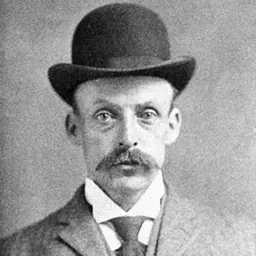
Contemporaries
People whose lives overlapped Stephen Richards's




Frequently asked questions
Who was Stephen Richards?
19th century American serial killer (1856–1879)
When was Stephen Richards born?
Stephen Richards was born on 18 March 1856 in Wheeling.
When did Stephen Richards die?
Stephen Richards died on 15 January 1879 in Minden.
What was Stephen Richards's occupation?
Stephen Richards was a serial killer.
What nationality was Stephen Richards?
Stephen Richards was American.
Sources & further reading
· DBpedia: Stephen D. Richards
Cite this page
APA: Biography.guide. (2026). Stephen Richards. https://biography.guide/stephen-richards-serial-killer/
MLA: "Stephen Richards." Biography.guide, https://biography.guide/stephen-richards-serial-killer/.
Chicago: "Stephen Richards." Biography.guide. https://biography.guide/stephen-richards-serial-killer/.
Data last updated: 2026-09-20 · Spot an error? Report a correction.
Page generated 2026-09-27 05:18 UTC