
About Stephen Kosslyn
Born 1948. Stephen Kosslyn is an American neuroscientist and psychologist.
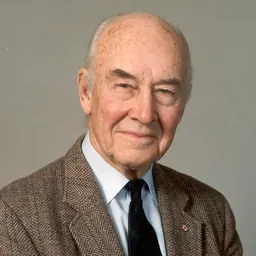
Stephen M. Kosslyn (born 1948) is an American psychologist and neuroscientist. He is a former chair of the psychology department and dean of social sciences at Harvard University, where he is a professor emeritus. Kosslyn is also the president of Active Learning Sciences, Inc., which provides AI software to educational companies. and then was one of the founders of cognitive neuroscience. His research areas include mental imagery, the neural bases of visual cognition, and the science of learning.
Kosslyn's research addressed the "imagery debate," a long-standing controversy in cognitive science over whether mental images are depictive or propositional. Beginning with computational modelling studies in the 1970s and later incorporating neuroimaging and transcranial magnetic stimulation research, Kosslyn argued that multiple lines of evidence supported the depictive view of mental imagery. In 2015, he and Joel Pearson co-authored a paper The Heterogeneity of Mental Representation: Ending the Imagery Debate.
Mental imagery Kosslyn has researched mental images. His studies demonstrated that people take longer to mentally scan greater distances across objects in their mental images. He also found that people could detect more details of objects in their mental images when they mentally "zoomed in" on them. In addition, he documented that the size and shape of the "mental screen" on which visualized objects appear is similar in scope and shape to the field of visual attention in perception (when actually seeing, not visualizing with eyes closed). He and his colleagues also demonstrated that depictive visual mental imagery can be implemented in computational systems. These models posited that visual mental imagery relies on distinct sets of processing components.
Visual cognition Kosslyn proposed a detailed theory of how visual information is stored and accessed in the brain during cognition. After they are generated into this structure, they can be interpreted and transformed via interactions with specific other brain areas. Kosslyn and his colleagues showed that the left cerebral hemisphere relies on "categorical" spatial representations, whereas the right cerebral hemisphere relies on metric, "coordinate", representations. Kosslyn and his colleagues showed that visual mental imagery relies on most of the same brain regions that underlie visual perception.
Kosslyn's research has examined individual differences in cognitive style, including distinctions between object visualisers, who tend to process detailed pictorial images, and spatial visualisers, who tend to process spatial relationships and transformations. His studies have also examined the implications of these differences for cognitive processing and education.
Kosslyn has also conducted research on the neural correlates of deception, including studies investigating patterns of brain activity associated with different forms of deceptive behaviour. In addition, he was involved in the development of the MiniCog Rapid Assessment Battery, a portable cognitive assessment system developed with funding from NASA and the National Space Biomedical Research Institute for evaluating cognitive performance during long-duration space missions.
Cognitive science in education Kosslyn has attempted to apply principles from cognitive science to improve how people learn, such as using cognitive principles to make data displays—such as graphs, charts, and diagrams—easier to understand. He developed guidelines for creating effective PowerPoint slides and other forms of visual communication.
Kosslyn has also proposed ways to design online courses based on principles from cognitive science. Kosslyn proposed the concept of the "Cognitive Amplifier Loop"—a procedure that is intended to help humans interact with AI.
Biography Kosslyn attended graduate school at Stanford University and received a PhD in psychology from Stanford in 1974. After an appointment as assistant professor of psychology at Johns Hopkins, he joined the faculty at Harvard in 1977, where he later served as the departmental chair, Dean of Social Sciences, and the John Lindsley Professor. He also was codirector of the Mind of the Market Lab at Harvard Business School and was an associate in the department of neurology at the Massachusetts General Hospital. In 2010, Kosslyn was appointed director of the Center for Advanced Study in the Behavioral Sciences at Stanford University. Following this, Kosslyn was the Founding Dean and Chief Academic Officer of the Minerva Schools (now Minerva University). He then was the founder and chief academic officer of Foundry College, an online two-year college.
He is founder, president and CEO of Active Learning Sciences, Inc.
Awards Kosslyn has won include the National Academy of Sciences Initiatives in Research Award, three honorary doctorates (from the University of Caen, France; the University of Paris-Descartes, France; the University of Bern, Switzerland), and a Guggenheim fellowship, He was elected to the American Academy of Arts and Sciences, and the Society of Experimental Psychologists.
Ties with Jeffrey Epstein
Between 1998 and 2002, Harvard received $200,000 in donations from Jeffrey Epstein to support Kosslyn's research. In 2003 Kosslyn contributed a note to Jeffrey Epstein's birthday book (where he was classified as a "scientist" and not a "friend"). In 2008, Kosslyn visited Epstein in Palm Beach County Jail.
A report from Harvard University shows that Kosslyn had known Epstein for about nine years and supported his application as a visiting fellow in the department of psychology in September 2005. The report noted that Kosslyn did not disclose Epstein's donations in the accompanying documents. Epstein "lacked academic qualifications", but there was speculation that his application was approved with the support of Kosslyn as the head of the department.
In February 2026, The Wall Street Journal reported that email correspondence released in connection with the Epstein case included exchanges between Jeffrey Epstein and Stephen M. Kosslyn, including after Epstein’s 2008 conviction. The Journal reported that Kosslyn sent Epstein a birthday message in January 2008, writing, “May the coming year be infinitely better than the previous one,” and that Epstein later wrote that “unfortunately jail starts monday.” The Journal also reported that other emails showed Kosslyn working with Epstein on drafting scripts for reporters in an effort to improve Epstein’s public image.
Selected publications Kosslyn has published over 350 scientific papers and written or co-authored 16 books and edited or co-edited 14 books, including the following:
Selected books Kosslyn, Stephen M. (1980). Image and mind. Cambridge, Massachusetts: Harvard University Press. ISBN 978-0-674-44366-2. Kosslyn, Stephen M. (1983). Ghosts in the mind's machine: Creating and using images in the brain. New York: W. W. Norton. ISBN 978-0-393-95257-5. Kosslyn, Stephen M. (1994). Elements of graph design. New York: W. H. Freeman. ISBN 978-0-7167-2362-2. Kosslyn, Stephen M. (1994). Image and brain: The resolution of the imagery debate. Cambridge, Massachusetts: The MIT Press. ISBN 978-0-262-277488. Kosslyn, Stephen M.; Koenig, Olivier (1995). Wet mind: The new cognitive neuroscience. New York: Free Press. ISBN 978-0-02-874085-0. Kosslyn, Stephen M.; Rosenberg, Robin S. (2001). Psychology: The brain, the person, the world. New York: Allyn and Bacon. ISBN 978-0-205-27465-9. Kosslyn, Stephen M.; Thompson, William L.; Ganis, Giorgio (2006), The case for mental imagery. New York: Oxford University Press. ISBN 978-0-19-517908-8. Kosslyn, Stephen M. (2006). Graph design for the eye and mind. New York: Oxford University Press. ISBN 978-0-19-531184-6. Smith, Edward E.; Kosslyn, Stephen M., eds. (2007). Cognitive psychology: Mind and brain. Upper Saddle River, N.J: Pearson/Prentice Hall. ISBN 978-013-182508-6. Kosslyn, Stephen M. (2007). Clear and to the point: 8 psychological principles for compelling PowerPoint presentations. New York: Oxford University Press. ISBN 978-0-19532069-5. Kosslyn, Stephen M.; Rosenberg, Robin S. (2010). Psychology in context. New York: Allyn & Bacon. ISBN 9780205456147. (3rd ed.) Kosslyn, Stephen M. (2010). Better PowerPoint: Quick fixes based on how your audience thinks. New York: Oxford University Press. ISBN 978-0-19-537675-3. Kosslyn, Stephen M.; Miller, G. Wayne (2013). Top brain, bottom brain: Surprising insights into how you think. Riverside: Simon & Schuster. ISBN 978-1-4516-4510-1. Rosenberg, Robin, S.; Kosslyn, Stephen M. (2014). Abnormal psychology (2nd ed.). New York: Worth Publishing. ISBN 1429242167. Kosslyn, Stephen M.; Nelson, Ben, eds. (2017). Building the intentional university: Minerva and the future of higher education. Cambridge, Massachusetts: The MIT Press. ISBN 978-0-262-03715-0. Kosslyn, Stephen M. (2020). Active learning online: Five principles that make online courses come alive. Boston, Massachusetts: Alinea Learning. ISBN 978-1735810706. Kosslyn, Stephen M. (2023). Active learning with AI: A practical guide. Boston Massachusetts: Alinea Learning. ISBN 979-8989214006. Kosslyn, Stephen M. (2024). Learning to flourish in the age of AI. New York: Routledge. ISBN 978-1-032-68665-3.
Don’t just read it —
keep it.
Full-length biographies made to live with: read them, listen on the way to work, watch them tonight.
- E-book
- Audio
- Video
Instant download · yours to keep · every purchase keeps this site free
Important facts
more
S. Kosslyn, S Kosslyn, Kosslyn, Kosslyn S, Kosslyn S., Kosslyn S. M., Kosslyn SMPeople in Stephen Kosslyn's life
Named in this biography and alive at the same time


Related people
Same field, nearest in time



Contemporaries
People whose lives overlapped Stephen Kosslyn's

Frequently asked questions
Who is Stephen Kosslyn?
American psychologist
When was Stephen Kosslyn born?
Stephen Kosslyn was born on 30 November 1948 in Southern California.
What is Stephen Kosslyn's occupation?
Stephen Kosslyn is a neuroscientist and psychologist.
What nationality is Stephen Kosslyn?
Stephen Kosslyn is American.
Sources & further reading
Cite this page
APA: Biography.guide. (2026). Stephen Kosslyn. https://biography.guide/stephen-kosslyn/
MLA: "Stephen Kosslyn." Biography.guide, https://biography.guide/stephen-kosslyn/.
Chicago: "Stephen Kosslyn." Biography.guide. https://biography.guide/stephen-kosslyn/.
Data last updated: 2026-09-20 · Spot an error? Report a correction.
Page generated 2026-09-27 05:30 UTC