
About Anne B. Young
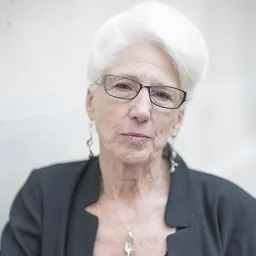
Born 1947. Anne B. Young is an American neuroscientist, physician, university teacher and neurologist, known for Glutamate, Huntington's disease and Neurodegenerative diseases.
Anne Buckingham Young is an American physician and neuroscientist who has made major contributions to the study of neurodegenerative diseases, with a focus on movement disorders like Huntington's disease and Parkinson's disease. Young completed her undergraduate studies at Vassar College and earned a dual MD/PhD from Johns Hopkins Medical School. She has held faculty positions at University of Michigan and Harvard University. She became the first female chief of service at Massachusetts General Hospital when she was appointed Chief of Neurology in 1991. She retired from this role and from clinical service in 2012. She is a member of many academic societies and has won numerous awards. Young is also the only person to have been president of both the international Society for Neuroscience and the American Neurological Association.
Early and personal life Young grew up in Winnetka, a suburb located on the North Shore of Chicago. Growing up, her feisty nature earned her the nickname of "Tiger Annie" among friends and family. As a result, she was sent to prep school to keep her out of trouble.
After receiving her undergraduate degree from Vassar College, Young enrolled in an MD/PhD Program at Johns Hopkins Medical School. There, she met her first husband, John (Jack) B. Penney Jr. Throughout their marriage, they collaborated professionally and together had two daughters, Jessica and Ellen. Penney died suddenly in 1999. Young is currently married to her high school boyfriend Stetson Ames.
Professional career
Overview Young's research career includes many highlights. In 1974 she published a paper contributing to the discovery of glutamate as a neurotransmitter. Additionally, a 1989 paper she co-authored describing an anatomically and pharmacologically derived model of basal ganglia disorders has been cited over 5000 times. As part of the Huntington Study Group, Young has published multiple reviews about the progress of research on Huntington's Disease. Additionally, she participated in an assessment of the Unified Huntington's Disease Rating Scale, which has been cited over 1000 times. Throughout her career, Young participated in the Venezuela Huntington's Disease Project with Nancy Wexler.
Johns Hopkins Medical School After graduating from Vassar, Young enrolled in Johns Hopkins Medical School. Young was one of nine women in her class of 110. In an autobiography, Young describes how her lectures had mostly male professors and students. They would show nude photos of women for entertainment. She once switched one of the photos with a nude picture of a man to embarrass the lecturer. Young also met her husband Jack during her first year, and they continued their relationship while both pursuing careers in neurology. Later that year, Young gave birth to her second daughter. The couple took on specific roles. Young was the expert in pharmacology, neurotransmitters, and receptors. In the clinic, she focused on hyperkinetic disorders like Huntington's and Tourette's syndrome. Penney was the expert in stereotactic surgery, anatomy, computer programs, and statistics. In the clinic, he focused on hypokinetic movement disorders like Parkinson's. In 1989, they published their work proposing a new model of the basal ganglia's involvement in Huntington's and Parkinson's in Trends in Neuroscience. Albin now occupies a faculty position at University of Michigan which is named in her honor: the Anne B. Young Collegiate Professor of Neurology.
Venezuela Huntington's disease project In 1981, Young traveled with Nancy Wexler to Lake Maracaibo to study a family of many members with or at risk of Huntington's disease. She and her husband returned yearly with Wexler to examine members of the family, to take DNA samples, and to develop a detailed pedigree. Their work in Venezuela contributed to Jim Gusella's discovery of the location of the gene that causes Huntington's disease.
Massachusetts General Hospital In 1991, Young was recruited and appointed to chief of neurology at Massachusetts General Hospital (MGH). She was the first female chief in the hospital's history and the first female chief of neurology at a teaching hospital in the United States.
MassGeneral Institute for Neurodegenerative Diseases (MIND) As chief of neurology, Young recognized the potential benefit of bringing together the existing labs at MGH studying neurodegenerative diseases. She developed a proposal to convert a nearby Navy building into an open lab space for the study of neurodegenerative disease, and she brought this to hospital administrators. Her proposal received funding, and she was given almost an entire building where the Mass General Institute for Neurodegenerative Disease (MIND) was established. MIND seeks to have a broad focus to study not only the cause of these diseases, but also to develop effective therapeutic techniques. Another aspect of MIND Young helped to foster is collaborative teamwork between researchers. MIND has made many contributions to research of neurodegenerative diseases, including a role in the development of several clinically proven therapies.
American Neurological Association In 2001, Young was the second female chosen to be president of the American Neurological Association.
Society for Neuroscience In 2003, Young was elected president of the Society for Neuroscience. She has also served as chair of the Government and Public Affairs Committee for the Society.
Selected publications Over her many years in research, Young has made contributions to the study of neuroscience. She has been credited in over a hundred publications, with a majority of contributions focusing on neurodegenerative diseases.
1974: Glutamic Acid-Selective Depletion by Viral Induced Granule Cell Loss in Hamster Cerebellum
This paper correlated the loss of the excitatory action of granule cells and the selective loss of synaptic glutamic acid, to suggest glutamate as the possible primary neurotransmitter of the granule cell. Today glutamate is considered to be the chief excitatory neurotransmitter in the human central nervous system. Their research linked the potential harmful and toxic effects of glutamic acid in Alzheimer's disease.
1988: Differential Loss of Striatal Projection Neurons in Huntington Disease
In this paper, Young and her colleagues investigated the degeneration of striatal projection neurons, present in the basal ganglia in the brain. Using immunohistochemistry, the progression of Huntington's Disease was imaged and tracked to identify how the disease reduces the number of neurons in the striatum.
1989: The Functional Anatomy of Basal Ganglia Disorders
This paper described a model of basal ganglia disorders, including hyperkinetic and hypokinetic disorders. Through different physical and systems-based research, models of neural networks of Early Stage Huntington's Disease and Parkinson's Disease were proposed. The models suggest that different areas of the striatum, previously established as the area of the brain most directly related to the diseases, may be involved in the different steps and features of motor control.
Memoir Dr. Young has been writing a memoir about her life and work, starting the process in 2022. She discusses how her husband's sudden death, "left her feeling like she had a bad concussion." She hopes that her story inspires future doctors, and to remind them that things work out despite feeling unpredictable. Dr. Young is a pioneer for women in science and always pushed for more space, more respect, and more recognition.
Colleagues
John B. Penney Jr. Nancy Wexler James F. Gusella Sid Gilman Solomon H. Snyder Raymond D. Adams Ira Shoulson She was elected to the American Academy of Arts and Sciences in 1995. In 1999, Young was awarded the Dean's Award for Support and Advancement of Women Faculty by Harvard Medical School. Two years later, Young won the Marion Spencer Fay Award, which recognizes excellence in medicine and science through innovation and leadership. In 2005, she was granted fellowship to the Royal College of Physicians, England. In 2006, she received the Milton Wexler Award from the Hereditary Disease Foundation. Young has also been given two distinguished alumni awards, one from Johns Hopkins Medical School and one from Vassar College. She holds a distinguished professor position at Harvard, the Julieanne Dorn Professor of Neurology.
Don’t just read it —
keep it.
Full-length biographies made to live with: read them, listen on the way to work, watch them tonight.
- E-book
- Audio
- Video
Instant download · yours to keep · every purchase keeps this site free
Important facts
People in Anne B. Young's life
Named in this biography and alive at the same time



Related people
Same field, nearest in time




Contemporaries
People whose lives overlapped Anne B. Young's



Frequently asked questions
Who is Anne B. Young?
American neuroscientist
When was Anne B. Young born?
Anne B. Young was born in 1947 in Evanston.
What is Anne B. Young's occupation?
Anne B. Young is a neuroscientist, physician, university teacher and neurologist.
What is Anne B. Young known for?
Anne B. Young is known for Glutamate, Huntington's disease and Neurodegenerative diseases.
What nationality is Anne B. Young?
Anne B. Young is American.
Sources & further reading
Cite this page
APA: Biography.guide. (2026). Anne B. Young. https://biography.guide/anne-b-young/
MLA: "Anne B. Young." Biography.guide, https://biography.guide/anne-b-young/.
Chicago: "Anne B. Young." Biography.guide. https://biography.guide/anne-b-young/.
Data last updated: 2026-09-20 · Spot an error? Report a correction.
Page generated 2026-09-27 05:34 UTC