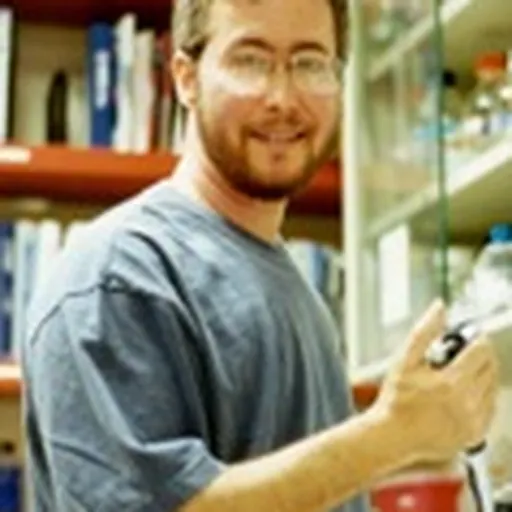
About Ben Barres
Lived 1954 – 2017 (aged 63). Ben Barres was an American neuroscientist, neurobiologist and biologist, known for Neuroscience.
Benjamin Barres (born September 13, 1954 – December 27, 2017) was an American neurobiologist at Stanford University. His research focused on the interaction between neurons and glial cells in the nervous system. Beginning in 2008, he was chair of the Neurobiology Department at Stanford University School of Medicine. He transitioned to male in 1997, and became the first openly transgender scientist in the National Academy of Sciences in 2013. Barres is also known for his pioneering activism for equal opportunity in science, often citing his experiences as both a male and female scientist.
Early life and education Barres was born on September 13, 1954, in West Orange, New Jersey, and was assigned female at birth. As a child, his salesman father and homemaker mother saw him as a tomboy. He later recalled: "Internally I felt strongly that I was a boy. This was evident in everything about my behavior." Attending a West Orange school, Barres excelled in mathematics and science.
At the age of 17, he learned that he had been born with Müllerian agenesis, for which he received surgical correction. He obtained a Bachelor of Science in Biology from Massachusetts Institute of Technology (1976), a medical degree (MD) from Dartmouth Medical School (1979), and a residency in neurology at Weill Cornell Medicine. He completed a PhD in neurobiology there in 1990, then did postdoctoral training at University College London under Martin Raff. Barres published on sexism in the sciences. In 2008, he was appointed to the Chair of Neurobiology at Stanford. His research involved study of mammalian glial cells of the central nervous system (CNS), including the exploration of their function and development. Much of his early work was published under his deadname.
His first major discovery was how developing neurons provide signals to the myelinating glial cells called the oligodendrocytes that provide insulation on the axons. Some of his earliest works focussed on vertebrate nervous system development, including how and why many neurons fail to survive shortly after forming connections with their targets. These studies investigated how this programmed cell death, apoptosis, occurred in such a tremendous scale. Additionally, he studied processes such as the prerequisites for and consequences of axon myelination, and the interactions of various signaling molecules such as thyroid-hormone and retinoic acid within the formation of glial cells including oligodendrocytes.
Early in his time at Stanford, Barres discovered the importance of glial cells in the formation, development, maturation, and regeneration of neurons.
Near the turn of the 21st century he continued his study of glial cells and the mechanisms behind their ability to generate new neurons. He studied control of synapses by glia, and the differentiation of astrocytes by endothelial cells. He investigated the role of the protein Id2 in the control of oligodendrocyte development and established that removing this protein led to premature oligodendrocyte maturation.
In the 2010s Barres's research focused on using techniques such as immunopanning, immunohistochemistry, tissue culturing, and patch clamping to: 1) understand the cell-to-cell interactions in the developmental regulation of nodes of Ranvier and myelin sheaths; 2) determine to what extent glial cells play a role in synapse formation and function of synapses; 3) identify the signals that promote retinal ganglia growth and survival, and how such knowledge of these signals could be regenerated post-trauma; 4) identify the functions and developmental mechanisms of gray matter astrocytes. In these objectives, his lab discovered a number of novel glial signals for the induction of myelination, axonal sodium channel clustering, and synapse formation processes. Additionally, his lab characterized these processes and the exact identity of these novel signals. He was the top student in the class, but found it hard to get a willing supervisor for research. He lost a scholarship to a man who had only one publication, while he already had six. While earning a PhD at Harvard, he was told that he was to win a scientific competition, which was evidently between him and one man; the Dean confided to him, "I have read both applications, and it's going to be you; your application is so much better." But the award was given to the male-presenting man, who dropped out of science a year later.
After transitioning, he noticed that people who were not aware of him being transgender treated him with respect much more than when he presented as a woman. After delivering his first seminar as a man, one scientist was overheard to comment, "Ben Barres gave a great seminar today, but his work is much better than his sister's [believing work published under his deadname to be his sister's] work." In 2012, he recollected the events of his sex change:
Barres was critical of economist Lawrence Summers and others who have claimed that one reason there are fewer women than men in science and engineering professorships might be that fewer women than men had the very high levels of "intrinsic aptitude" that such jobs required. and his experiences of being treated differently as a female scientist versus a male scientist.
Death Barres died on December 27, 2017, some 20 months after being diagnosed with pancreatic cancer, at his home in Palo Alto, California. He was survived by two sisters and a brother.
In a recollection of his life, he said:I lived life on my terms: I wanted to switch genders, and I did. I wanted to be a scientist, and I was. I wanted to study glia, and I did that too. I stood up for what I believed in and I like to think I made an impact, or at least opened the door for the impact to occur. I have zero regrets and I'm ready to die. I've truly had a great life. and a Searle Scholar Award. He has also won teaching awards: the Kaiser Award for Excellence in Teaching, and the Kaiser Award for Innovative and Outstanding Contributions to Medical Education. In 2008 he received the Mika Salpeter Lifetime Achievement Award. He is an inducted member of the Reeve Foundation International Research Consortium on Spinal Cord Injury. He is a co-founder of Annexon Biosciences, Inc., a company making drugs to block neurodegeneration in Alzheimer's and other neurological diseases. He became a member and elected Fellow of the American Association for the Advancement of Science in 2011. In 2013 he was elected to the National Academy of Sciences, becoming the first openly transgender member.
Key publications
Research articles Books
Legacy In 2022, director–producer Pamela B. Green launched a Kickstarter campaign for Ask The Question, a feature biopic about Ben Barres.
Don’t just read it —
keep it.
Full-length biographies made to live with: read them, listen on the way to work, watch them tonight.
- E-book
- Audio
- Video
Instant download · yours to keep · every purchase keeps this site free
Important facts
People in Ben Barres's life
Named in this biography and alive at the same time



Related people
Same field, nearest in time




Contemporaries
People whose lives overlapped Ben Barres's

Frequently asked questions
Who was Ben Barres?
American neurobiologist (1954–2017)
When was Ben Barres born?
Ben Barres was born on 13 September 1954 in West Orange.
When did Ben Barres die?
Ben Barres died on 27 December 2017 in Stanford.
What was Ben Barres's occupation?
Ben Barres was a neuroscientist, neurobiologist and biologist.
What was Ben Barres known for?
Ben Barres was known for Neuroscience.
What nationality was Ben Barres?
Ben Barres was American.
Sources & further reading
Cite this page
APA: Biography.guide. (2026). Ben Barres. https://biography.guide/ben-barres/
MLA: "Ben Barres." Biography.guide, https://biography.guide/ben-barres/.
Chicago: "Ben Barres." Biography.guide. https://biography.guide/ben-barres/.
Data last updated: 2026-09-22 · Spot an error? Report a correction.
Portrait: Wikimedia Commons · author & licence
Page generated 2026-09-27 05:03 UTC