
About Stefano Mandini
Lived 1750 – 1810 (aged 59–60). Stefano Mandini was an opera singer and singer.
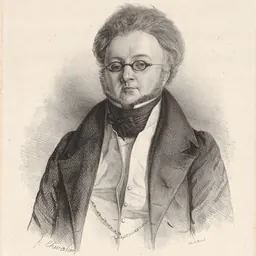
Stefano Mandini; engraving from the late 1780s by Thérèse Eléonore Lingée after a drawing by Jean-Michel Moreau the Younger. From the collections of the British Museum. The French caption reads "Academic Society of the Children of Apollo / Et(ienne) Mandini, Professor", where "Etienne" is French for "Stefano". Stefano Mandini (1750 – ca. 1810) was an outstanding Italian operatic baritone of the second half of the 18th century. He appeared in the premieres of many well-known operas of his day, of which the most famous at the present time is Mozart's The Marriage of Figaro, for which Mandini created the role of Count Almaviva.
Career His career began in Italy with performances in Ferrara in 1774 and Parma in 1776. A key event occurred when Emperor Joseph II of Austria chose to found a top-rank Italian opera company at his capital in Vienna, and sent his representatives seeking the best available talent. Mandini was recruited during this search, and first sang in the Emperor's company on 5 May 1783 as Milord Arespingh in L'italiana in Londra by Domenico Cimarosa. He sang in a number of operas with the company, including the following:
When Mandini was cast as Count Almaviva in Mozart's Le Nozze di Figaro (premiered 1 May 1786), Mozart followed his normal practice in tailoring the music to the singer's strengths. In the opera, the biggest scene for the Count is his long solo appearance near the start of Act 3, where he first ponders his options (recitative), then expresses rage at Figaro (Allegro maestoso), and finally breaks out into triumph and joy (Allegro assai) as he imagines revenge. Keefe notes that in preparing this scene, Mozart followed his normal practice, preparing a particella, a score "comprising vocal lines, an instrumental bass line and occasional instrument material" (this is known today because the parts of the particella were in darker ink). Keefe suggests that, at Mozart's invitation, Mandini inspected the particella and requested a change, namely the insertion of coloratura material near the very end. Mozart obliged him with three measures of virtuosity, with rapid triplets rising to a trill on C sharp. Thus some of the actual content of the opera may be attributable to Mandini's influence.
Lyrics: "and makes me rejoice"
Assessment Keefe (2017), drawing on press comments of Mandini's time, infers he was capable of "splendid acting" and possessed "strong vocal technique". The tenor Michael Kelly, who sang with Mandini in the Marriage of Figaro premiere, felt that his two baritone collaborators, Mandini and the celebrated Francesco Benucci (who sang Figaro) were "the two best comic singers in Europe". When he journeyed to Saint Peterburg, his singing was admired by the painter Élisabeth Vigée Le Brun.
Don’t just read it —
keep it.
Full-length biographies made to live with: read them, listen on the way to work, watch them tonight.
- E-book
- Audio
- Video
Instant download · yours to keep · every purchase keeps this site free
Important facts
People in Stefano Mandini's life
Named in this biography and alive at the same time

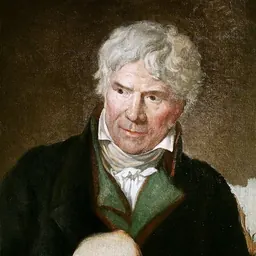

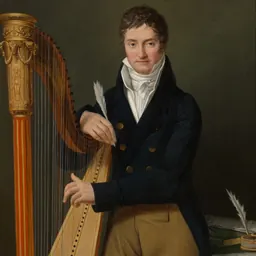

Related people
Same field, nearest in time
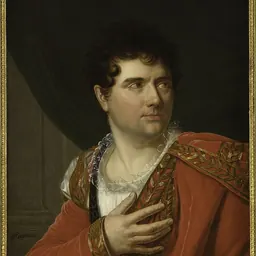
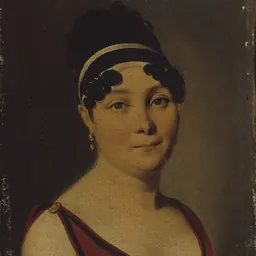



Contemporaries
People whose lives overlapped Stefano Mandini's






Frequently asked questions
Who was Stefano Mandini?
Italian baritone
When was Stefano Mandini born?
Stefano Mandini was born in 1750.
When did Stefano Mandini die?
Stefano Mandini died in 1810.
What was Stefano Mandini's occupation?
Stefano Mandini was an opera singer and singer.
Sources & further reading
Cite this page
APA: Biography.guide. (2026). Stefano Mandini. https://biography.guide/stefano-mandini/
MLA: "Stefano Mandini." Biography.guide, https://biography.guide/stefano-mandini/.
Chicago: "Stefano Mandini." Biography.guide. https://biography.guide/stefano-mandini/.
Data last updated: 2026-09-20 · Spot an error? Report a correction.
Page generated 2026-09-27 05:20 UTC