
About Domenico Cimarosa
Lived 1749 – 1801 (aged 51). Domenico Cimarosa was an Italian composer.
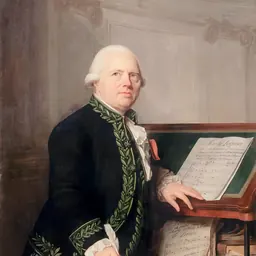
Domenico Cimarosa (; 17 December 1749 – 11 January 1801) was an Italian composer of the Neapolitan School and of the Classical period. He wrote more than eighty operas, the best known of which is Il matrimonio segreto; most of his operas are comedies. He also wrote instrumental works and church music.
Cimarosa was principally based in Naples, but spent some of his career in various other parts of Italy, composing for the opera houses of Rome, Venice, Florence and elsewhere. He was engaged by Catherine the Great of Russia as her court composer and conductor between 1787 and 1791. In his later years, returning to Naples, he backed the losing side in the struggle to overthrow the monarchy there, and was imprisoned and then exiled. He died in Venice at the age of 51.
Life and career Early years Cimarosa was born in Aversa (now in the province of Caserta), a city near Naples. His surname was Cimmarosa, as shown on his baptismal certificate. He was not an only child. A few days after Domenico's birth, his mother moved to Naples, while Gennaro found work as a waiter serving the Filomarino family of Pozzuoli, where he died in 1750, when Domenico was only 11 months old."
.His widow, Anna, was hired as a laundress by the monastic order of the Church of San Severo, and Cimarosa received a good education, including musical training, from the monks and clergy of the church. His teachers were Gennaro Manna and Fedele Fenaroli for composition and Saverio Carcais, the maestro de violino. He was a capable keyboard player, violinist and singer, but composition was his primary concern as a student; in 1770 he, Niccolò Antonio Zingarelli and Giuseppe Giordani were senior students in the composition class. The opera, performed at the Burgtheater on 7 February 1792, was so successful that Leopold had it played again the same evening in his private chambers – "the longest encore in operatic history" as one critic put it. They were performed in Berlin, Copenhagen, Hamburg, London, Prague and Stockholm, as well as Saint Petersburg, Vienna and all the main Italian cities. Between 1783 and 1790 Haydn conducted performances of thirteen Cimarosa operas for his employers at Schloss Esterházy and many of the pieces were given several times.
Three weeks after the premiere of Il matrimonio segreto the emperor Leopold died suddenly. His successor, Francis II, was less interested in music than Leopold had been, and in 1793, Cimarosa returned to Naples. In 1796 he was appointed principal organist of the royal chapel, and he continued to produce new operas and revise older ones. He reworked L'italiana in Londra and I due baroni, adapting them for local taste by adding sections in Neapolitan dialect. The most important new works from this last phase of his career were Le astuzie femminili (1794) and two serious operas, Penelope (1794) and Gli Orazi e i Curiazi (1796); the first two of these were composed for Naples, and the last for La Fenice in Venice.
Works
Although Cimarosa wrote a considerable quantity of instrumental and church music, he was, and remains, best known for his operas.
Cimarosa avoided the rigidity of the traditional da capo aria, and wrote solo numbers consisting of more flexible divisions, with changes of tempo, metre and key to reflect the words of his librettists. Johnson and Lazarevich comment that this freedom of form conveys spontaneity and flexibility. Cimarosa's arias often speed up for the closing section, in the style of cabalettas. Providing contrast to the vocal display pieces, he often wrote quite simple arias in the manner of cavatinas. A feature of his scores is the sustained writing for concerted voices. In the words of the Grove article: One of Cimarosa's strengths was the composition of witty and vivacious ensembles. Il matrimonio segreto, an ensemble opera in the style of Mozart's Le nozze di Figaro, is composed of eight arias, four duets, three trios, a quartet, a quintet and two finales featuring all six characters.
Reputation Johnson and Lazarevich write that Cimarosa's reputation during his lifetime reached a height unsurpassed until Rossini's heyday, and he continued to be highly regarded into the 19th century. Eugène Delacroix preferred Cimarosa's music to Mozart's. He wrote of Il matrimonio segreto, "It is perfection itself. No other musician has this symmetry, this expressiveness and sense of the appropriate, this gaiety and tenderness, and above all … incomparable elegance". Stendhal wrote that Cimarosa, Mozart and Shakespeare were the only passions of his life. To Stendhal, Cimarosa was "the Molière of composers", and he claimed to have seen Il matrimonio segreto more than 100 times.
Hector Berlioz, who hated Italian opera, was not an admirer: "I should throw to the devil the unique and interminable Matrimonio Segreto, which is nearly as tiresome as The Marriage of Figaro without being anything like so musical." Robert Schumann was impressed by Cimarosa's "absolutely masterful" orchestration, but by little else. Eduard Hanslick praised Cimarosa's wonderful facility, masterly compositional strokes and good taste. "Full of sunshine – that is the right expression for Cimarosa's music".
Notes, references and sources
Don’t just read it —
keep it.
Full-length biographies made to live with: read them, listen on the way to work, watch them tonight.
- E-book
- Audio
- Video
Instant download · yours to keep · every purchase keeps this site free
Important facts
People in Domenico Cimarosa's life
Named in this biography and alive at the same time

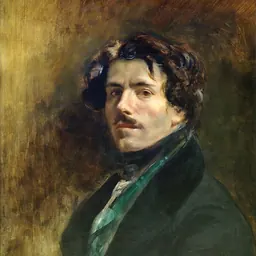


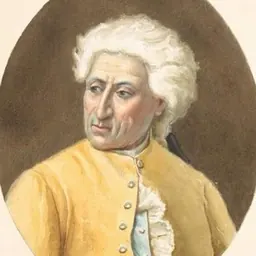

Related people
Same field, nearest in time
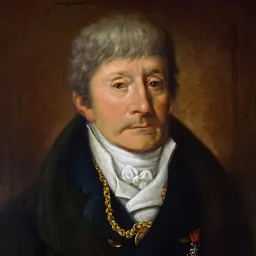
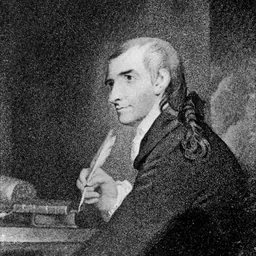


Contemporaries
People whose lives overlapped Domenico Cimarosa's





Frequently asked questions
Who was Domenico Cimarosa?
Italian opera composer of the Neapolitan school (1749–1801)
When was Domenico Cimarosa born?
Domenico Cimarosa was born on 17 December 1749 in Aversa.
When did Domenico Cimarosa die?
Domenico Cimarosa died on 11 January 1801 in Venice.
What was Domenico Cimarosa's occupation?
Domenico Cimarosa was a composer.
What nationality was Domenico Cimarosa?
Domenico Cimarosa was Italian.
Sources & further reading
· Wikipedia: Domenico Cimarosa
Cite this page
APA: Biography.guide. (2026). Domenico Cimarosa. https://biography.guide/domenico-cimarosa/
MLA: "Domenico Cimarosa." Biography.guide, https://biography.guide/domenico-cimarosa/.
Chicago: "Domenico Cimarosa." Biography.guide. https://biography.guide/domenico-cimarosa/.
Data last updated: 2026-09-20 · Spot an error? Report a correction.
Page generated 2026-09-27 05:30 UTC