
About Stefan Hanka-Kulesza
Lived 1892 – 1964 (aged 71). Stefan Hanka-Kulesza was a Polish and Austrian military officer, military personnel and engineer.
Seven Lancers of Belina in 1914, on the porch of a manor in Goszyce; Stefan Kulesza is lying down. Standing from left: , codenamed Bończa, Stanisław Skotnicki, codenamed Grzmot, Janusz Głuchowski, codenamed Janusz, and , codenamed Zdzisław. Above them: , codenamed Kmicic, and the patrol commander, Władysław Prażmowski, codenamed Belina alt=Photograph of a group of men in uniforms posing on a porch. See caption for details.
Stefan Hanka-Kulesza, also known as Kulesza-Hanka, born Stefan Kulesza until 1937 (30 August 1892, Holendernia, near Włodawa – 5 June 1964, London), was a Polish independence activist, engineer, and colonel in the cavalry of the Polish Armed Forces. He was a recipient of the Order of Virtuti Militari for his service between 1914 and 1921.
While studying engineering at the Ghent University, he joined the and the Riflemen's Association. At the outbreak of World War I, he was in Kraków attending an officer training course and joined the Seven Lancers of Belina, the first Polish military unit to cross the border from the Austrian Partition into the Russian Partition. He later served in the 1st Uhlans Regiment of Polish Legions, becoming a second lieutenant and deputy squadron commander. Following the Oath crisis in 1917, he was arrested and interned in Beniaminów.
In November 1918, he joined the Polish Army as a major. During the Polish–Soviet War, he commanded the newly formed 3rd Mazovian Chevau-léger Regiment. He distinguished himself in combat, particularly during the Battle of Warsaw, where he was severely wounded leading a bayonet charge on 17 August. In the interwar period, he commanded the 3rd Chevau-léger Regiment but was removed in 1930 due to irregularities. He later led the 17th Cavalry Brigade and, from August 1939, the Kresowa Cavalry Brigade. During the Invasion of Poland, he was relieved of command early in the campaign but later led the improvised Dubno Group, fighting Ukrainian insurgents, the Red Army, and the Wehrmacht. He surrendered on 25 September 1939 and spent the rest of the war in a prisoner-of-war camp. After the war, he lived in exile in London.
Biography Stefan Hanka-Kulesza was born on 30 August 1892 at the Holendernia estate near Włodawa, in the Russian Partition. His father, Józef Kulesza, was the estate owner, and his mother was Leokadia, née Pytkowska. On the night of 1–2 August, this seven-man unit became the first Polish military group to cross the border from the Austrian Partition into the Russian Partition at Kocmyrzów. The patrol conducted reconnaissance through Goszyce, Działoszyce, Jędrzejów, and Słomniki, returning to the manor in Goszyce. From 6 February to 4 April 1917, he commanded a cavalry non-commissioned officer course for the 1st Uhlans Regiment in Ostrołęka. In April 1917, he became deputy commander of the 5th Squadron, training new recruits. Following the Oath crisis on 15 July 1917, he was arrested and interned in Beniaminów.
In July 1920, during the urgent mobilization following the retreat from Ukraine, his squadron formed a heavy machine gun unit for the newly establish 3rd Mazovian Chevau-léger Regiment. The 28-year-old Major Hanka-Kulesza was appointed the regiment's first commander and led it to the front of the Polish–Soviet War. During the Battle of Warsaw, after the loss of Radzymin, the 201st Regiment protected Jabłonna from the east starting 14 August, engaging in heavy fighting with the Red Army near Nieporęt.
On 17 August, near Baboszewo by Ćwiklin, three dismounted squadrons of the regiment faced an assault by three regiments of the 18th Soviet Rifle Division advancing on Płońsk from Arcelin. After a six-hour battle, despite exhausting their ammunition, Hanka-Kulesza's forces held the line and forced the enemy to retreat. However, he was severely wounded during a bayonet counterattack. – he was evacuated, and Captain Rudolf Dreszer assumed temporary command.
Interwar period After the war and demobilization, Hanka-Kulesza remained commander of his regiment, first in Płock, then in Vawkavysk from autumn 1921, and finally in Suwałki from May 1922. On 3 May 1922, he was verified as a major with seniority from 1 June 1919, ranked 42nd among cavalry officers.
In 1922, his wife, Pelagia Kuleszyna, became the godmother of the 3rd Regiment's banner. and Hanka-Kulesza oversaw reservist training. On 31 March 1924, he was promoted to lieutenant colonel with seniority from 1 July 1923, ranked 8th among cavalry officers. On 1 January 1928, President Ignacy Mościcki promoted him to colonel with seniority from 1 January 1928, ranked 13th in the cavalry corps. On 26 March 1930, he was relieved of command. In the 1930s, his units were repeatedly disqualified during maneuvers, but he received high evaluations from the Sanation leadership. Colonel Jerzy Grobicki, a fellow legionnaire, later suggested that Hanka-Kulesza's fame from the Seven Lancers of Belina in 1914 made him untouchable.
In April 1937, he became deputy commander of the Kresowa Cavalry Brigade in Brody. On 16 September 1937, the Lublin Voivode permitted him to change his surname from "Kulesza" to "Hanka-Kulesza". The brigade complied, disengaging from the enemy and returning to positions near Szadek, resulting in the loss of Warta and several bridges in the area.
For reasons not fully clear, Hanka-Kulesza was relieved of command on 4 September by the Łódź Army commander and reassigned as deputy commander of the brigade. Regardless, after 6 September, he left his unit and traveled to Warsaw, possibly to clarify the situation, following General Rómmel. In Warsaw, he was not reinstated as brigade commander but was sent to Dubno to organize the city's defense. Formed on 12 September, this operational group was tasked with defending the city and the Ikva river line against a potential Wehrmacht advance into Volhynia. After the Soviet invasion on 17 September, the group abandoned Dubno without a fight and moved south, aiming to join General Kazimierz Sosnkowski's Southern Front forces operating near Lviv. Along the way, it absorbed rear units and scattered soldiers from broken formations, engaging in skirmishes with Ukrainian insurgents and Soviet advance patrols.
On 21 September, the Dubno Group won a skirmish at Kamianka-Buzka against the German 4th Light Division. Due to changing front conditions, Hanka-Kulesza ordered his forces to break through to Hungary. He then decided to attack Rava-Ruska with all available forces, expecting a strong German garrison. Due to the overextension of his units, the Dubno Group joined the battle of Rava-Ruska throughout 24 September. After a day-long, exhausting fight against the 2nd Panzer Division, his forces inflicted significant losses but failed to break through, with some units panicking and disintegrating. At a nighttime commanders' meeting, Hanka-Kulesza deemed further breakthrough attempts impossible and ordered surrender. Terms were agreed upon on the morning of 25 September 1939 with the 2nd Panzer Division's staff, and by 10:30 AM, Polish soldiers began laying down arms. Over 2,000 soldiers and officers were taken into German captivity. The Bellona Publishing House's guide Boje polskie describes his command in this battle as "inept". However, Paweł Wieczorkiewicz notes that Hanka-Kulesza "wrote a fine page in the final stage of the campaign" and "recorded a notable episode in the fight against the Soviets".
He was captured by the Germans and spent the remainder of the war in Oflag VII-A Murnau. After the war, he settled in Paris, then moved to London, where he established a business and lived until his death on 5 June 1964. He is buried at North Sheen Cemetery in southwest London.
Don’t just read it —
keep it.
Full-length biographies made to live with: read them, listen on the way to work, watch them tonight.
- E-book
- Audio
- Video
Instant download · yours to keep · every purchase keeps this site free
Important facts
People in Stefan Hanka-Kulesza's life
Named in this biography and alive at the same time


Related people
Same field, nearest in time


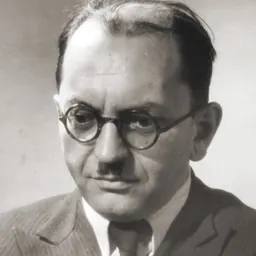
Contemporaries
People whose lives overlapped Stefan Hanka-Kulesza's
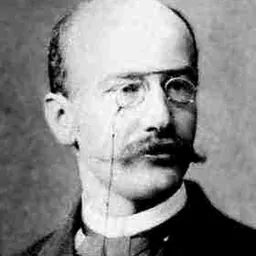
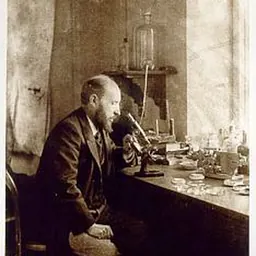

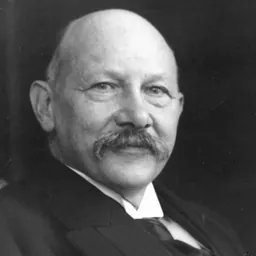
Frequently asked questions
Who was Stefan Hanka-Kulesza?
Polish officer (1892-1964)
When was Stefan Hanka-Kulesza born?
Stefan Hanka-Kulesza was born on 30 August 1892 in Holendernia.
When did Stefan Hanka-Kulesza die?
Stefan Hanka-Kulesza died on 5 June 1964 in London.
What was Stefan Hanka-Kulesza's occupation?
Stefan Hanka-Kulesza was a military officer, military personnel and engineer.
What nationality was Stefan Hanka-Kulesza?
Stefan Hanka-Kulesza was Polish and Austrian.
Sources & further reading
· Wikipedia: Stefan Hanka-Kulesza
· DBpedia: Stefan Hanka-Kulesza
Cite this page
APA: Biography.guide. (2026). Stefan Hanka-Kulesza. https://biography.guide/stefan-hanka-kulesza/
MLA: "Stefan Hanka-Kulesza." Biography.guide, https://biography.guide/stefan-hanka-kulesza/.
Chicago: "Stefan Hanka-Kulesza." Biography.guide. https://biography.guide/stefan-hanka-kulesza/.
Data last updated: 2026-09-20 · Spot an error? Report a correction.
Page generated 2026-09-27 05:19 UTC