
About Stasys Raštikis
Lived 1896 – 1985 (aged 88). Stasys Raštikis was a Russian and Lithuanian journalist, politician, military officer and university teacher.
Stasys Raštikis (September 13, 1896 – May 3, 1985) was a Lithuanian military officer, ultimately obtaining the rank of divisional general. He was the commander of the Lithuanian Army from September 21, 1934, to April 23, 1940.
During World War I, he served in the Imperial Russian Army mostly in the Caucasus Campaign. After return to Lithuania in 1918, he joined the newly formed Lithuanian Army and fought in the Lithuanian–Soviet War. He was severely injured and spent 20 months in Soviet captivity. He returned to the 5th Infantry Regiment and later joined the Intelligence Department of the General Staff. The coup d'état of December 1926 brought his future wife's uncle, Antanas Smetona, to power, which propelled his career. Raštikis completed military education in Germany and, after the failed military coup in 1934, became Chief of the General Staff and Commander of the Armed Forces. He undertook an extensive military reform to standardize, streamline, and modernize the army during the period of increasing militarization and rising tensions in Europe. He placed particular attention on soldiers' and officers' education, organizing and personally commanding various military exercises.
Raštikis attempted to distance himself and the army from politics and did not support the ruling Lithuanian Nationalist Union. After the Polish ultimatum of March 1938, Raštikis became Minister of Defense and was increasingly drawn into the political arena. He was a negotiator of the Soviet–Lithuanian Mutual Assistance Treaty by which Lithuania regained a portion of the Vilnius Region but virtually sacrificed its independence. A conflict with Prime Minister Antanas Merkys led to Raštikis' resignation in April 1940. When the Soviet Union presented its ultimatum in June 1940, he was briefly considered for prime minister in the new pro-Soviet People's Government. Fearing arrest by the NKVD, Raštikis escaped to Nazi Germany.
Raštikis returned to Lithuania when Germany invaded the Soviet Union in June 1941. He was named Minister of Defense in the short-lived Provisional Government of Lithuania. However, it soon became clear that the Germans would not allow Lithuanian autonomy, and Raštikis obtained a job organizing army archives at the Lithuanian War Museum. Toward the end of the war, he retreated to Germany and emigrated to the United States in 1949. He taught Russian and Lithuanian languages at the Defense Language Institute in Monterey, California. Raštikis published a four-volume memoir.
Biography Active military duty Raštikis was born in Kuršėnai, but his family soon moved to Dūkštas where his father worked as a sacristan. Raštikis attended primary school in Dūkštas and then a progymnasium in Zarasai. In summer 1915, the regiment withstood about ten days of German attacks along Merkys but then began retreating east towards Berezina River. Raštikis completed training courses with the 10th Army, was promoted to non-commissioned officer, and was sent for further studies to Tbilisi. After graduation, he was promoted to the rank of praporshchik and spent the remainder of the war in the Caucasus campaign with the 279th Infantry Regiment. The battalion was sent to the front near Žiežmariai and Žasliai on March 31, 1919. On August 28, during the final attacks towards Turmantas, Raštikis was shot in the shoulder and leg in the present-day Latvia. He was taken prisoner by the Red Army and spent 20 months in captivity. He was transported to hospitals in Daugavpils and Rybinsk, later to prison camps in Tula and Lubyanka prison in Moscow. He broke the same leg that was injured in 1919 – it continued to bother him for the rest of his life – and spent time recovering in a hospital. but his involvement is not mentioned in his extensive memoirs or known from other documents. While working, he attended an evening school and obtained a high school diploma. In 1925, he enrolled in the Kaunas University.
During the coup d'état of December 1926, Raštikis was promoted from the director of the Polish Section to the director of the entire Intelligence Department by Povilas Plechavičius. In June 1929, he married Elena Marija, niece of Antanas Smetona, President of Lithuania. The wedding took place at the St. Michael the Archangel Church, Kaunas and was officiated by Vladas Mironas. This family connection proved instrumental in his future career. From early 1930 to June 1932, Raštikis attended the officer's courses of the General Staff of Reichswehr . At the same time he lectured at the Higher Officers' Courses (including a course on military history) and contributed to military press becoming a member of the editorial board of Karys, the magazine of the Lithuanian military. In early 1934, mutinous moods spread in the military and commanding officers were reshuffled in an attempt to forestall further disturbances. Raštikis became the commander of the 3rd Infantry Division stationed in Šiauliai. On June 7, 1934, General Petras Kubiliūnas, commander of the General Staff, and other members of the Iron Wolf organization attempted a coup d'état against President Smetona. At the same time, , the new Chief of the General Staff, was ill and resigned in September 1934. A new position of the Commander of the Armed Forces was established and Raštikis took the role effective January 1, 1935. One of the goals of the new structure was to make the General Staff less politically involved hoping that it would make the command more stable: there were 20 commanders of the General Staff before Raštikis and the army lagged behind the newest developments. The reforms were opposed by Juozas Tūbelis, Minister of Finance, as they required significant additional funding to the army that already consumed about 18–19% of the Lithuanian budget. But President Smetona approved the reforms, except for the proposed military alliance with Latvia and Estonia, and they proceeded.
Raštikis first undertook the issue of military education. Numerous new statutes were prepared (some 90 statutes were issued in 1935–40) and the education program was revamped to standardize and coordinate activities of the various branches of the armed forces (artillery, infantry, aviation, etc.) Raštikis personally commanded mandatory military exercises and simulations. (The martial law was lifted in November 1938 due to German pressure in the months before the ultimatum of March 1939.) The army also acquired new equipment, including light tanks (including 36 Carden Loyd tankettes) and anti-tank and anti-aircraft artillery (including 9 Vickers Model 1931 and 151 Oerlikon 20 mm cannons). The Lithuanian Riflemen's Union was restructured so that it fell more easily at the disposal of the Commander of the Armed Forces. Great efforts were made to reduce the time for mobilization from 8–10 days to less than 48 hours, and to develop comprehensive defense plans code-named L (against Poland) and V (against Germany).
Foray into politics
Raštikis had a tenuous relationship with the Lithuanian Nationalist Union, the ruling political party in Lithuania. In particular, the Union wanted to turn the Lithuanian Riflemen's Union into the party organ by merging it with Young Lithuania, party's youth organization,
In March 1938, when Poland presented an ultimatum, Raštikis spoke decisively for its acceptance and against armed resistance. In February 1939, during the celebration of the 20th anniversary of Estonia's independence, Raštikis visited Johan Laidoner, commander of the Estonian Army, and inspected several Estonian military installations. On his way back, he stopped in Latvia and met with Jānis Balodis and Krišjānis Berķis.
Start of World War II and resignation
World War II started on September 1, 1939, with the Invasion of Poland. Lithuania declared strict neutrality but, as the war was approaching its borders, it declared and executed partial mobilization on September 17. Raštikis was a member of the Lithuanian delegation to Moscow, but he did not lead the Lithuanian troops who entered Vilnius for the first time since 1920 on October 28. It was the first public sign that Raštikis was losing favor with Smetona's regime. In addition to being prime minister, Merkys wanted to become minister of defense (a position he already held in 1919 and 1927), but Raštikis protested and Musteikis retained his post. However, fearing public backlash, he was officially given a three-month vacation for "health reasons". In his duties, Raštikis was replaced not by his deputy divisional general Stasys Pundzevičius, but by Vincas Vitkauskas who had no higher military education. After the vacation, Raštikis resigned and refused any other military positions. On April 23, 1940, Smetona promoted him to divisional general and accepted the resignation.
Soviet and Nazi occupations
As the Winter War between Finland and Soviet Union concluded by March 1940, Soviet Union began increasing diplomatic pressure on Lithuania. Raštikis was invited back to the military, but he agreed only to take the position of director of the Higher War School of Kaunas on June 7. A week later he was called to the emergency government meeting discussing the Soviet ultimatum. He opined that mounting military resistance when Soviet troops were already in the country was impossible. In accordance with the Soviet demand of a new more pro-Soviet government (which became known as the People's Government of Lithuania), Raštikis was slated to become the new prime minister, but he was not acceptable to Moscow and the selection of another candidate was supervised by Molotov's deputy Vladimir Dekanozov.
Lithuania lost its independence and was gradually converted into a soviet socialist republic. Concurrently, the Lithuanian army was gradually transformed into units of the Red Army. The work at the military academy ceased when men were called back to their units, but Raštikis was not allowed to resign. On February 13, 1941, fearing an arrest by NKVD as an "enemy of the people", Raštikis left his wife and three young daughters in Kaunas and departed towards Germany. It was the last time he saw his daughters who were deported to Siberia in June. He crossed the border during the night of March 19 and was well received by the Germans. With the help of various Lithuanians, he settled in Berlin.
On June 22, 1941, Germany invaded the Soviet Union. At the same time, Lithuanians organized an anti-Soviet uprising and organized the Provisional Government of Lithuania in hopes of reestablishing independent Lithuania. Raštikis was named as the minister of defense. Together with , an officer with Ausland-SD, Raštikis flew to Kaunas on June 27. According to Raštikis memoirs, he, as a member of the Provisional Government, approached the Kaunas War Field Commandant General Oswald Pohl and the Military Command Representative General Karl von Roques in an attempt to help the Jews, however they replied that the Gestapo was handling these issues and that the German military could not help. The government was not recognized by the Germans and was gradually deprived of any meaningful authority and self-disbanded on August 5. Raštikis was offered a position as General Counsel in the Reichskommissariat Ostland but refused (the position was taken by Petras Kubiliūnas).
Raštikis was left without a job. With the help of General Vladas Nagevičius, he got a job at the Lithuanian War Museum and began organizing army archives. Once it became clear that the conference was meant only to rubber-stamp German directives, Raštikis and the rest of the committee resigned.
Refugee and immigrant to United States In summer 1944, the Eastern Front was closing in on Lithuania and Raštikis and his wife retreated to Regensburg in Germany. He worked at a factory and his wife worked as a nurse. He later got a job at an office of an electrical company until the city fell into the American occupation zone. In May 1946, Raštikis and other Lithuanians were moved to a displaced persons camp in Scheinfeld.
Upon his return to the United States, Raštikis moved to Monterey, California, and joined the Defense Language Institute as an instructor of Russian and Lithuanian. Monterey was far from centers of Lithuanian culture and Raštikis became a lot less active in Lithuanian cultural life. He concentrated on writing his memoirs. He retired in 1968 and died of myocardial infarction in 1985. They had three daughters: Laima, Meilutė Marija, and Aldona. When Raštikis escaped to Germany in February 1941, he left his family behind. She was imprisoned in Kaunas Prison and awaited deportation to a gulag in Kazakhstan but was freed during the uprising of June 1941. Other family members were deported as well, including two brothers of Smetonaitė The youngest daughter Aldona and her grandfather died in exile.
Published works Raštikis contributed about 1,000 articles to various Lithuanian newspapers and magazines He wrote five military textbooks. Kovose dėl Lietuvos (In the Struggles for Lithuania; two volumes; Los Angeles, 1956 and 1957; Vilnius, 1990) Įvykiai ir žmonės (Events and People; Chicago, 1972; Vilnius, 1996) Lietuvos likimo keliais (On the Paths of Lithuania's Fate; Chicago, 1982; Vilnius, 1996)
Selected awards Lithuanian awards Order of the Cross for the Homeland (December 1919) Order of the Cross of Vytis (August 1921) Order of Vytautas the Great Swedish Order of Vasa, 3rd Class (Commander) (1934) Polish Order of Polonia Restituta, 1st degree
Don’t just read it —
keep it.
Full-length biographies made to live with: read them, listen on the way to work, watch them tonight.
- E-book
- Audio
- Video
Instant download · yours to keep · every purchase keeps this site free
Important facts
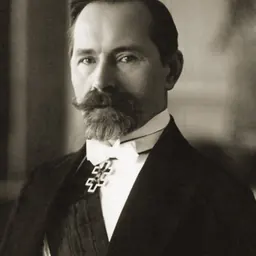
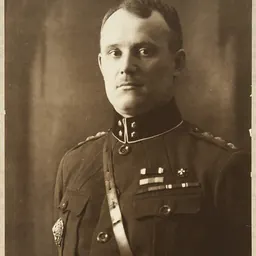
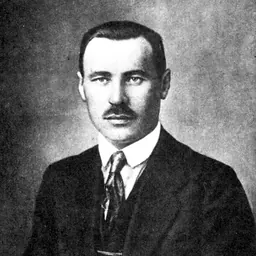
People in Stasys Raštikis's life
Named in this biography and alive at the same time




Related people
Same field, nearest in time



Contemporaries
People whose lives overlapped Stasys Raštikis's



Frequently asked questions
Who was Stasys Raštikis?
General of the Lithuanian Army (1896–1985)
When was Stasys Raštikis born?
Stasys Raštikis was born on 13 September 1896 in Kuršėnai.
When did Stasys Raštikis die?
Stasys Raštikis died on 3 May 1985 in Los Angeles.
What was Stasys Raštikis's occupation?
Stasys Raštikis was a journalist, politician, military officer and university teacher.
What nationality was Stasys Raštikis?
Stasys Raštikis was Russian and Lithuanian.
Sources & further reading
Cite this page
APA: Biography.guide. (2026). Stasys Raštikis. https://biography.guide/stasys-rastikis/
MLA: "Stasys Raštikis." Biography.guide, https://biography.guide/stasys-rastikis/.
Chicago: "Stasys Raštikis." Biography.guide. https://biography.guide/stasys-rastikis/.
Data last updated: 2026-09-20 · Spot an error? Report a correction.
Page generated 2026-09-27 05:26 UTC