
About Vincas Vitkauskas
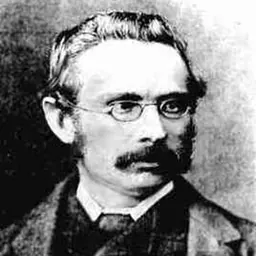
Lived 1890 – 1965 (aged 74). Vincas Vitkauskas was a Russian and Lithuanian politician.
Interwar Lithuania Stalling career Despite success in the field and evaluation as a capable officer, Vitkauskas was demoted to commander of a company of the 7th Infantry Regiment on 2 August 1921. Minister of Defence Konstantinas Žukas thought that Vitkauskas was a Bolshevik sympathizer. However, on 6 September, he was transferred to the staff of the Lithuanian Military Brigade , At the time, the brigade was commanded by Antanas Merkys, a friend from the Romanian Front, In April, he was called to become commandant of Klaipėda. This position was also Merkys' doing – he was a secretary to Antanas Smetona, the Commissioner of the Klaipėda Region. A month later he was promoted to major.
When the office of the commandant of Klaipėda was liquidated in November 1923, he was reassigned to the 3rd military district as commander of the 1st general staff. Concurrently, from January to September 1924, he was the commander of the staff of the 3rd Infantry Division. In February 1925, he was temporarily assigned as the commander of the 9th Infantry Regiment, stationed in Marijampolė. After the May 1926 elections to the Third Seimas, Christian Democrats lost their majority and Vitkauskas' command was made permanent and he was awarded the Order of the Cross of Vytis (2nd type, 1st class). When he did not report on time, rumors started spreading about his political leanings reviving old suspicions of his socialist sympathies. The new government did not trust Vitkauskas and started gathering intelligence on him. The armed forces were reorganized by Stasys Raštikis and Vitkauskas once again became the inspector of the infantry in August 1935. He continued to improve his military knowledge by inspecting German proving grounds and observing their military exercises, learning about anti-aircraft defense in Switzerland, and touring infantry schools and shooting rages in the Soviet Union. In 1938, Vitkauskas was elected chairman of the officers' club (Karininkų ramovė).
Vitkauskas was appointed as the commander of the 1st Division on 4 April 1939 and promoted to divisional general in June. He had no formal military education, but Stasys Raštikis, commander of the army, valued his hard work, initiative, and dedication. In September 1939, after the Invasion of Poland, the Lithuanian Army was mobilized and Vitkauskas was commended for the smooth mobilization of his division and effective guard of the Lithuanian borders between Neris river and Latvia. In October, Lithuania gained a portion of the Vilnius Region according to the Soviet–Lithuanian Mutual Assistance Treaty. On 28 October, the Lithuanian Army entered Vilnius, which was fiercely contested between Poland and Lithuania, for the first time since 1920. The troops were commanded not by Raštikis but by Vitkauskas – the first public sign that Raštikis was losing favor with the Smetona's regime. This high-profile appointment was also linked with Merkys, who was appointed the Lithuanian representative to the region.
On 17 November 1939, Merkys became Prime Minister and offered Ministry of Defence to Vitkauskas, but he refused. Merkys' relationship with Raštikis was poor and Raštikis was forced into a three-month vacation for "health reasons" on 22 January 1940. It was a surprising appointment as he gained prominence only after the takeover of Vilnius, but he was described as a non-political candidate which was important to Smetona. Delayed by the Winter War with Finland, Soviet Union began heightening tensions in late spring 1940 just as Nazi Germany was winning the Battle of France. Though the Lithuanian government and army had several months to plan for a contingency, the reaction was sluggish and no decisive steps were taken. The military developed a defensive plan against Russia (known as Plan R), but it was just a slightly modified Plan L for defense against Poland.
Before midnight on 14 June 1940, Soviet Union issued an ultimatum to Lithuania. The Lithuanian government, given less than 12 hours to respond, held an emergency meeting that night. Vitkauskas, as commander of the army, opposed calls for armed resistance. The government voted to accept the ultimatum and Lithuania lost its independence. Vitkauskas departed to station on the Libau–Romny Railway to meet the new Soviet contingents. Two days later, as directed by Soviet envoy Vladimir Dekanozov, a new government led by Prime Minister Justas Paleckis was formed. It became known as the People's Government. Vitkauskas continued his role as Minister of Defense. Merkys no longer had any role in the government and attempted to escape to Sweden a month later.
Soviet officials began rapid Sovietization of Lithuania and its military. Already in July, the purge of the army started – Lithuanian officers were dismissed and replaced by more communist-leaning personnel, more vocal opponents of the Soviet regime were arrested. On 2 July 1940, People's Government issued order to reorganize the Army into the People's Army. This, among other things, introduced political commissars and a propaganda section. On 11 July, even before the elections to the People's Seimas, Soviet Commissar of Defense Semyon Timoshenko announced the creation of the Baltic Military District.
On 14–15 July, Vitkauskas was elected in the show election to the People's Seimas. Vitkauskas was elected a member of the 20-member delegation to present the petition to the Supreme Soviet of the Soviet Union, which was approved on 3 August. Vitkauskas, together with Justas Paleckis, Icikas Meskupas-Adomas, and Antanas Sniečkus, was personally received by Joseph Stalin on 9 August.
On 17 August, it was officially declared that the Lithuanian People's Army was to be liquidated and reorganized into the 29th Rifle Corps of the Red Army. On 27 August, two days after the adoption of the new constitution copied from the 1936 Soviet Constitution, the order to liquidate the Ministry of Defense was given. The process of liquidating the Lithuanian Army continued until December 1940. According to data provided by Raštikis, during that time, about 15% of lower and 30% of higher officers as well as almost 50% of the generals were purged. On 23 February 1941, Vitkauskas swore allegiance to the Red Army. Two explanations are given – as a preparation for the German invasion or a precaution against a possible mutiny due to the June deportation. According to Vitkaukas' wife, the orders to depart to Moscow were urgent and Vitkauskas was placed under armed guard at the railway station. After the completion of the courses in December 1941, he taught tactics of the great military formations. He was a member of the Supreme Soviet of the Soviet Union from 1941 to 1954. He became a member of the Communist Party of the Soviet Union in 1950 and was a member of the Supreme Soviet of the Lithuanian SSR from 1955 to 1963. Vitkauskas contributed articles, mostly memoirs and commentary on current events, to communist press, including Tiesa and Kauno tiesa. He wrote several poems for children, which were published in 1927, 1965, and 1980. He also translated plays by Alexander Ostrovsky (including The Storm published in 1948) and short stories by Aleksey Nikolayevich Tolstoy (first published in 1949). He died in 1965 and was buried in the Petrašiūnai Cemetery.
Evaluation Vitkauskas is a controversial figure in the history of Lithuania. On one hand, he loyally served in the Lithuanian Army for over two decades (1919–1940). On the other hand, he actively collaborated with the Soviet regime that arrested and executed many Lithuanian officers. Opinions range widely: from a traitor and a sleeper Soviet agent to a desperate man who contemplated suicide (according to Jonas Černius) and mourned the loss of independence (according to his daughter). Historians further point out that Vitkauskas destroyed most sensitive and damning military archives before turning them to the Soviets. An objective evaluation is not possible due to lack of archival data (most relevant archives are kept in Russia). Order of the Cross of Vytis (1920 and 1926) Independence Medal (1928) Silver Medal for the Liberation of Klaipėda (1929) Order of Vytautas the Great (1930) Order of the Lithuanian Grand Duke Gediminas (1934) Riflemen's Star by the Lithuanian Riflemen's Union (1938) Order of the Three Stars of Latvia (1938) Order of the Red Star (1945) Order of the Patriotic War (1947) Order of Lenin (1950)
Don’t just read it —
keep it.
Full-length biographies made to live with: read them, listen on the way to work, watch them tonight.
- E-book
- Audio
- Video
Instant download · yours to keep · every purchase keeps this site free
Important facts
People in Vincas Vitkauskas's life
Named in this biography and alive at the same time



Related people
Same field, nearest in time




Contemporaries
People whose lives overlapped Vincas Vitkauskas's



Frequently asked questions
Who was Vincas Vitkauskas?
politician (1890-1965)
When was Vincas Vitkauskas born?
Vincas Vitkauskas was born on 4 October 1890 in Užbaliai.
When did Vincas Vitkauskas die?
Vincas Vitkauskas died on 3 March 1965 in Kaunas.
What was Vincas Vitkauskas's occupation?
Vincas Vitkauskas was a politician.
What nationality was Vincas Vitkauskas?
Vincas Vitkauskas was Russian and Lithuanian.
Sources & further reading
· Wikipedia: Vincas Vitkauskas
Cite this page
APA: Biography.guide. (2026). Vincas Vitkauskas. https://biography.guide/vincas-vitkauskas/
MLA: "Vincas Vitkauskas." Biography.guide, https://biography.guide/vincas-vitkauskas/.
Chicago: "Vincas Vitkauskas." Biography.guide. https://biography.guide/vincas-vitkauskas/.
Data last updated: 2026-09-20 · Spot an error? Report a correction.
Page generated 2026-09-27 05:22 UTC