
About Stanley Tennenbaum
Lived 1927 – 2005 (aged 78). Stanley Tennenbaum was an American mathematician.
Stanley Tennenbaum (1927/28 – May 4, 2005) was an American mathematical logician. Though best remembered for Tennenbaum's theorem, despite having never published a proof of it, Tennenbaum had also studied Suslin's problem and computably enumerable sets.
Over his academic career in the 1960s and 1970s, he switched between several U.S. institutions; namely, in order, the University of Michigan, the University of Pennsylvania, the University of Rochester, the Institute for Advanced Study, and New Mexico State University.
Biography
Early life and education (1927–1956) Tennenbaum grew up in Cincinnati, Ohio. he received his PhD from the same university in 1956. He also spent a few months as one of the counselors for "Bettelheim's Orthogenic School", a school, also located in the city of Chicago, Illinois, which served autistic and schizophrenic children. As of 1961, he had a research scholarship from the University of Michigan Department of Mathematics. Later on, he became a visiting professor of philosophy at the University of Pennsylvania as of 1964. He then went on to teach at the University of Rochester,
Around the spring of 1991, Tennenbaum had showed up at the University of Illinois Chicago campus while Bill Howard, one of Tennenbaum's friends, had been teaching a class titled "Finite Math for Business Students", during which some students left and one had dropped a bottle. After the class, Tennenbaum told Howard that the class was bad for the latter's mental health. Namely, if two red squares of minimal integer sidelength could equal a larger white square of integer sidelength, by putting both red squares inside the white square and double counting, the doubly counted part (a square) must be equal in area to the uncounted part (two even smaller squares). This contradicts the minimality assumption. Although Tennenbaum himself never gave a proof, this theorem would later become known as Tennenbaum's theorem. In the same abstract, Tennenbaum also wrote, without proof, that if a set is representable by a first-order formula in a countable nonstandard model of PA, then the Turing degree of that set is at most the Turing degree of the operations of said model.
In 1963, Tennenbaum proved the relative consistency of the negation of Suslin's hypothesis by applying an early version of forcing; the same result was independently proven by Thomas Jech in 1967 using the method of nabla-models introduced by Petr Vopěnka. He had also had one daughter, Susan.
Don’t just read it —
keep it.
Full-length biographies made to live with: read them, listen on the way to work, watch them tonight.
- E-book
- Audio
- Video
Instant download · yours to keep · every purchase keeps this site free
Important facts
People in Stanley Tennenbaum's life
Named in this biography and alive at the same time
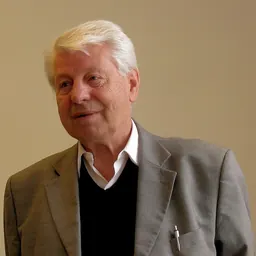


Related people
Same field, nearest in time


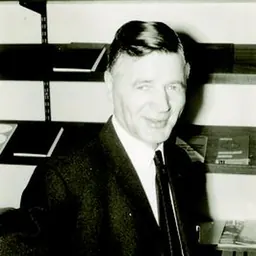
Contemporaries
People whose lives overlapped Stanley Tennenbaum's
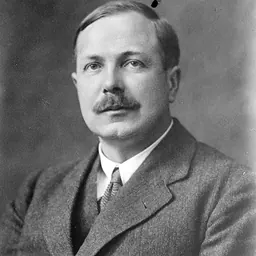
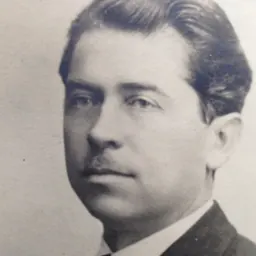


Frequently asked questions
Who was Stanley Tennenbaum?
American mathematician (1927–2005)
When was Stanley Tennenbaum born?
Stanley Tennenbaum was born on 11 April 1927 in Cincinnati.
When did Stanley Tennenbaum die?
Stanley Tennenbaum died on 4 May 2005 in Princeton.
What was Stanley Tennenbaum's occupation?
Stanley Tennenbaum was a mathematician.
What nationality was Stanley Tennenbaum?
Stanley Tennenbaum was American.
Sources & further reading
· Wikipedia: Stanley Tennenbaum
Cite this page
APA: Biography.guide. (2026). Stanley Tennenbaum. https://biography.guide/stanley-tennenbaum/
MLA: "Stanley Tennenbaum." Biography.guide, https://biography.guide/stanley-tennenbaum/.
Chicago: "Stanley Tennenbaum." Biography.guide. https://biography.guide/stanley-tennenbaum/.
Data last updated: 2026-09-20 · Spot an error? Report a correction.
Page generated 2026-09-27 05:00 UTC