
About Stanley Schachter
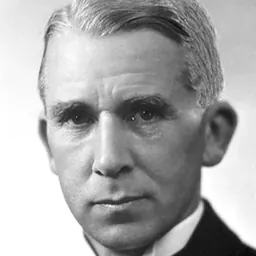
Lived 1922 – 1997 (aged 75). Stanley Schachter was an American psychologist and university teacher.
Stanley Schachter (April 15, 1922 – June 7, 1997) was an American social psychologist best known for his development of the two factor theory of emotion in 1962 along with Jerome E. Singer. In his theory he states that emotions have two ingredients: physiological arousal and a cognitive label. A person's experience of an emotion stems from the mental awareness of the body's physical arousal and the explanation one attaches to this arousal. Schachter also studied and published many works on the subjects of obesity, group dynamics, birth order and smoking. A Review of General Psychology survey, published in 2002, ranked Schachter as the seventh most cited psychologist of the 20th century.
Biographical background
Early life and education Schachter was born in Flushing, New York, the son of Anna (Fruchter) and Nathan Schachter. His parents were both Romanian Jews, his father from Vasilău, a small village in Bukovina, and his mother from Rădăuți. As a young man, Schachter initially studied Art history at Yale University. He obtained his bachelor's degree in 1942, and went on to pursue his Master's in Psychology, also at Yale, where he was influenced by Clark Hull. After earning his Master's in 1944, Schachter joined the United States Armed Forces, where he served until 1946. During his two years in the Armed Forces, Schachter obtained the rank of sergeant. He worked at the Biophysics Division of the Aero-Medical Laboratory of Wright Field in Riverside, Ohio, studying the visual problems experienced by pilots in flight.
In 1946, after his term in the armed forces, Schachter went to the Massachusetts Institute of Technology (MIT) to work with the social psychologist Kurt Lewin, in his Research Center for Group Dynamics, studying social issues. Unfortunately, Lewin died in 1947, very shortly after Schachter's arrival in Cambridge, Massachusetts. A senior doctoral student, Leon Festinger, took over as Schachter's supervisor, and the pair became very close lifelong friends. When Festinger moved to the University of Michigan's Institute for Social Research in 1948, Schachter followed. This was where Schachter gained his Ph.D. in 1949, under supervisor Festinger, writing his dissertation on how individuals with differing opinions who were working in small groups were treated by the members of the group whose opinion matched with the majority. That year, Schachter also won the first of his several General Electric Foundation Awards, which he continued to win each year through 1962.
Birth order, eminence, and higher education (1963) Schachter was also interested in research involving the original ideas of Francis Galton on eminence and birth order. It was believed that those who are more eminent, inventive, productive, or genius are either first-born or the only child within the family. Schachter's research concluded that this data is only a reflection because all previous research involves a college population as the experimental sample. He indicates that college samples for many reasons are overly-populated with family first-borns.
Obesity and eating (1968) Schachter conducted many experiments that tested the internal and external cues of hunger with obese individuals. One experiment described in this publication was in relation to stress. This experiment involved two independent variables; and fullness. To manipulate stress a painful or non-painful shock manipulation was conducted on obese individuals and non-obese individuals. Participants were informed of a secondary study that would be conducted of taste-testing crackers. The dependent variable of the experiment was the amount of crackers consumed. Schachter concluded based on his findings that there are physiological responses (internal cues) that tell you not to eat when stressed. In the study, non-obese people ate less when stressed. This was compared to obese individuals that tend to be less sensitive to these internal cues and more sensitive to external cues such as food advertisements and periods of time dedicated to eating.
Nicotine regulation in heavy and light smokers (1977) Schachter conducted research on the regulation of nicotine intake among different types of smokers. He tested his hypothesis that smokers do indeed regulate their nicotine intake. Results showed that long-term heavy smokers did in fact regulate their nicotine intake by smoking more of low-nicotine cigarettes. Long-term light smokers did not regulate their nicotine intake consistently.
Theories
Theory on emotion Schachter along with Jerome Singer came up with the two-factor theory of emotion. This theory posits that emotion is based on two factors, cognitive labels and physiological arousal. When a person feels an emotion, physiological arousal occurs, and the person searches the environment for clues as to how to label the physiological arousal. They also propose two conditions that can occur when a person is in a state of arousal: when there is an explanation and when the individual does not have an explanation for their arousal. Under the first condition, an individual will use that explanation, and all will be fine. In the second condition, the individual will label their arousal based on external and internal stimuli.
One important piece of this theory is the misattribution of arousal. If the brain is unsure why it feels an emotion it will use external stimuli as clues for labeling the emotion it is feeling.
Theory on obesity Schachter proposed that obese individuals are hypersensitive to external stimuli, both food-related and non-food related. Schachter found that a number of factors lead to differences in responses between obese individuals and normal individuals. Obese individuals will eat more than normal individuals when food is easy to get but will eat less than normal individuals when food is harder to get. An increased amount of visible food correlates with a decrease in the number of sandwiches eaten by normal individuals but an increase in the number eaten by obese individuals. Taste also caused variations in amount consumed. While both groups consumed less of the bad-tasting food than they did the good-tasting food, the obese individuals had a higher difference; they ate more of the good tasting food and less of the bad tasting food than normal individuals.
Publications
Books Schachter, S (1950) With L. Festinger and K. Back. Social Pressures in Informal Groups. New York: Harpers. Schachter, S (1956) With L. Festinger and H. Riecken. When Prophecy Fails. Minneapolis: University of Minnesota Press. Schachter, S (1959) The Psychology of Affiliation. Stanford: Stanford University Press. Schachter, S (1971). Emotion, Obesity and Crime. New York: Academic. Schachter, S & Rodin, J. (1974). Obese Humans and Rats. Hillsdale, NJ.: Erlbaum.
Book chapters Schachter, S. (1964) The interaction of cognitive and physiological determinants of emotional state. In Advances in Experimental Social Psychology, ed. L. Berkowitz, pp. 49–79. New York: Academic Press. Schachter, S. & Latané, B. (1964). Crime, cognition and the autonomic nervous system. In Nebraska Symposium on Motivation, ed. D. Levine, pp. 221–73. Lincoln: University of Nebraska Press. Schachter, S. (1980). Nonpsychological explanations of behavior. In Retrospective on Social Psychology, ed. L. Festinger, pp. 131–57. New York: Oxford University Press.
Papers Schachter, S. (1951) Deviation, rejection and communication.J. Abnorm. Soc. Psychol. 46:190-207. Schachter, S. (1962) With J. Singer. Cognitive, social and physiological determinants of emotional state. Psychol. Rev. 69:379-99. Schachter, S. (1963) Birth order, eminence and higher education. Am. Sociol. Rev. 28:757-68. Schachter, S. (1968). Obesity and eating. Science 161:751-56. Schachter, S. (1971). Some extraordinary facts about obese humans and rats. Am. Psychol. 26:129-44. Schachter, S. (1977). Nicotine regulation in heavy and light smokers. J. Exp. Psychol. 106:5-12. Schachter, S. (1978). Pharmacological and psychological determinants of cigarette smoking. Ann. Intern. Med. 88:104-14. Schachter, S. (1982). Recidivism and self-cure of smoking and obesity. Am. Psychol. 37:436-44. Schachter, S. (1991) With N. J. S. Christenfeld, B. Ravina, and F. R. Bilous. Speech disfluency and the structure of knowledge. J. Pers. Soc. Psychol. 60:362-67.
Don’t just read it —
keep it.
Full-length biographies made to live with: read them, listen on the way to work, watch them tonight.
- E-book
- Audio
- Video
Instant download · yours to keep · every purchase keeps this site free
Important facts
People in Stanley Schachter's life
Named in this biography and alive at the same time

Related people
Same field, nearest in time



Contemporaries
People whose lives overlapped Stanley Schachter's


Frequently asked questions
Who was Stanley Schachter?
American psychologist
When was Stanley Schachter born?
Stanley Schachter was born on 15 April 1922 in Queens.
When did Stanley Schachter die?
Stanley Schachter died on 7 June 1997 in East Hampton.
What was Stanley Schachter's occupation?
Stanley Schachter was a psychologist and university teacher.
What nationality was Stanley Schachter?
Stanley Schachter was American.
Sources & further reading
· Wikipedia: Stanley Schachter
Cite this page
APA: Biography.guide. (2026). Stanley Schachter. https://biography.guide/stanley-schachter/
MLA: "Stanley Schachter." Biography.guide, https://biography.guide/stanley-schachter/.
Chicago: "Stanley Schachter." Biography.guide. https://biography.guide/stanley-schachter/.
Data last updated: 2026-09-20 · Spot an error? Report a correction.
Page generated 2026-09-27 04:57 UTC