
About Stanisław Szczęsny Potocki
Lived 1751 – 1805 (aged 54). Stanisław Szczęsny Potocki was a Polish politician, diplomat, military personnel, voivode and art collector.
Count Stanisław Szczęsny Feliks Potocki (; 1751–1805), of the Piława coat of arms, known as Szczęsny Potocki was a member of the Polish szlachta and a military commander of the forces of the Polish–Lithuanian Commonwealth and then Poland. Knight of the Order of the White Eagle, awarded in August 1775.
He was named Great Chorąży of the Crown in 1774–1780, voivode of Ruthenian Voivodeship in 1782–1791, Great Lieutenant General of the Crown since 1784, General of Artillery of the Crown in 1789–1792, starost bełski, hrubieszowski, sokalski, hajsyński, zwinogrodzki, Marshal of the Targowica Confederation in 1792. He plotted with others against the state, was convicted of treason and sentenced to death in his absence. He died in ignominy.
Biography
Early life He was the son of Franciszek Salezy Potocki, Voivode and Governor of Polish Kyiv, of the Tulczyn line of the family. He entered the public service, and owing to the influence of his relations became grand standard-bearer of the Crown at the age of twenty-two. After the death of Prince August Aleksander Czartoryski in 1782, King Stanisław II Augustus appointed him the Voivode of Ruthenia. In 1784, he purchased the rank of a colonel from bankrupted Voivode of Kyiv, Stempkowski and soon became a lieutenant-general in the Royal Army.
A "Great" nobleman
He was a great magnate, grandly ruling in his vast estates in the eastern parts of the Polish–Lithuanian Commonwealth, known as the Kresy. His annual income was over 3 million zloties.
Family The father of numerous children, one of his daughters, Olga, married Lev Naryshkin.
Time of the Partitions His scheme was to divide Poland into an oligarchy of autonomous grandees exercising supreme power in rotation (in fact a perpetual interregnum). In 1788 he persuaded two other magnates, Franciszek Ksawery Branicki and Severin Rzewuski to join the anti-royalist conspiracy. The election of Stanisław Małachowski and Kazimierz Lew Sapieha as marshals of the Four Years Sejm still further alienated him from the Liberals. After strenuously but vainly opposing every project of reform, he slipped off to Vienna whence he continued an active propaganda against the new proposals.
Protest against the Constitution He opposed the Constitution of 3 May of 1791, and was one of the leaders of the Hetman Party. After attempting fruitlessly to persuade the Leopold II, Holy Roman Emperor to take up arms against the reformers, he proceeded with his co-conspirators to St. Petersburg in March 1792 and, with the connivance of the Empress Catherine II of Russia formed the Targowica Confederation allegedly for the maintenance of the ancient and lax institutions of Poland (14 May 1792), of which he had been marshal, or rather the dictator.
He continued directing the conspiracy from his castle at Tulczyn. When the May Constitution was overthrown and the Prussians were already in occupation of Greater Poland, Potocki (March 1793) went on a diplomatic mission to St. Petersburg. There finding himself duped and set aside, he again went to Vienna until 1797, when he retired to Tulczyn and devoted himself to the improvement of his estates and large wealth for the remainder of his life.
He had been sentenced to death in absentia by the Supreme Criminal Court during the Kościuszko Uprising in 1794. On 17 November 1797 he was made a general of the Russian infantry, but was dismissed on 30 October 1798. He was buried with the ignominy of a "traitor" general.
Quote
After the signing of the Targowica Confederation: "Each true Pole, not blinded by the Prussian and royalist cabal, is convinced, that our Fatherland can only be saved by Russia, otherwise our nation will be enslaved".
After Stanisław August Poniatowski's abdication and the destruction of the Polish-Lithuanian Commonwealth: "About past Poland and Poles [I don't want to talk anymore]. Gone is this country, and this name, as many others have perished in the world's history. I am now a Russian forever."
Don’t just read it —
keep it.
Full-length biographies made to live with: read them, listen on the way to work, watch them tonight.
- E-book
- Audio
- Video
Instant download · yours to keep · every purchase keeps this site free
Important facts
Family & relationships
People in Stanisław Szczęsny Potocki's life
Named in this biography and alive at the same time
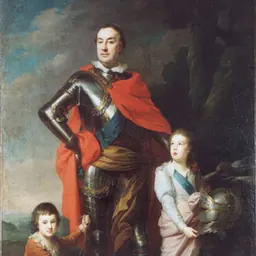
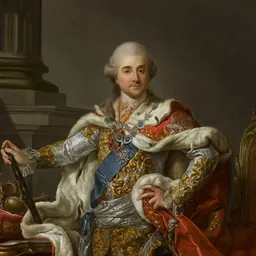

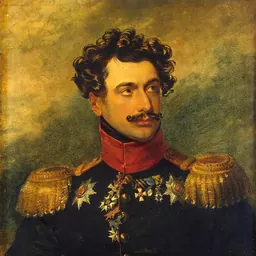
Related people
Same field, nearest in time
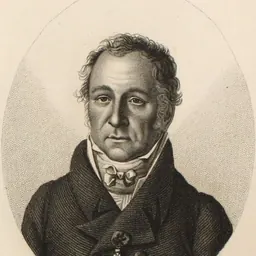



Contemporaries
People whose lives overlapped Stanisław Szczęsny Potocki's





Frequently asked questions
Who was Stanisław Szczęsny Potocki?
Polish general (1751-1805)
When was Stanisław Szczęsny Potocki born?
Stanisław Szczęsny Potocki was born on 20 February 1751 in Sheptytskyi.
When did Stanisław Szczęsny Potocki die?
Stanisław Szczęsny Potocki died on 14 March 1805 in Tulchyn.
What was Stanisław Szczęsny Potocki's occupation?
Stanisław Szczęsny Potocki was a politician, diplomat, military personnel, voivode and art collector.
What nationality was Stanisław Szczęsny Potocki?
Stanisław Szczęsny Potocki was Polish.
Sources & further reading
· Wikipedia: Stanisław Szczęsny Potocki
· DBpedia: Stanisław Szczęsny Potocki
Cite this page
APA: Biography.guide. (2026). Stanisław Szczęsny Potocki. https://biography.guide/stanislaw-szczesny-potocki/
MLA: "Stanisław Szczęsny Potocki." Biography.guide, https://biography.guide/stanislaw-szczesny-potocki/.
Chicago: "Stanisław Szczęsny Potocki." Biography.guide. https://biography.guide/stanislaw-szczesny-potocki/.
Data last updated: 2026-09-27 · Spot an error? Report a correction.
Page generated 2026-09-27 05:16 UTC