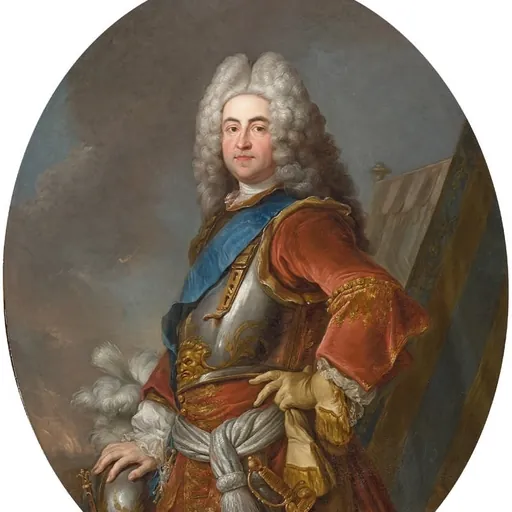
About Stanisław Poniatowski
Lived 1676 – 1762 (aged 85). Stanisław Poniatowski was a Polish diplomat, writer and politician.
Stanisław Poniatowski (15 September 1676 – 29 August 1762) was a Polish military commander, diplomat, and noble. Throughout his career, Poniatowski served in various military offices, and was a general in both the Swedish and Polish–Lithuanian militaries. He also held numerous civil positions, including those of podstoli of Lithuania and Grand Treasurer of the Lithuanian army in 1722, voivode of the Masovian Voivodeship in 1731, regimentarz of the Crown Army in 1728, and castellan of Kraków in 1752. Throughout his lifetime, he served in many starost positions.
Poniatowski was involved in Commonwealth politics, and was a prominent member of the Familia, a faction led by the Czartoryski family. On a number of occasions he was in service of Stanisław I Leszczyński, the principal rival of Augustus II for the throne of Poland. Having served under Leszczyński as a military officer and envoy during the Great Northern War, Poniatowski later embraced the Russian-supported Augustus. Subsequently, during the War of the Polish Succession, he returned, with the majority of the Familia, to his earlier allegiance. He later effected a reconciliation with Augustus III, and eventually became one of the new king's chief advisors.
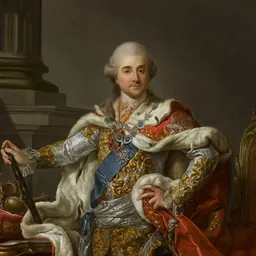
Poniatowski's fifth son, Stanisław August Poniatowski, reigned as the last king of Poland from 1764 until 1795, when he abdicated as a result of the Third Partition of Poland by Russia, Prussia, and Austria. His grandson, Prince Józef Antoni Poniatowski, was a Polish general and later a Marshal of the First French Empire, serving under Napoleon I.
Biography Early life Poniatowski was born on 15 September 1676 in the village of Chojnik, now part of the Lesser Poland Voivodeship.
He received elementary education in Kraków, at either the Kraków Academy or at the Nowodworski School.
In 1708, Leszczyński appointed Poniatowski his personal representative to Charles XII. He participated in the Battle of Holowczyn that year, and served as an aide to Charles XII during his exile in the Ottoman Empire after the Battle of Poltava in 1709. Here, he worked to establish an alliance between the Ottomans and the Swedes, aiming to bring the Ottomans into the war against Russia.
Poniatowski did not return to Poland, as Lesczyński had been forced to retreat to Swedish Pomerania upon the return of Augustus in 1709. With the support of Russian forces, Augustus had forced Lesczyński from the throne and had retaken the crown in that year. Instead, Poniatowski entered the service of Sweden, serving as a diplomat for both Charles XII and Lesczyński. He was later involved in mediation attempts between Lesczyński and Augustus, and also joined the Swedish army in various campaigns, being wounded during one in Norway in 1716. During the course of his diplomatic activities, he traveled throughout Europe, including to such countries as Prussia, France, and Spain. For his service to Charles XII, he received the position of the governor of Palatine Zweibrücken, then in personal union with Sweden. In 1726 he became the Knight of the Order of the White Eagle. Eventually, however, he decided to grant Leszczyński his full support, doing so during the convocation sejm of 1733. Over the next few years, throughout the 1740s, he and familiar supported plans for reform and strengthening the Commonwealth, however most of them have failed due to liberum veto disrupting the Sejm proceedings. Those failures likely resulted in his apathy, and he became much less active on the political scene in the 1750s. On 6 June 1752 he received the office of castellan of Kraków. His older brother Józef Poniatowski (1674after 1731) was a generał wojsk koronnych and married Helena Otfinowska, without issue. His younger siblings were Michał Jacenty Poniatowski, a Dominican, and , a Carmelitan Abbess in Kraków. He married firstly shortly after 1701 and divorced Teresa Woynianka-Jasieniecka, who died after 1710, without issue, and secondly Princess Konstancja Czartoryska on 14 September 1720. They had eight children.
He was the father of: Kazimierz Poniatowski (15 September 1721 – 13 April 1800), podkomorzy wielki koronny between 1742 and 1773 and generał wojsk koronnych, who was created a Prince on 4 December 1764 and married on 21 January 1751 Apolonia Ustrzycka (17 January 1736–1814) and had issue (1723 – 1749/1759), canon and provost in the Cathedral of Kraków (kanonik i proboszcz katedralny krakowski), chancellor of Gniezno in 1748 (1725 – killed in action on 29 June 1744), adiutant of Karl von Lothringen Ludwika Maria Poniatowska (30 November 1728 – 10 February 1781), who married in 1745 Jan Jakub Zamoyski (? - 10 February 1790), wojewoda podolski in 1770, IX ordynat till in 1780 and starosta lubelski, and had female issue (Urszula Zamoyska (c. 1750–1808), who married firstly and divorced before 1781 Wincenty Potocki (? - 1825), podkomorzy wielki koronny, and married secondly Michal Jerzy Mniszech, marszalek wielki koronny) Izabella Poniatowska, (1 July 1730 – 14 February 1808) was a Polish noblewoman, countess and princess. She was a sister of Stanisław Antoni Poniatowski, who in 1764 became King of Poland and Grand Duke of Lithuania, and reigned as Stanisław II Augustus. She married, firstly on 19 November 1748 as his third wife Hetman Jan Klemens Branicki in 1756, and secondly the Masovian voivode Andrzej Mokronowski, without issue. Stanisław II August (Poniatowski), the last King of Poland and Grand-Duke of Lithuania, who was crowned in 1764. Andrzej Poniatowski (16 July 1734/5 – Vienna, 3/5 March 1773), Austrian General-Lieutenant in 1760, Austrian Fieldmarshall in 1771 and starost prenski, who was created a Prince on 10 December 1765, and married on 3 May 1761 Maria Teresa, Countess Kinsky von Wchinitz und Tettau (14 February 1740 – 25 September 1806), and had issue Michał Jerzy Poniatowski (12 October 1736 – 12 August 1794), opat tyniecki i czerwinski, Bishop of Plock and koadiutor krakowski in 1773 and Archbishop of Gniezno in 1784, who was created a Prince on 4 December 1764
Don’t just read it —
keep it.
Full-length biographies made to live with: read them, listen on the way to work, watch them tonight.
- E-book
- Audio
- Video
Instant download · yours to keep · every purchase keeps this site free
Important facts
Family & relationships
People in Stanisław Poniatowski's life
Named in this biography and alive at the same time



Related people
Same field, nearest in time



Contemporaries
People whose lives overlapped Stanisław Poniatowski's




Frequently asked questions
Who was Stanisław Poniatowski?
Castellan of Kraków (1676-1762)
When was Stanisław Poniatowski born?
Stanisław Poniatowski was born on 15 September 1676 in Chojnik, Lesser Poland Voivodeship.
When did Stanisław Poniatowski die?
Stanisław Poniatowski died on 29 August 1762 in Ryki.
What was Stanisław Poniatowski's occupation?
Stanisław Poniatowski was a diplomat, writer and politician.
What nationality was Stanisław Poniatowski?
Stanisław Poniatowski was Polish.
Sources & further reading
· Wikipedia: Stanisław Poniatowski
· DBpedia: Stanisław Poniatowski (1676–1762)
Cite this page
APA: Biography.guide. (2026). Stanisław Poniatowski. https://biography.guide/stanislaw-poniatowski-diplomat/
MLA: "Stanisław Poniatowski." Biography.guide, https://biography.guide/stanislaw-poniatowski-diplomat/.
Chicago: "Stanisław Poniatowski." Biography.guide. https://biography.guide/stanislaw-poniatowski-diplomat/.
Data last updated: 2026-09-23 · Spot an error? Report a correction.
Portrait: Wikimedia Commons · author & licence
Page generated 2026-09-27 05:05 UTC