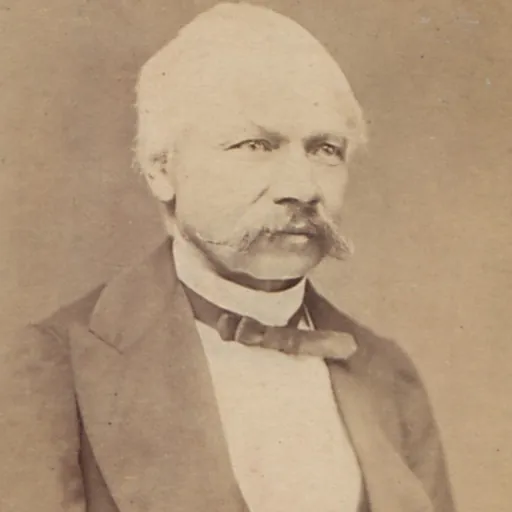
About Stanisław Egbert Koźmian
Lived 1811 – 1885 (aged 74). Stanisław Egbert Koźmian was a linguist, translator and translation.
Stanisław Egbert Koźmian (21 April 181123 April 1885) was a Polish writer, poet and translator. He is now best known for translating the works of William Shakespeare into Polish.
Koźmian was born in Wronów, near Lublin, to wealthy parents. After attending the Warsaw Lyceum, he studied law at the University of Warsaw from 1828 to 1830, where his friends included the poet Zygmunt Krasiński and the writer and translator . He participated as a junior officer in the Polish insurrection of 1831 and was forced to live abroad after the rebellion was crushed. He settled in England, where he lived as an exile for 12 years.
In England, Koźmian helped to raise funds for Polish emigrants and lobbied Parliamentarians about the plight of his homeland. After being allowed to return home to the Duchy of Posen, he and his brother Jan Koźmian worked as joint editors of their pro-Catholic periodical Poznań Review . His translations of seven of the works of William Shakespeare were included in the publication of Drama Works by William Shakespeare in 1875, the first translation into Polish of all of Shakespeare's plays. Koźmian became a member of the Poznań Society of Friends of Learning in 1857, and was elected as president. He died in Poznań on 23 April 1885.
Life Family and early years
Stanisław Egbert Koźmian was born in the Polish village of Wronów, near Lublin (then in the Duchy of Warsaw), on 21 April 1811, the eldest child of Tomasz Jan Adam Kożmian (b. 1780) and Wiktorya Mikuliczówna (b. 1789). His parents owned estates at Wola Gałęzowska and Wronów. Stanisław had three siblings: a sister, , and two brothers, Teofil Seweryn Tomasz and Jan Koźmian. After the death of his father in 1818, at the age of 38, Stanisław and his the family were brought up in the household of an uncle, the poet, critic and journalist , at Piotrowice, near Puławy.
Koźmian was educated in Lublin from 1821 to 1825. From 1826 to 1828 he attended the Warsaw Lyceum, where his classmates included the poet Zygmunt Krasiński and the writer and translator . From 1828 to 1830 he studied law and public administration at the University of Warsaw; whilst there he published a translation of the Irish poet Thomas Moore's Lalla Rookh.
Return to Poland After living as an exile in England for 12 years, Koźmian was granted permission to return to Polish lands within the Greater Poland region, and settled within the Prussian Province of Posen in 1849. He became a member of the Poznań Society of Friends of Learning in 1857. In 1867, he moved permanently to Poznań and became more involved in the work of the Society; he was made its vice-president in 1868, from 1869 to 1872 he headed the Department of History, and was from 1875 until his death the president of the Society. He was very active in the works of the Society, supporting and initiating a number of projects such as the study of Polish orthography or legal terminology; he also supported the Society against interference from the Prussian government, which was increasingly unfriendly towards Polish-language activities. At the same time, however, representing the conservative and Catholic factions, he successfully opposed efforts of the Society's Department of Natural History, which attempted to promote Darwin's theory of evolution, preventing it from holding lectures on the topic. He became a member of the Academy of Learning in 1873.
In 1851, he bought the Przylepki estate in the district of Śremski; the estates of the political activist Dezydery Chłapowski, the politician Cezary Plater and Jan Koźmian were nearby, and Koźmian and his friends visited each other, debating political, social and economic issues. He was also visited by his friends the poets Lucjan Siemieński, Wincenty Pol and Julian Klaczko, as well as with Ulrich, with whom he discussed Shakespeare. Koźmian married Felicya Łempicka in 1853; they had two daughters, Zofia and Maria.
On 19 February 1884, he was temporarily paralysed. Left in constant pain and unable to write, his health slowly deteriorated. He died on 23 April 1885, and in 1849 he and his brother Jan become joint editors. From the mid-1850s until the magazine ceased publication in 1865, he was its editor-in-chief. The periodical moved from being purely religious to discussing issues such as literature, art, science, and economics, although it maintained its strongly Catholic and conservative perspective. Koźmian's interests were wide; he published articles and essays on issues ranging from mathematical topics in Polish and English as well as on Polish-British relations, and on Shakespeare.
Koźmian's own prose consists mainly of essays, many of which appeared in the two volumes of his England and Poland , which was published in 1862. The first volume describes what the English thought and knew of Poland, their feelings towards the Polish people, and reasons for the indifference most English people felt towards the Poland's fate at the hands of its more powerful neighbours. The second volume gave particulars of English institutions, life, politics, and literature.
Koźmian wrote numerous essays, particularly on literature. Some of his articles appeared in and were collected in a collection I z bliska, i z daleka (1881). As a journalist he took an unpopular Catholic point of view, and was comparatively unknown in his lifetime. Nonetheless Stefan Kieniewicz described him as a "pretty good journalist" for his time and era, noting that he was respected for the quality of his prose. As a literary critic, his articles, also considered quite popular, were published, anonymously, in the columns of The Newspaper of the Grand Duchy of Poznań . —first appeared under Koźmian's name, as Krasiński in general published his works either anonymously or under pseudonyms to avoid provoking the Russian Empire authorities. Their success put Koźmian in an uncomfortable position, which he described in one of his poems, an imitation of Dante's Inferno. Despite that, Krasiński pressed Koźmian to declare himself as the author of all of Krasiński's works, past and present, a troublesome honour that Kożmian declined. In 1873 he would publish in print his correspondence with Krasiński.
Translator According to Kieniewicz, Koźmian's contribution to literature is arguably most important in his capacity as a translator. He translated into Polish from German and, particularly, from English languages; during his lifetime he was the most vocal supporter of translating and popularizing English literature in Poland.
As a translator, Koźmian is best remembered for his work on Shakespeare. (18451865). Poznań Review . 42 issues. Poznań: W. Stefańsiego. (1846). To the Masters of the Word . First published in Paris: Catholic Bookshop Poland (poetry). (1849). Polish Speech . Poznań: first published in Przegląd Poznański. (1862). England and Poland . Volume 1 Volume 2 (18661877). Koźmian's translations of Shakespeare's plays were published as Dzieła dramatyczne Williama Shakespeare (Drama Works by William Shakespeare) in three volumes. Volume 1: A Midsummer Night’s Dream , King Lear and The Two Gentlemen of Verona . Volume 2: King John and Richard II . Volume 3: Henry IV Part 1 and Henry IV Part 2 . (1869). Konrad Celtes. Poznań: Towarzystwo Przyjaciół Nauk Poznańskie. (1869). The Legend of the Tree of the Holy Cross . Poznań: N. Kamieński. (1869). Popular Science Lectures . Poznań: N. Kamieński. (1870). Poetry and prose by Stanisław Koźmian . 2 volumes. (1872). The Life and Writings of Konstanty Gaszyński . Poznań: N. Kamieński. (1877). Journey on the Rhine and Switzerland (1846) . Poznań: Jan Konstanty Żupańsk. (1881). And from near and far: a set of one hundred pheletons. (?) Placed in Kuryer Poznański from October 1878 to September 1880 . Poznań: J. K. Żupański. (1882). The Journey of Saint Angela Merici to the Holy Land . Poznań: Jarosław Leitgeb. (1882). Traces of Polish historical events in Shakespeare's The Winter's Tale and The Tempest (Ślady historycznych wypadków polskich w Zimowej Powieści i Burzy). Poznań: Society of Friends of Science.
Don’t just read it —
keep it.
Full-length biographies made to live with: read them, listen on the way to work, watch them tonight.
- E-book
- Audio
- Video
Instant download · yours to keep · every purchase keeps this site free
Important facts
People in Stanisław Egbert Koźmian's life
Named in this biography and alive at the same time




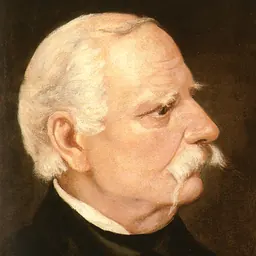
Related people
Same field, nearest in time
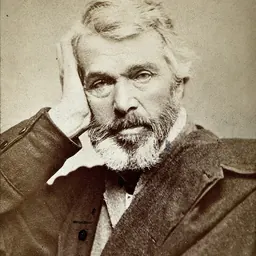
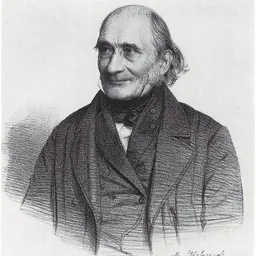

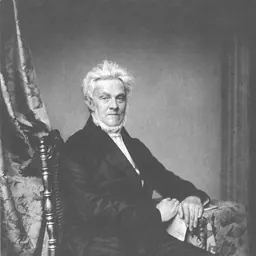
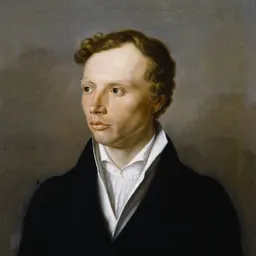
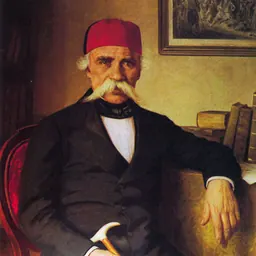
Contemporaries
People whose lives overlapped Stanisław Egbert Koźmian's





Frequently asked questions
Who was Stanisław Egbert Koźmian?
Polish translator (1811–1885)
When was Stanisław Egbert Koźmian born?
Stanisław Egbert Koźmian was born on 21 April 1811 in Wronów.
When did Stanisław Egbert Koźmian die?
Stanisław Egbert Koźmian died on 23 April 1885 in Poznań.
What was Stanisław Egbert Koźmian's occupation?
Stanisław Egbert Koźmian was a linguist, translator and translation.
What nationality was Stanisław Egbert Koźmian?
Stanisław Egbert Koźmian's recorded nationality: Congress Poland.
Sources & further reading
· Wikipedia: Stanisław Egbert Koźmian
· DBpedia: Stanisław Egbert Koźmian
Cite this page
APA: Biography.guide. (2026). Stanisław Egbert Koźmian. https://biography.guide/stanislaw-egbert-kozmian/
MLA: "Stanisław Egbert Koźmian." Biography.guide, https://biography.guide/stanislaw-egbert-kozmian/.
Chicago: "Stanisław Egbert Koźmian." Biography.guide. https://biography.guide/stanislaw-egbert-kozmian/.
Data last updated: 2026-09-22 · Spot an error? Report a correction.
Page generated 2026-09-27 05:10 UTC