
About St. Clair Streett
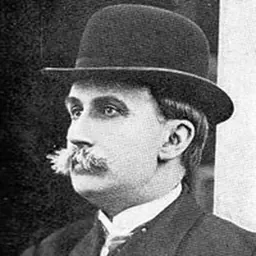
Lived 1893 – 1970 (aged 76). St. Clair Streett was an American military officer and military aviator.
St. Clair Streett (October 6, 1893 – September 28, 1970), known as "Bill", was a United States Air Force (USAF) major general and writer who first organized and led the Strategic Air Command (SAC). Streett was named for his grandfather, Dr. St. Clair Streett of Maryland. St. Clair is a family name originating from the mid-18th century when a Martha St. Clair married a John Streett in Maryland.
St. Clair Streett joined the United States Army after high school. By 1916, he was a sergeant in the Signal Corps, Enlisted Reserve., Then, at the suggestion of General Billy Mitchell who wished to strengthen the American air presence in Alaska Territory, Streett commanded The Alaska Flying Expedition, an exploratory flight made by the Air Service between 15 July and 20 Oct. 1920, from Mitchel Field on Long Island to Nome, Alaska. Dubbed the Black Wolf Squadron for the logo painted on the fuselage sides of their four De Havilland DH-4B biplanes, the eight men flew round trip in 112 hours of flying time, dividing the route into 18 legs across the northern United States and the western provinces of Canada, then north to Fairbanks, Alaska via Dawson City, Yukon. The flight reached Nome on 23 Aug. 1920 and returned to Mitchel Field on 20 Oct. 1920. An advance party prepared landing fields, stocked fuel and provisions to replenish the flyers and their aircraft.
Afterward, Streett speculated, "Some day this trip may be made overnight—who knows?" For this pioneering effort demonstrating that Alaska could be linked by air to the United States, Streett was awarded the Distinguished Flying Cross
General Billy Mitchell Brigadier General Billy Mitchell (left) shakes hands with St. Clair Streett, hatless, wearing a shirt and tie, 1920 Following this successful publicity flight, Streett was appointed assistant to General Billy Mitchell, the deputy chief of the Air Service. When Mitchell formed the 1st Provisional Air Brigade in May 1921 for the purpose of demonstrating that a bomber could sink a battleship, Streett was closely connected. Mitchell sent Streett to Air Corps headquarters to inform his superior Charles T. Menoher that the battleships could not be sunk as planned, with the bombers flying at . Streett informed Menoher that Mitchell intended to break the rules and fly much lower to ensure a newsworthy sinking, but that the Navy should not know of this change. Mitchell also planned to sink the target ship with several very close near-miss explosions that would cause severe damage to the ship's hull below the waterline. The US Navy's rules for the bombing limited the actual number of direct hits allowed on the target ship. The US Navy had intended to inspect the damage to these ships after the bombings, and US Navy gunfire to learn as much as possible about the effects of shell & bomb hits on battleship armor and structure. The target ship, the former German World War I battleship Ostfriesland was sunk with only a few direct hits, and several intentional very near-misses. The US Navy leadership was shocked and angry over the target's sinking. In late July after the battleship Ostfriesland had been sunk, Mitchell carried out a 19-bomber mock raid against Manhattan. About the stunt, Streett wrote an article entitled "14th Heavy Bombardment Squadron Attacks New York City" for the Army and Navy aviation magazine U.S. Air Service. On October 14, 1922, Streett participated in the third Pulitzer race flown out of Selfridge Field near Detroit but an oil line burst in his Verville-Sperry R-3 and forced him to abandon the race on the fifth and final lap.
In January 1924, Streett was named assistant chief of the Airways Section in the Office of the Chief of Air Corps. In this role he helped gather prevailing weather data, airfield locations, maps and reports of flying conditions for the Air Corps men undertaking the first aerial circumnavigation during March–September 1924. He planned for and ordered caches of oil and fuel to be kept at likely locations during the multistage voyage. In September 1925, he entered the Air Corps Tactical School at Langley Field, Virginia, graduating the following June. At that height they measured a temperature of , cold enough to freeze the aircraft controls. During July 1932, he was on special assignment as assistant in the preparation of data on performance tests of aircraft. Streett shifted to become plans and training officer for the Hawaiian Department at Fort Shafter, and then was attached to the Army Air Forces division of the War Department as deputy chief of operations. he thought that MacArthur would have to be removed from the Pacific in order for there to be any sound cooperation in the theater. Streett suggested MacArthur be appointed ambassador to "Russia" or some similar position of high stature but low military influence. ) Streett implemented a tightening of training policy to reduce losses through human error, and he initiated research into solutions for the technical problems the bomber was having.
At the time, Tampa was rated the worst U.S. city for syphilis infections among USAAF personnel, and the city with the most rampant prostitution. USAAF Captain Robert Dyer, charged with protecting the country's airmen from venereal disease (VD), had no success getting Tampa authorities to address the problem. When Streett arrived at his command and saw the extent of the VD crisis at MacDill Field, he threatened to close certain areas of Tampa to all military personnel if the city's police were unable to curb prostitution. This action would have ruined a number of legitimate local businesses, and a campaign was initiated to arrest prostitutes and to bar unmarried couples from renting a room together. Streett guided the Thirteenth through their part of the initial phases of the Philippines Campaign, in concert with the Fifth Air Force as part of United States Far East Air Forces.
Postwar career When Arnold needed to solve a thorny problem, he was known to demand "Where is Bill Streett?" Streett served under Arnold as deputy commander of the CAF, but Arnold held at that time two major commands: Air Staff and CAF, with Air Staff taking his full attention. In effect, Streett was left in charge of CAF. When the Continental Air Forces became Strategic Air Command (SAC) in March 1946, he retained his nominal position as deputy commander, and actually commanded the new organization until October when Kenney's prior obligations to the United Nations came to an end and he could finally take the reins of the SAC as originally intended by General Carl Andrew Spaatz. He revealed to the students that the SAC was not yet very powerful—only two strike groups were fully operational and that three months in the future after a rush of preparation, there still would be only four B-29 Superfortress groups and two long-range fighter aircraft groups. This was in contrast to the then-current public relations statements by the SAC which proclaimed "quick retaliation will be our answer [to any future aggressor] in the form of an aerial knockout..." Streett offered his opinion that the SAC should stage into the Far East and take operational control of those units. Robert Wood Johnson II, chairman of Johnson & Johnson, resigned from the commission because of the strain it took on his health, but he noted that the USAF represented by Commissioner Streett was "cooperative and open to greater progress" with the commission, directly contrasting with the U.S. Navy which he rated as "militantly resistant." The Sarnoff Commission's 85-page report was delivered to the United States Senate Committee on Armed Services and Charles Erwin Wilson, President Dwight D. Eisenhower's new defense secretary, on February 17, 1953. It called for a ten percent reduction in military spending, amounting to the elimination of 500,000 civilian and military personnel and the cutting of $5B from the military's annual budget. After studying the report, Wilson appointed a commission to heed its main points and streamline the Defense Department so that it could more efficiently wage a war. Instead of Streett, Wilson selected retired General Spaatz to represent the USAF. The Streetts had one child, a son in 1927, St. Clair Streett Jr., also nicknamed "Bill", who graduated from the United States Military Academy at West Point with the Class of 1949 and took part in the infantry Battle of Old Baldy during the Korean War. General Streett's son, St. Clair Streett Jr. married Edith Peake Boatner (youngest daughter of USAF Lt. Gen. Bryant L. Boatner) in 1954 and had four children: St. Clair "Dan" Streett III, born in California in 1955, who graduated from Virginia Military Institute in 1977, USAF Colonel Bryant Boatner Streett (VMI 1978) born at Fort Belvoir, Virginia in 1956, Monica Page Streett born in 1959 in Nurnberg, Germany, and Emily Williams Streett born in 1961 at West Point, New York. General Streett's son retired from the US Army after 21 years of service in the Infantry and the Engineers. Besides serving in combat in Korea, and in South Vietnam as an advisor, St. Clair Jr. had participated in the US Army Corps of Engineer construction projects for NASA (in the race to put a man on the moon before the end of the decade) at Cape Caniveral, Florida and Huntsville, Alabama. "Bill" Streett Jr. married again in 1980 to Anitra Mae "Sue" Rustmeyer—the two had a daughter, Sarah Mae Streett, born the next year.
Major General Streett died on September 28, 1970, at Andrews Air Force Base in Maryland. His wife (at age 104 years) died on October 17, 1999, and was buried with him at Arlington National Cemetery.
Don’t just read it —
keep it.
Full-length biographies made to live with: read them, listen on the way to work, watch them tonight.
- E-book
- Audio
- Video
Instant download · yours to keep · every purchase keeps this site free
Important facts
People in St. Clair Streett's life
Named in this biography and alive at the same time





Related people
Same field, nearest in time


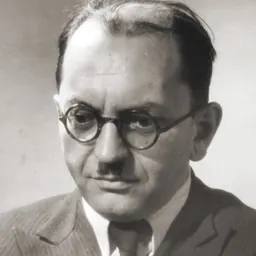
Contemporaries
People whose lives overlapped St. Clair Streett's
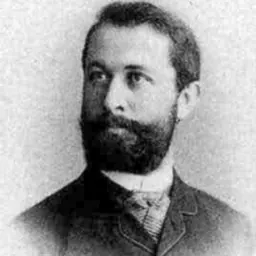

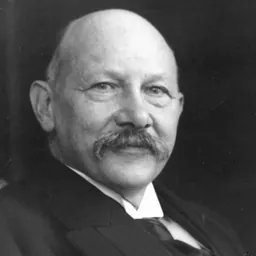
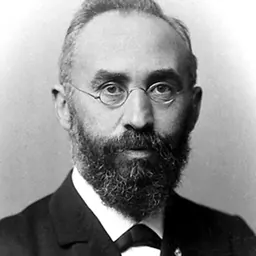

Frequently asked questions
Who was St. Clair Streett?
American Air Force general (1893-1970)
When was St. Clair Streett born?
St. Clair Streett was born on 6 October 1893 in Washington, D.C..
When did St. Clair Streett die?
St. Clair Streett died on 28 September 1970 in Joint Base Andrews.
What was St. Clair Streett's occupation?
St. Clair Streett was a military officer and military aviator.
What nationality was St. Clair Streett?
St. Clair Streett was American.
Sources & further reading
· Wikipedia: St. Clair Streett
Cite this page
APA: Biography.guide. (2026). St. Clair Streett. https://biography.guide/st-clair-streett/
MLA: "St. Clair Streett." Biography.guide, https://biography.guide/st-clair-streett/.
Chicago: "St. Clair Streett." Biography.guide. https://biography.guide/st-clair-streett/.
Data last updated: 2026-09-20 · Spot an error? Report a correction.
Page generated 2026-09-27 05:31 UTC