
Soumendranath Tagore
Indian communist leader and intellectual
About Soumendranath Tagore
Lived 1901 – 1974 (aged 72). Soumendranath Tagore was an Indian politician, revolutionary, writer, activist, founder and marxism.
Saumyendranath Tagore (8 October 1901 – 22 September 1974), son of Sudhindranath Tagore, fourth child of Dwijendranath Tagore, and grandnephew of Rabindranath Tagore, was the leader of the Revolutionary Communist Party of India, and the first translator of The Communist Manifesto into Bengali, which was published in Langal magazine edited by Kazi Nazrul Islam.
Education Tagore passed matriculation in 1917 from Mitra Institution in Kolkata and became graduate with Hon's in Economics from the Presidency College in the year of 1921. There, he met international communist leaders and was soon in Moscow. He attended the 6th Congress of the Communist International (Comintern).
Differences with the Comintern Tagore differed with the Comintern on the "Colonial Question". He also came to oppose the Comintern's "Popular Front" strategy in the 1930s, regarding it as a betrayal of proletarian revolution. Tagore had turned hostile towards Stalin, possibly as in reaction to his failed bid to gain recognition from the Communist International in 1928. Although the CPI would later moderate its positions after the Seventh Congress of the Communist International, Tagore broke with the CPI. In May 1934 he set up an 'initiative committee' for the founding of a new party. Other founders of the Communist League included Sudhir Dasgupta, Prabhat Sen, Ranjit Majumdar and Arun Banerjee.
The Communist League and the peasantry After the formation of the Communist League Tagore began touring the Bengal country-side, organizing peasants to struggle for abolishing the zamindari system. In early 1938 Tagore built a peasants wing, the ‘Bangiyo Pradeshik Kisan Sabha’ (BPKS), separate from the CPI-led Krishak Samiti. Tagore's BPKS demanded abolition of the zamindari system without giving any compensation to landlords, free distribution of land among the cultivators and agricultural labourers, minimization of revenue demands and cancellation of debts to moneylenders.
Tagore in Assam In 1941 the Communist League had been renamed the "Communist Party of India", but in March 1943 it was rechristened the Revolutionary Communist Party of India (RCPI) in order to differentiate it from the "official" Communist Party of India.
The RCPI was the first left organization to established itself in Assam. In November 1938 Tagore visited Assam and met with a group of students and youth. His visit was organized by the Congressman Debranath Sarma. This time he visited Khagen Barbarua at his village in Upper Assam and discussed building the party organization in the province. After being released from prison in 1948, Tagore argued, instead, that armed revolution was premature in India. The latter of the two parties came to be known as 'RCPI (Tagore)'. It was led by Tagore until his death in 1974.
Time in Germany In 1933, Tagore was arrested on the charge of plotting to assassinate the leader of Nazi Germany, Adolf Hitler, while he was in Munich, Germany, and kept in custody at the Gestapo prison. The Associated Press wrongly reported that "son of the world famous poet, Sir Rabindranath Tagore" was arrested, rather than grand nephew; after the intervention of the British Consul-General from India, Tagore was released the very next day and set out for Paris.
Literary works Saumyendranath Tagore was a regular writer of Kallol group. He wrote articles in French, Russian, German, English and Bengali languages. The books Biplabi Russia, Trayee, Jatri, Rabindranather Gaan, 'Communism and Fetishism', 'Bourgeois Democratic Revolution and India', 'Permanent Revolution', 'Tactics and strategy of revolution' 'Gandhi'(French) are few of them.
Tagore's revolutionary activities led the British authorities to ban a number of his works.
Family Saumyendranath Tagore married Srimati Hutheesingh from an aristocratic Jain Gujarati Hutheesing family of Ahmedabad. She was a student in Shantiniketan and a well known dancer and choreographer who took training in dance in India and abroad. Srimati Tagore's brother Gunottam (Raja) Hutheesingh married Krishna Nehru, younger daughter of Motilal Nehru and sister of India's first Prime Minister Jawaharlal Nehru.
Family tree
Don’t just read it —
keep it.
Full-length biographies made to live with: read them, listen on the way to work, watch them tonight.
- E-book
- Audio
- Video
Instant download · yours to keep · every purchase keeps this site free
Important facts
People in Soumendranath Tagore's life
Named in this biography and alive at the same time
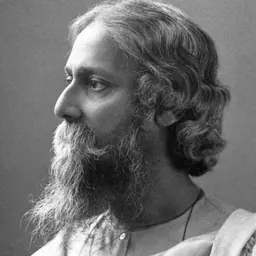
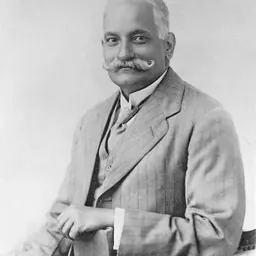



Related people
Same field, nearest in time





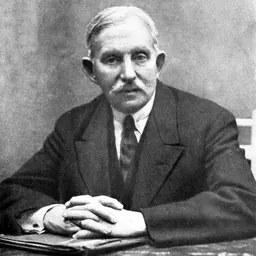
Contemporaries
People whose lives overlapped Soumendranath Tagore's



Frequently asked questions
Who was Soumendranath Tagore?
Indian communist leader and intellectual
When was Soumendranath Tagore born?
Soumendranath Tagore was born on 8 October 1901 in Kolkata.
When did Soumendranath Tagore die?
Soumendranath Tagore died on 22 September 1974.
What was Soumendranath Tagore's occupation?
Soumendranath Tagore was a politician, revolutionary, writer, activist, founder and marxism.
What nationality was Soumendranath Tagore?
Soumendranath Tagore was Indian.
Sources & further reading
· Wikipedia: Soumendranath Tagore
· DBpedia: Saumyendranath Tagore
Cite this page
APA: Biography.guide. (2026). Soumendranath Tagore. https://biography.guide/soumendranath-tagore/
MLA: "Soumendranath Tagore." Biography.guide, https://biography.guide/soumendranath-tagore/.
Chicago: "Soumendranath Tagore." Biography.guide. https://biography.guide/soumendranath-tagore/.
Data last updated: 2026-09-20 · Spot an error? Report a correction.
Page generated 2026-09-27 05:14 UTC