
Soraya Tarzi
Princess Consort (1919-1926), later Queen Consort of King Amanullah Khan of Afghanistan
About Soraya Tarzi
Lived 1899 – 1968 (aged 68). Soraya Tarzi was an Afghan politician.
Soraya Tarzi (Pashto/Dari: ثريا طرزی) (24 November 1897 – 20 April 1968) was Queen of Afghanistan as the wife of King Amanullah Khan. As Queen, she became one of the most influential women in the world at the time. then part of the Ottoman Empire. She was the daughter of the Afghan political figure Sardar Mahmud Beg Tarzi, and granddaughter of Sardar Ghulam Muhammad Tarzi. She belonged to the Mohammadzai Pashtun tribe, a sub-tribe of the Barakzai dynasty.
She studied in Syria, learning Western and modern values, which would influence her future actions and beliefs. Her mother was the Syrian feminist Asma Rasmya, her father's second wife, and daughter of Sheikh Muhammad Saleh al-Fattal Effendi, of Aleppo, Muezzin of the Umayyad Mosque.
Upon her family's return to Afghanistan, Soraya Tarzi would meet and marry then prince Amanullah.
When she married into the royal family Tarzi grew to be one of the region's most important figures. which broke centuries of tradition. They both actively denounced polygamy. Amanullah was to dissolve the royal harem when he succeeded to the throne and free the enslaved women of the harem.
Amanullah and Soraya had ten children, four sons and six daughters: Princess Ameenah Shah (14 May 1916 – 29 October 1992). During her exile, in 1954 she married a naturalised Turkish citizen of Bosnian origin named Mustafa Hasanovic Ar. He was the son of the deputy of the Bosnian Young Muslims. Princess Abedah. She married firstly Ali Wali, son of Muhammad Wali and had one son. She married secondly to Hamidullah Enayat Seraj, son of Sardar Enayatullah. Crown Prince Rahmatullah of Afghanistan (7 June 1921 – 11 September 2009). He married Adelia Graziani, a niece of an Italian general Rodolfo Graziani. Prince Saifullah died young from cholera. Prince Hymayatullah died very young from bronchial pneumonia. Princess Adeela (1925–2000) married Armando Angelini (b. August 10, 1924), the son of an Italian cavalry officer and they had four daughters: Elisabetta (b. 31 May 1948) Cristina (b. 3 Oct 1949) Simin (b. 8 Oct 1954) Cinzia (b. 11 Jan 1957) Prince Ehsanullah (1926–2017) married Leyla Tarzi, daughter of Col. Tavvab Tarzi, son of Mahmud Tarzi. They had 2 sons, both born in Istanbul: Ahmed Aman Ullah (b. 1961), married Sylvie Théobald (b. at Bourges, France) Rahmad Ullah (b. 1965), married Carine Berger, of Bernex, Switzerland. Princess India (1929–2023), in 1951 she married Kazem Malek, an Iranian landowner, and settled in Mashhad, Iran. They had two daughters: Soraya, born in 1954 in Rome, Italy, and Hamdam, born in Mashad, Iran in 1956. After eight years of marriage Princess India divorced her husband and returned to Rome to live with her two daughters. In 1966 she married an Afghan businessman, Abdul Rauf Haider. They had a son named Eskandar who was born in Rome in 1967. In 1968, Princess India returned to Afghanistan after the death of her mother Queen Soraya. She attended funeral ceremonies in Jalalabad and was very much impressed by her homeland and decided from that time on she would work for the benefit of Afghanistan. Soraya (b. 1954), first daughter of Princess India Haman (b. 1956), second daughter of Princess India and her husband Kazem Malek. Haman later married an Italian naval commander, Paolo Fusarini. The couple had two children, Matteo and Flavia. Ömer, son of Princess Nagia and İlter Doğan Hümeyra, daughter of Princess Nagia and İlter Doğan
Queen of Afghanistan
When the prince became Amir in 1919 and King in 1926, the Queen played an important role in the evolution of the country. When Amanullah was enthroned in June 1926, she was enthroned alongside him in front of a completely shaved and non-turbaned audience. Queen Soraya was also the first Muslim consort who appeared in public together with her husband, something which was unheard of at the time. riding on horseback, and in some Cabinet meetings.
Women's rights
The emancipation of women was a part of Amanullah's reform policy, and the women of the royal family, particularly his wife and sisters, acted as the role models of this change. Many women from Amanullah's family publicly participated in organizations and went on to become government officials later in life.
In 1921, Tarzi founded and contributed to the first magazine for women, Ishadul Naswan (Guidance for Women), which promoted women's welfare and had an office to which women could report mistreatment by their husbands, brothers, and fathers. in 1921, as well as the first hospital for women, the Masturat Hospital, in 1924.
In 1927–1928, Soraya and her husband visited Europe. They were the first heads of state to visit to visit Germany since its defeat in World War I, and met with Pope Pius XI, leader of the Catholic Church. The Queen spoke to a large group of students and leaders in Oxford. Despite this, the British did not have a good relationship with Tarzi's family as a whole, for the chief representative of Afghanistan that they had to deal with was her father.
On August 29, 1928, Amanullah held a Loya Jirgah, a Grand Assembly of Tribal Elders, to endorse his development programmes, and to which the 1,100 delegates were required to wear European clothes provided for them by the state. Amanullah argued for women's rights to education and equality and publicly removed her veil during a speech she gave at the meeting. Her daughters and women from the Kabul elite also unveiled themselves in public. In Kabul, this policy was also endorsed by reserving certain streets for men and women dressed in modern Western clothing. Conservatives objected to the unveiling of women and her actions incited anger, but they did not say so openly at the meeting. Instead they began to mobilize public opinion after their return from the meeting.
Final years in exile
In 1929, the King abdicated in order to prevent a civil war and went into exile. but this was later found to be false. the family mausoleum in a large marble plaza, covered by a dome roof held up by blue columns in the heart of Jalalabad, next to her husband the King, who had died eight years earlier. Princess India was also an honorary cultural ambassador of Afghanistan to Europe.
Honours
National honour Grand Collar of the Order of the Supreme Sun.
Foreign honors Decoration of al-Kemal in brilliants (Kingdom of Egypt, 26 December 1927). Honorary Dame Grand Cross of the Order of the British Empire (United Kingdom, 13 March 1928). In 2019 Time created 89 new covers to celebrate women of the year starting from 1920; it chose Tarzi for 1927.
Ancestry
Don’t just read it —
keep it.
Full-length biographies made to live with: read them, listen on the way to work, watch them tonight.
- E-book
- Audio
- Video
Instant download · yours to keep · every purchase keeps this site free
Important facts
Family & relationships
People in Soraya Tarzi's life
Named in this biography and alive at the same time

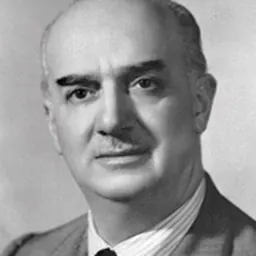

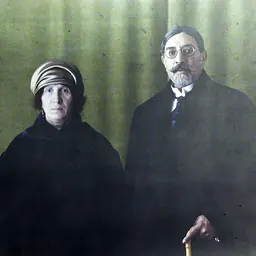
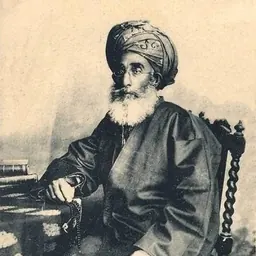

Related people
Same field, nearest in time




Contemporaries
People whose lives overlapped Soraya Tarzi's

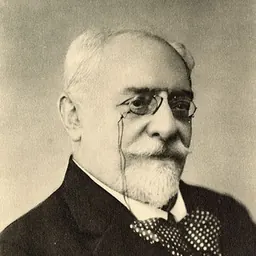


Frequently asked questions
Who was Soraya Tarzi?
Princess Consort (1919-1926), later Queen Consort of King Amanullah Khan of Afghanistan (1926-1929)
When was Soraya Tarzi born?
Soraya Tarzi was born on 24 November 1899 in Damascus.
When did Soraya Tarzi die?
Soraya Tarzi died on 20 April 1968 in Rome.
What was Soraya Tarzi's occupation?
Soraya Tarzi was a politician.
What nationality was Soraya Tarzi?
Soraya Tarzi was Afghan.
Sources & further reading
Cite this page
APA: Biography.guide. (2026). Soraya Tarzi. https://biography.guide/soraya-tarzi/
MLA: "Soraya Tarzi." Biography.guide, https://biography.guide/soraya-tarzi/.
Chicago: "Soraya Tarzi." Biography.guide. https://biography.guide/soraya-tarzi/.
Data last updated: 2026-09-20 · Spot an error? Report a correction.
Page generated 2026-09-27 05:33 UTC