
Solomon Lefschetz
Jewish American mathematician
About Solomon Lefschetz
Lived 1884 – 1972 (aged 88). Solomon Lefschetz was an American and Russian mathematician, topologist and university teacher, known for Algebraic geometry and analytic geometry, Hairy ball theorem and Lefschetz duality.
Solomon Lefschetz (; 3 September 1884 – 5 October 1972) was a Russian-born American mathematician who did fundamental work on algebraic topology, its applications to algebraic geometry, and the theory of non-linear ordinary differential equations.
Life He was born in Moscow, the son of Alexander Lefschetz and his wife Sarah or Vera Lifschitz, both Russian-Jewish traders who used to travel around Europe and the Middle East (since they held Ottoman passports). He moved towards mathematics, receiving a Ph.D. in algebraic geometry from Clark University in Worcester, Massachusetts in 1911. He then took positions at the University of Nebraska and University of Kansas, moving to Princeton University in 1924, where he was soon given a permanent position. He remained there until 1953.
In the application of topology to algebraic geometry, he followed the work of Charles Émile Picard, whom he had heard lecture in Paris at the École Centrale Paris. He proved theorems on the topology of hyperplane sections of algebraic varieties, which provide a basic inductive tool (these are now seen as allied to Morse theory, though a Lefschetz pencil of hyperplane sections is a more subtle system than a Morse function because hyperplanes intersect each other). The Picard–Lefschetz formula in the theory of vanishing cycles is a basic tool relating the degeneration of families of varieties with 'loss' of topology, to monodromy. He was an Invited Speaker of the ICM in 1920 in Strasbourg. His book L'analysis situs et la géométrie algébrique from 1924, though opaque foundationally given the current technical state of homology theory, was in the long term very influential (one could say that it was one of the sources for the eventual proof of the Weil conjectures, through SGA 7 also for the study of Picard groups of Zariski surface). In 1924 he was awarded the Bôcher Memorial Prize for his work in mathematical analysis. He was elected to the United States National Academy of Sciences in 1925 and the American Philosophical Society in 1929.
The Lefschetz fixed-point theorem, now a basic result of topology, was developed by him in papers from 1923 to 1927, initially for manifolds. Later, with the rise of cohomology theory in the 1930s, he contributed to the intersection number approach (that is, in cohomological terms, the ring structure) via the cup product and duality on manifolds. His work on topology was summed up in his monograph Algebraic Topology (1942). From 1944 he worked on differential equations.
He was editor of the Annals of Mathematics from 1928 to 1958. During this time, the Annals became an increasingly well-known and respected journal, and Lefschetz played an important role in this.
In 1945 he travelled to Mexico for the first time, where he joined the Institute of Mathematics at the National University of Mexico as a visiting professor. He visited frequently for long periods, and during 1953–1966 he spent most of his winters in Mexico City. The RIAS mathematics group stimulated the growth of nonlinear differential equations through conferences and publications. He left RIAS in 1964 to form the Lefschetz Center for Dynamical Systems at Brown University, Providence, Rhode Island.
Selected works L´Analysis situs et la géométrie algébrique, Paris, Gauthier-Villars 1924 Intersections and transformations of complexes and manifolds, Transactions of the American Mathematical Society vol. 28, 1926, pp. 1–49, online; fixed-point theorem, published in vol. 29, 1927, pp. 429–462, online. Géométrie sur les surfaces et les variétés algébriques, Paris, Gauthier Villars 1929 Topology, AMS 1930 Algebraic Topology, New York, American Mathematical Society 1942 Introduction to topology, Princeton 1949 with Joseph P. LaSalle, Stability by Liapunov's direct method with applications, New York, Academic Press 1961 Algebraic geometry, Princeton 1953, 2nd edn., 1964 Differential equations: geometric theory, Interscience, 1957, 2nd edn., 1963 Stability of nonlinear control systems, 1965 Reminiscences of a mathematical immigrant in the United States, American Mathematical Monthly, vol.77, 1970, pp. 344–350.
Don’t just read it —
keep it.
Full-length biographies made to live with: read them, listen on the way to work, watch them tonight.
- E-book
- Audio
- Video
Instant download · yours to keep · every purchase keeps this site free
Important facts
more
Lefschetz number, Lefschetz pencil, Lefschetz theorem on (1,1)-classes, Lefschetz zeta function, Picard–Lefschetz theoryPeople in Solomon Lefschetz's life
Named in this biography and alive at the same time

Related people
Same field, nearest in time



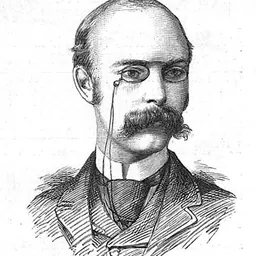
Contemporaries
People whose lives overlapped Solomon Lefschetz's
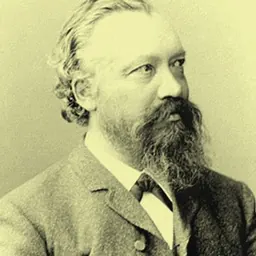
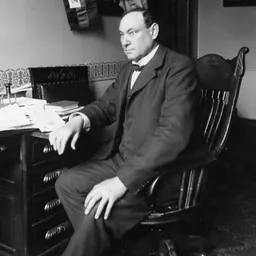
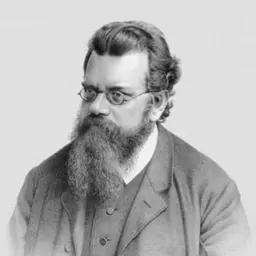

Frequently asked questions
Who was Solomon Lefschetz?
Jewish American mathematician (1884-1972)
When was Solomon Lefschetz born?
Solomon Lefschetz was born on 3 September 1884 in Moscow.
When did Solomon Lefschetz die?
Solomon Lefschetz died on 5 October 1972 in Princeton.
What was Solomon Lefschetz's occupation?
Solomon Lefschetz was a mathematician, topologist and university teacher.
What was Solomon Lefschetz known for?
Solomon Lefschetz was known for Algebraic geometry and analytic geometry, Hairy ball theorem, Lefschetz duality, Lefschetz fixed-point theorem, Lefschetz hyperplane theorem and Lefschetz manifold.
What nationality was Solomon Lefschetz?
Solomon Lefschetz was American and Russian.
Sources & further reading
· Wikipedia: Solomon Lefschetz
Cite this page
APA: Biography.guide. (2026). Solomon Lefschetz. https://biography.guide/solomon-lefschetz/
MLA: "Solomon Lefschetz." Biography.guide, https://biography.guide/solomon-lefschetz/.
Chicago: "Solomon Lefschetz." Biography.guide. https://biography.guide/solomon-lefschetz/.
Data last updated: 2026-09-20 · Spot an error? Report a correction.
Page generated 2026-09-27 05:26 UTC