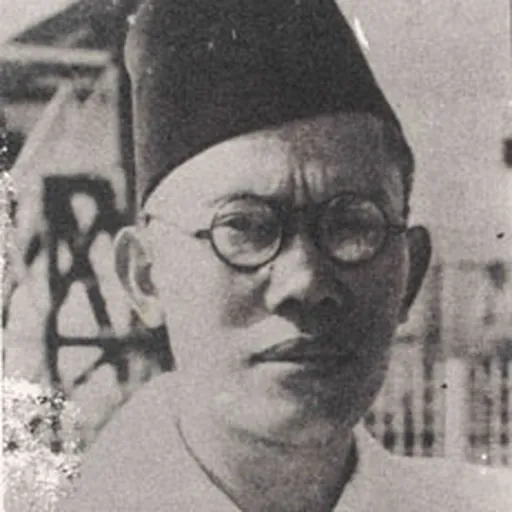
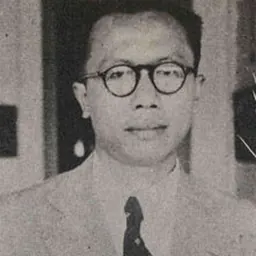
Sjafruddin Prawiranegara
Indonesian statesman and economist
About Sjafruddin Prawiranegara
Lived 1911 – 1989 (aged 77). Sjafruddin Prawiranegara was an Indonesian politician, economist and philosopher.
Political career
Deputy Prime Minister
Following Sjafruddin's return to Yogyakarta, he was appointed as Deputy Prime Minister for Sumatra in the Second Hatta Cabinet, and was stationed at Kutaraja. Additionally, Sjafruddin assured officials who had worked for the Dutch that the Republican government would not permit reprisals.
Minister of Finance
Within the Republic of the United States of Indonesia Cabinet led by Hatta, Sjafruddin returned to his previous office as Minister of Finance, a post which he would later retain in the succeeding Natsir Cabinet. While drafting a provisional constitution for the federal state, Sjafruddin argued unsuccessfully for the inclusion of a clause whereby Hatta would become Prime Minister in the event of a political deadlock. The proposal was accepted by Masyumi and several others, but could not pass and was eventually dropped in exchange for an implicit promise by Sukarno to do so instead of a formal clause. In the Masyumi-heavy cabinets between December 1949 and the end of the Wilopo Cabinet in June 1953, Sjafruddin's economic views and outlook enjoyed significant influence in the government, with Sjafruddin being Masyumi's primary economic policymaker. One of Sjarifuddin's programs was a foreign exchange certificate system, which required certificates obtainable from exporting goods in order to engage in imports. The left halves of the notes remained legal tender until 9 April, with a nominal value of half its face value, and were to be exchanged with new notes, while the right halves were exchanged with 30-year government bonds yielding 3 percent. According to Sjafruddin in a later interview, beyond reining in inflation, this also served to create uniform legal tender for the whole country and remove unwanted Dutch currency from circulation. The Bank of Java claimed that the policy reduced the money supply by 41 percent, and that the prices of food and textiles still rose in 1950 after the execution of the Sjafruddin Cut. Both the foreign exchange certificate system and the Sjafruddin Cut invited significant criticism from the political opposition. This was especially the case with the cut, which was constantly attacked by PKI. Sjafruddin was initially reluctant to take up the post, having planned to retire from public life and enter the private sector to earn enough for his children's education. As he did not want to earn money through abuse of office, he accepted the post under the condition that his salary and that of other Indonesian employees in the bank would be the same as that of the Dutch staff.
Sjafruddin's economic and monetary policy views, such as his opposition to the nationalization of the bank, were similar to the views of the outgoing Dutch administrators, and according to Sjafruddin, Houwink approved of his appointment. In BI's first annual report, Sjafruddin argued for the bank to continue commercial banking activities, citing a shortage of access to banking systems and the lack of a capital market in Indonesia at that time. In designing BI's statutes, Sjafruddin included a clause which would manage the bank's reserves of gold and foreign currency at 20 percent of currency issued. This was criticized by contemporary economists, most prominently Sumitro who had been appointed the new Finance Minister.
While in office, Sjafruddin criticized the Indonesian government's lack of clarity on the distinction between "domestic" and "foreign" capital. Sjafruddin was of the opinion that the distinction between the two lay in whether profits were remitted abroad or not in other words, that Chinese Indonesian entrepreneurs would be "domestic". This was in contrast to positive discrimination policies for indigenous Indonesians favored by Sumitro. During the Ali Sastroamidjojo premiership between 1953 and 1955, Sjafruddin was also a prominent critic of the government's economic and monetary policies. In 1956, approaching the end of Sjafruddin's first term as governor, the Indonesian National Party (PNI) proposed to replace him with PNI member, BI deputy governor and former PDRI minister Lukman Hakim, with whom Sjafruddin had a close relationship. Sjafruddin maintained his post after NU opted to back his second term, aided by favours given to NU-related businesses by fellow Masyumi member and sitting finance minister Wibisono.
PRRI rebellion
Prelude
By late 1957, the Indonesian economic and political situation had deteriorated, and Dutch firms were often blamed for the malaise. Public opinion was firmly against Sjafruddin's policy of accommodating foreign capital. Anti-Dutch sentiments rose significantly following Dutch success in blocking the West New Guinea dispute from being discussed at the United Nations General Assembly on 29 November, and immediately afterwards Sukarno ordered labor unions and army units to take over Dutch businesses. Sjafruddin and other Masyumi leaders were investigated for possible links with an assassination attempt on Sukarno on 30 November in Cikini as some of the assailants were members of Masyumi's youth wing. Despite this, Sjafruddin remained openly critical of the takeovers and the lack of a clear plan on how they would be executed, believing that Indonesians needed further training in order to acquire the skills needed to run the nationalized companies. Throughout December 1957, Masyumi leaders Sjafruddin, Natsir, and Burhanuddin Harahap were subjected to accusations by the media of being complicit in the assassination attempt, and they were harassed by phone calls and by paramilitary groups affiliated with PNI and PKI. They all opted to depart Jakarta for their own and their families' safety, and by January 1958 Sjafruddin was in Padang.
While on the way there, he and other Masyumi leaders (and Sumitro, who had left Jakarta after being accused of corruption) attended a meeting with a number of dissident officers such as Maludin Simbolon. Following debates (the military commanders allegedly wanted to declare Sumatra's independence, which the civilian leaders opposed), the group released a statement which called the Djuanda Cabinet unconstitutional, and called for a cabinet led by Hatta and the Sultan of Yogyakarta Hamengkubuwono IX to be formed. Sjafruddin also went to Palembang and held discussions with the potential dissident Colonel Barlian, who was the regional commander of the armed forces in South Sumatra. Barlian refused to commit his forces to support a potential rebellion. Sjafruddin also wrote an open letter to Sukarno, which voiced his opposition to the "fascist" Guided Democracy and called for a return to the 1945 Constitution. While Natsir and Harahap claimed to have specific reasons to be in Sumatra, Sjafruddin openly admitted to having fled Jakarta, writing another open letter to Sukarno on 23 January, saying that "he was not ready to die stupidly". On 1 February, Sjafruddin was removed from his office as Bank Indonesia governor by Presidential Order, and he was replaced by Lukman Hakim.
Rebellion
On 15 February 1958, the Revolutionary Government of the Republic of Indonesia (PRRI) was declared in Padang by Lt. Col Ahmad Husein, with Sjafruddin being named as both its prime minister and finance minister. According to Sjafruddin in his later autobiography, he refused Husein's request that he sign the declaration which proclaimed PRRI, in order to emphasize that PRRI's formation was not his initiative. Sjafruddin had previously attempted to convince the military officers to exercise restraint and avoid a civil war, but he eventually agreed to take part in PRRI. The Indonesian government under prime minister Djuanda Kartawidjaja issued an order to arrest Sjafruddin and the other civilian leaders the following day, and within a week aerial attacks were launched against cities in West Sumatra. By April, government forces had landed in Padang and secured it with little to no resistance. Once he learned of PRRI's military collapse, Sjafruddin vowed in anger to "stay here in the jungle" and adding that "it won't be the first time". By 5 May, PRRI's capital at Bukittinggi had been captured by the Indonesian government.
Within four months, the government had completely defeated PRRI militarily. PRRI's leaders had failed to gain significant popular support for the movement, and while it initially received some backing from the United States, military aid was soon withdrawn. By the middle of 1958, the group had been forced into a low-intensity guerrilla warfare based in the jungles of Sumatra. Despite continued defeats, Sjafruddin still refused to attempt a compromise with the Jakarta government. On the first anniversary of PRRI, he gave a speech attacking Sukarno for working with communists, and urging a federal state. In a last-ditch political attempt, the Masyumi leadership and the dissident military leaders announced the "United Republic of Indonesia" at Bonjol on 8 February 1960. In the proclamation, Sjafruddin was named president of the Republic, but little else beyond the state's constitution was announced. The declaration did not amount to much, and the Indonesian government continued to pressure PRRI, capturing rebel-held towns in Sumatra's highlands. By July, the rebel stronghold at Koto Tinggi where Sjafruddin and the other Masyumi/PRRI leaders resided had been captured, forcing them to flee and disabling their capacity to lead the rebellion.
Army Chief of Staff Abdul Haris Nasution, in order to further split the government of PRRI, announced an amnesty program for rebelling troops in late 1960. In April and May 1961, they began surrendering to the government, although PRRI still controlled much of the rural regions of West Sumatra. Sjafruddin and Natsir appointed Maludin Simbolon to represent PRRI in negotiating with the central government, but the military leaders opted to surrender separately. Between June and 17 August, nearly all of PRRI's troops and military commanders surrendered, leaving the civilian leaders few options. Sjafruddin himself had been negotiating with Nasution since July, and alongside Assaat and Burhanuddin Harahap he submitted to military authorities near Padangsidimpuan on 25 August. He did so after advising his own remaining followers to "cease hostilities" in a radio broadcast on 17 August. Sjafruddin also surrendered PRRI's assets in form of of gold bullion. This left only Natsir and Colonel Dahlan Djambek as PRRI's remaining leadership, and after Djambek's death on 13 September, Natsir too surrendered on 25 September, ending PRRI's rebellion. Sjafruddin was initially not imprisoned, due to a 1961 declaration of amnesty for PRRI members by Sukarno, and for a time he stayed around Medan. However, in March 1962, he was brought to Jakarta, and then held as a prisoner in Kedu for two years before being transferred to a military prison in Jakarta in 1964. After the fall of Sukarno and the advent of Suharto's New Order, Masyumi leaders were released from prison between 1965 and 1967. Sjafruddin himself was released on 26 July 1966.
Post-rebellion
Shortly before Sjafruddin's release, other Masyumi leaders released earlier had attempted to rehabilitate the party, but the Indonesian Army had forbidden the rehabilitation of both Masyumi and the Socialist Party of Indonesia. Disillusioned, Sjafruddin left active politics and tended to express himself more through religious organizations such as the Indonesian Pesantren Foundation and the Mubaligh Corps. He also maintained an interest in economics, founding the Indonesian Association of Muslim Businessmen in July 1967, and he generally supported the economic policies of the technocrats under Suharto such as Widjojo Nitisastro and Mohammad Sadli. He then used Friday sermons in mosques to preach against corruption under Suharto. He opposed the government monopoly on hajj pilgrimages, considering it inefficient and prone to fraud and corruption. In 1970, he founded a hajj association, which facilitated pilgrims who wanted to build up savings to go to Mecca outside the official government route. While successful for a time, financial mismanagement resulted in around 300 pilgrims being abandoned in Mecca in 1976 and requiring an intervention from the government. He also opposed the government-backed Parmusi and the newly formed Islamic parties, comparing them unfavorably with PKI. Due to his vocal criticism of the Suharto government, he was detained for a short period in April 1978.
In 1980, he became a member of the "Petition of Fifty" opposition group, alongside former PRRI colleagues Natsir and Harahap and retired generals such as Nasution, Ali Sadikin, and Hoegeng Iman Santoso. The petition questioned the conduct of the Indonesian National Armed Forces, its collaboration with Golkar, Suharto's accumulation of wealth, and his use of Pancasila, Indonesia's foundational philosophical theory, as a political weapon. Between 1974 and 1982, Pancasila had been pushed as the sole guiding principle for all groups in Indonesia, including religious ones. Sjafruddin was not opposed to Pancasila in itself, and accepted it as a founding principle for the state and constitution, but could not accept its extension as the basis of all social and political organizations. On 7 July 1983 he wrote a widely circulated open letter to Suharto protesting the provision in the draft law that endorsed the concept. In the letter, he made an argument based around Sukarno's 1945 speech at the creation of Pancasila, which had emphasized a nation based on gotong-royong (mutual assistance). Sjafruddin viewed this statement as an argument allowing the participants of the state to maintain their own unique identities – and that Pancasila's universal enforcement would eliminate the diversity. Following the 1984 Tanjung Priok riots and massacre, he was one of the authors and signatories of a "white paper" which attributed the riots to government policy, especially the increased use of Pancasila as a political tool. Due to these activities, Suharto banned Sjafruddin from leaving the country except for medical treatment. Still, he continued to criticize the government for example, he was investigated in June 1985 due to a sermon he gave at a mosque in Tanjung Priok. During the PDRI months, his family remained in Yogyakarta under protection of Hamengkubuwono IX, while during the PRRI period they followed Sjafruddin to West Sumatra. His 1950s biography described Sjafruddin as "unskilled in sweet-talk", but noted he was "funny and has a lot of humor". He had a limited grasp of Arabic, which he learned in the 1950s. During Sjafruddin's imprisonment after his PRRI involvement, his family was homeless for a time due to the seizure of their house. For some time, they stayed at the homes of family and friendly Masyumi politicians, and one of his children could only enroll at a Catholic school thanks to I. J. Kasimo's intervention. Eventually, once Deputy Prime Ministers Leimena and Soebandrio became aware of his family's situation, their home was returned and Leimena provided the family with basic needs. When Sukarno also learned of the family's problems, he arranged for a businessman to give the family two cars.
Death and legacy
Sjafruddin died in Jakarta of a heart attack on 15 February 1989. Suffering from bronchitis, at around 6 pm that day he had collapsed in his home and was rushed to Pondok Indah Hospital. He was buried in a simple grave at Tanah Kusir Cemetery in South Jakarta. In the years preceding his death, he had grown frailer, and in a December 1988 letter to George McTurnan Kahin after Hamengkubuwono IX's death he wrote "I was more than ever aware that the time is nearing that the Angel of Death will fetch me and join me with all other friends and comrades in arms who have preceded us."
In Sjafruddin's obituary, Kahin wrote that Sjafruddin was "never tainted by corruption" and had a "reputation for honesty, forthrightness, and solid integrity". Journalist Rosihan Anwar called him an idealist, who despite his Muslim background had a strong socialist ideal close to that of Sjahrir. Indonesian Army officials were particularly against Sjafruddin's appointment as a National Hero, but as Natsir had also received the title in 2008, politicians from Islamic political parties – including several governors and high officials – organized seminars and book launchings supporting Sjafruddin's bid throughout 2011. These actions led to Yudhoyono's approval of the honor. One of the two buildings that comprise Bank Indonesia's headquarters is named after Sjafruddin. A number of modern political figures, such as MPR speaker Zulkifli Hasan, deputy speaker Lukman Hakim Saifuddin and Constitutional Court Chief Justice Jimly Asshiddiqie, have argued for the formal recognition of Sjafruddin as Indonesia's second president.
Don’t just read it —
keep it.
Full-length biographies made to live with: read them, listen on the way to work, watch them tonight.
- E-book
- Audio
- Video
Instant download · yours to keep · every purchase keeps this site free
Important facts
People in Sjafruddin Prawiranegara's life
Named in this biography and alive at the same time
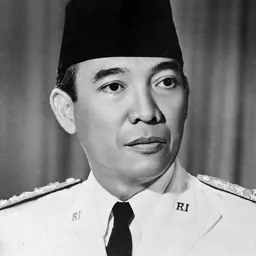




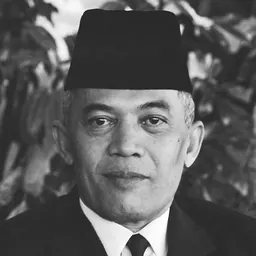
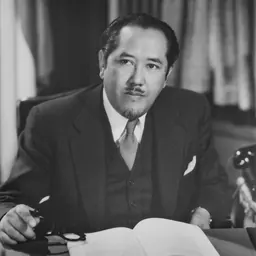
Related people
Same field, nearest in time






Contemporaries
People whose lives overlapped Sjafruddin Prawiranegara's





Frequently asked questions
Who was Sjafruddin Prawiranegara?
Indonesian statesman and economist (1911–1989)
When was Sjafruddin Prawiranegara born?
Sjafruddin Prawiranegara was born on 28 February 1911 in Bantam Residency.
When did Sjafruddin Prawiranegara die?
Sjafruddin Prawiranegara died on 15 February 1989 in Jakarta.
What was Sjafruddin Prawiranegara's occupation?
Sjafruddin Prawiranegara was a politician, economist and philosopher.
What nationality was Sjafruddin Prawiranegara?
Sjafruddin Prawiranegara was Indonesian.
Sources & further reading
· Wikipedia: Sjafruddin Prawiranegara
· DBpedia: Sjafruddin Prawiranegara
Cite this page
APA: Biography.guide. (2026). Sjafruddin Prawiranegara. https://biography.guide/sjafruddin-prawiranegara/
MLA: "Sjafruddin Prawiranegara." Biography.guide, https://biography.guide/sjafruddin-prawiranegara/.
Chicago: "Sjafruddin Prawiranegara." Biography.guide. https://biography.guide/sjafruddin-prawiranegara/.
Data last updated: 2026-09-20 · Spot an error? Report a correction.
Portrait: Wikimedia Commons · author & licence
Page generated 2026-09-27 04:58 UTC