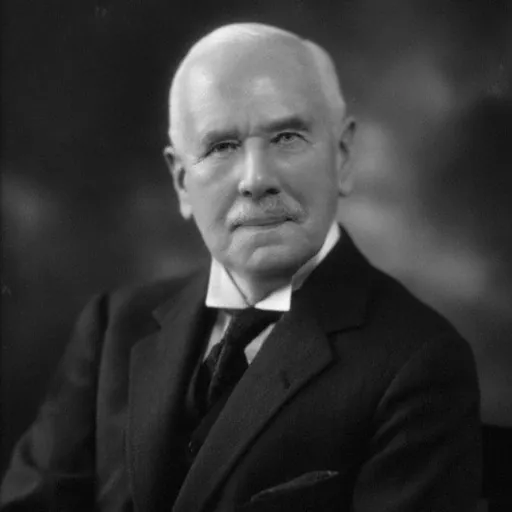
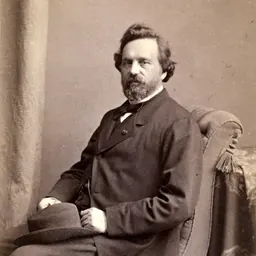
Sir William Arbuthnot-Lane, 1st Baronet
British surgeon and physician
About Sir William Arbuthnot-Lane, 1st Baronet
Lived 1856 – 1943 (aged 86). Sir William Arbuthnot-Lane, 1st Baronet was a British surgeon and sir William Arbuthnot Lane.
Sir William Arbuthnot Lane, 1st Baronet, CB, FRCS (4 July 1856 – 16 January 1943) was a British surgeon and physician. He mastered orthopaedic, abdominal, and ear, nose and throat surgery, while designing new surgical instruments toward maximal asepsis. He thus introduced the "no-touch technique", and some of his designed instruments remain in use.
Lane pioneered internal fixation of displaced fractures, procedures on cleft palate, and colon resection and colectomy to treat "Lane's disease"—now otherwise termed colonic inertia, which he identified in 1908—which surgeries were controversial but advanced abdominal surgery. During World War I, as an officer with the Royal Army Medical Corps, he organised and opened Queen Mary's Hospital in Sidcup, which pioneered reconstructive surgery. The late-Victorian and Edwardian periods' preeminent surgeon, Lane operated on socialites, politicians, and royalty. Lane thus attained baronetcy in 1913.
In the early 1920s, as an early advocate of dietary prevention of cancer, Lane met medical opposition, resigned from British Medical Association, and founded the New Health Society, the first organisation practising social medicine. Through newspapers and lectures, sometimes drawing large crowds, Lane promoted whole foods, fruits and vegetables, sunshine and exercise: his plan to foster health and longevity via three bowel movements daily. Tracing diverse diseases to modern civilization, he urged the people to return to farmland.
For his New Health, Lane eventually became viewed as a crank. Lane's explanation of the association between constipation and illness as due to autointoxication is generally regarded by gastroenterologists as wholly fictitious, and Lane's earlier surgeries for chronic constipation have been depicted as baseless. Yet constipation remains a major health problem associating with diverse signs and symptoms, including psychological—sometimes still explained as Lane's disease—and total colectomy has been revived since the 1980s as a mainstream treatment, although dietary intervention is now the first line of action.
Life and career
Childhood
William Arbuthnot Lane was born in 1856 in Fort George near Inverness, Scotland, as the eldest of the eight children of Benjamin Lane, a military surgeon enlisted to the British Empire. At age 12, he was sent to boarding school at Stanley House School, Bridge of Allan in Scotland. Soon, he was persuaded to switch to surgery, however, a surer career than medicine. In 1883, Lane became a Fellow of Royal College of Surgeons and joined Great Ormond Street Hospital, at age 32, Lane returned to Guy's Hospital as anatomy demonstrator and assistant surgeon, and remained with Guy's for most of his career. during World War I (1914–18).
Family
William's first wife, Charlotte Jane Briscoe—daughter of John Briscoe, himself son of Major Briscoe—bore Irene Briscoe in 1890 and Eileen Caroline in 1893, both in St Olave parish. At age 78, Charlotte Jane died in 1935. Sir Lane's daughter Eileen was married to Nathan Mutch, whose sister was Jane Mutch. In 1935, Sir Lane married Jane Mutch (who died in 1966 at age 82).
Image
Lane was tall, rather thin, seemingly aged slowly, his reactions were often difficult to discern,
The man whose first question, after what he considers to be a right course of action has presented itself, is What will people say? is not the man to do anything at all. If you get a rude letter, always send a polite one back. It's much better. If everyone believes a thing, it is probably untrue!
Death
He died at his home, 46 Westbourne Terrace, Paddington, London, W2.
Medical spotlight
Surgery master
By 1886, Lane authored a surgery textbook. In 1889 in America at Johns Hopkins University's medical school, William Halsted, a pioneer of abdominal surgery, introduced surgical gloves, and then contracted Goodyear Rubber Company to manufacture thin ones to preserve hands' tactile sensitivity.
Widely renowned, Lane's surgical skill exhibited imperturbable calm at difficulties encountered during the operations. Whereas other surgeons would attempt asepsis but lapse, perhaps touching an unsterilized surface, Lane's utterly fastidious protocol was unrelenting. As did Paul Ehrlich—theorist on antibody mediating acquired immunity—and as did Pasteur, Metchnikoff believed nutrition to influence immunity. Metchnikoff's book La Vie Humaine foresaw a courageous surgeon removing the colon.
The pioneer British psychiatrist Henry Maudsley asserted much "evidence that organic morbid poisons bred in the organism or in the blood itself may act in the most baneful manner upon the supreme nervous centers. The earliest and mildest mental effect by which a perverted state of blood declares itself is not in the production of positive delusion or incoherence of thought, but in a modification of mental tone", then perhaps "a chronic delusion of some kind", though "its more acute action is to produce more or less active delirium and general incoherence of thought". whose theory converged with the autointoxication principle.
Since 1875, American medical doctor John Harvey Kellogg in Battle Creek, Michigan, at his huge sanitarium—advertised as "University of Health", staffing some 800 to 1 000, and yearly receiving several thousand patients, including US Presidents and celebrities—had battled degeneration and disease by fending off bowel sepsis. In the early 20th century, rebuking alleged "health faddists" like Kellogg and Sylvester Graham, American physicians who embraced focal infection theory cast themselves in the German tradition of "scientific medicine". Kellogg argued that German researchers ostensibly repudiated the autointoxication principle, but, by using different terminology, supported it circuitously. coined the term autointoxication,
Lane
In 1908, Lane reported a syndrome of severe chronic constipation, often with dysfunction of pelvic muscles and obstructed defecation—invariably with psychological dysfunction, impairing quality of life, but affecting mostly women—a syndrome soon termed Lane disease, yet now otherwise termed slow transit constipationas well as colonic inertia. That same year, Lane treated it by surgery. The following year, Lane's book The Operative Treatment of Chronic Constipation was published in London. Lane began with colon bypass, and then, at insufficient improvements, performed total colectomy. Famed for an appendectomy saving England's monarch, Lane warned of "chronic intestinal stasis"—its "flooding of the circulation with filthy material", thus autointoxication—warnings taken seriously by the public. Apparently, Lane had had trouble publishing in the British Medical Journal and in The Lancet his first articles on chronic intestinal stasis. In any case, most surgeons opposed Lane's operating on constipation. There, "chronic intestinal stasis received its deathblow", when a Fellow's severely antagonistic speech, apparently influencing the course of Lane's career, preempted Lane's opening a surgery school.
In 1916, Henry Cotton in America had embraced focal infection theory with unmatched zeal, became the first to apply it to psychiatry, In 1923, on his European lecture tour, Cotton arrived in Britain, where he learned from Lane an improved surgical technique
New Health
In the early 1920s, Lane began advocating cancer prevention through diet, but, thereby drawing conflict with the British Medical Association, resigned from the association in 1924, With advertising by physicians being forbidden, Lane averted disciplining by the General Medical Council by having his name deleted from the Medical Register. Meanwhile, colectomy for constipation was abandoned amid low success rates but high complication rates. —New Health Society's view, not hereditarian, however, depicted humankind's regeneration as pivoting on health education. Lane said that his lecture in Oldham, Lancashire, was "packed by three thousand or more people", and "that many people had to be carried out fainting, while outside mounted policemen were kept busy holding back and controlling the crowd who wished to force their way into the hall".
Legacy
Seven years before his 1943 death, Lane's autobiography explained himself as a man "acting upon the repeated request of his children that I should write for them a rough sketch of my life", although "it can be of no interest to others". Rather, two of his former house surgeons at Guy's Hospital—first W. E. Tanner and later T. B. Layton—would borrow from it to author biographies on Lane. By then, however, consensus had formed that Lane's surgeries to treat constipation had been misguided, and perhaps even Lane himself had concluded so. By 1982, colectomy for constipation was declared "clinically futile". Lane's rationale and his era's very notion of autointoxication have been depicted as wholly unfounded and irrational due to a pervasive psychological effect of toilet training Yet by the late 1990s, the autointoxication concept and thereby colon cleansing was being renewed in alternative healthcare, allegedly upon a fictitious basis.
In basic research, if freed from its simplistic reduction to constipation, the autointoxication principle has now been substantially supported as an independent mechanism whereby gastrointestinal microorganisms contain or produce toxins exhibiting systemic effects—as by transmigration into circulation and driving systemic inflammation—effects that include the psychological. Apparent instances of autointoxication associate not merely with constipation, however, but principally with alternating constipation and diarrhea,
Still, constipation remains a "major health problem". Gastroenterologists attribute chronic constipation's associated signs and symptoms to slow colon transit, to irritable bowel syndrome, to pelvic floor dysfunction —apparently a cause of refractory constipation in adolescents, too —or to obstructed defecation, which along with slow colon transit have remained incompletely understood.
Treating constipation, gastroenterologists' first line of intervention is now dietary—whole foods, principally vegetables, fruits, and grains—or fiber supplements. although some gastroenterologists as recently as 2012 have claimed that there is "no evidence" supporting a role for exercise. Some 15% to 30% of constipation patients exhibit slow colon transit, but sometimes successfully, exhibited by some 15% to 30% of constipation patients. By 1985, Lane's early article on surgical treatment of chronic constipation had become a classic, while physiologic testing and more accurate patient selection renewed interest in total colectomy with ileorectal anastomosis—that is, removing the entire large intestine and joining the small intestine's outlet to the rectum—to treat colonic inertia, Lane disease. By now, gastroenterology's accepted view is that, although few patients meet the selection criteria, surgery ought to be offered as a treatment option for severe chronic constipation. Selection criteria ought to be extremely stringent, including multiple confirmation of slow colon transit by physiologic testing, and further medical, psychological, and psychosocial evaluations, with patients understanding that colectomy might not improve the condition and might even worsen abdominal pain.
Relevance
Willie Lane was among the last surgeons of an era where one could master three specialties—orthopaedic, abdominal, and ear nose and throat—and some of his designed surgical instruments are still used today. Even in the 21st century, particular descriptions by Lane "should be required reading by orthopaedic surgeons".
Footnotes
Don’t just read it —
keep it.
Full-length biographies made to live with: read them, listen on the way to work, watch them tonight.
- E-book
- Audio
- Video
Instant download · yours to keep · every purchase keeps this site free
Important facts
People in Sir William Arbuthnot-Lane, 1st Baronet's life
Named in this biography and alive at the same time



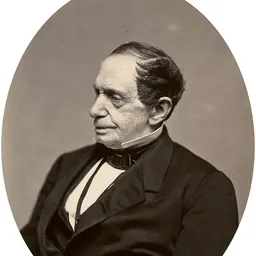
Related people
Same field, nearest in time
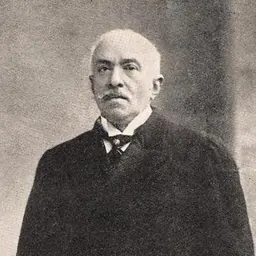
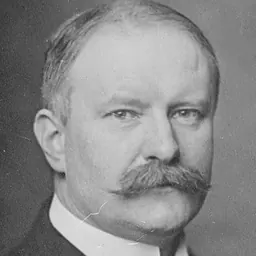
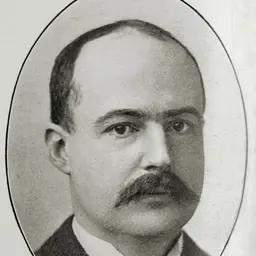

Contemporaries
People whose lives overlapped Sir William Arbuthnot-Lane, 1st Baronet's


Frequently asked questions
Who was Sir William Arbuthnot-Lane, 1st Baronet?
British surgeon and physician (1856-1943)
When was Sir William Arbuthnot-Lane, 1st Baronet born?
Sir William Arbuthnot-Lane, 1st Baronet was born on 4 July 1856 in Fort George.
When did Sir William Arbuthnot-Lane, 1st Baronet die?
Sir William Arbuthnot-Lane, 1st Baronet died on 16 January 1943 in Paddington.
What was Sir William Arbuthnot-Lane, 1st Baronet's occupation?
Sir William Arbuthnot-Lane, 1st Baronet was a surgeon and sir William Arbuthnot Lane.
What nationality was Sir William Arbuthnot-Lane, 1st Baronet?
Sir William Arbuthnot-Lane, 1st Baronet was British.
Sources & further reading
· Wikipedia: Sir William Arbuthnot-Lane, 1st Baronet
· DBpedia: Sir William Arbuthnot Lane, 1st Baronet
Cite this page
APA: Biography.guide. (2026). Sir William Arbuthnot-Lane, 1st Baronet. https://biography.guide/sir-william-arbuthnot-lane-1st-baronet/
MLA: "Sir William Arbuthnot-Lane, 1st Baronet." Biography.guide, https://biography.guide/sir-william-arbuthnot-lane-1st-baronet/.
Chicago: "Sir William Arbuthnot-Lane, 1st Baronet." Biography.guide. https://biography.guide/sir-william-arbuthnot-lane-1st-baronet/.
Data last updated: 2026-09-24 · Spot an error? Report a correction.
Portrait: Wikimedia Commons · author & licence
Page generated 2026-10-04 09:15 UTC