
Henry Cotton
British member of the Indian Civil Service and Liberal Party politician
About Henry Cotton
Lived 1845 – 1915 (aged 70). Henry Cotton was a British politician.
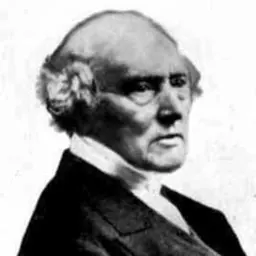
Sir Henry John Stedman Cotton, (13 September 1845 – 22 October 1915 ) had a long career in the Indian Civil Service, during which he was sympathetic to Indian nationalism and labourers in Assam's tea plantations. He was elected the president of the Indian National Congress in 1904 at the height of the Bengal partition. After returning to England, he served as a Liberal Party Member of Parliament (MP) for Nottingham East from 1906 to January 1910.
Early life Henry was born in 1845 in the city of Kumbakonam in the Madras region of India, to Indian-born parents of English descent, Joseph John Cotton (1813–1867) and Susan Jessie Minchin (1823–1888).
He became the Chief Commissioner of Assam in 1897, from which post he retired in 1902.
Through his paternal great-grandfather Joseph Cotton (1745–1825), Henry John Stedman Cotton was a first cousin once removed of both the judge Henry Cotton (his godfather, who he was named after The British man of letters James S. Cotton was his brother.
In 1848, he left India to be educated in England. He entered Magdalen College School in 1856, Brighton College in 1859, and King's College London in 1861. After his graduation from college, he took and passed the Indian Civil Service Examination.
Career Cotton joined the Indian Civil Service in Bengal Presidency, arriving in India in 1867.
In 1901 when Cotton recommended an increase in the wages for the tea plantation workers, the Indian Tea Association campaigned heavily against him in the Anglo-Indian press and lobbied to create trouble for him with his superiors. This eventually marred his prospects in the Indian Civil Services. Nevertheless, he undertook some corrective administrative measures based on inspections of the province's plantations.
Cotton College, Guwahati, the oldest institute of higher education in Assam and all of Northeast India was established in 1901 by Cotton.
Post-retirement As he retired, he was appointed a Knight Commander of the Order of the Star of India (KCSI) in the 1902 Coronation Honours list published on 26 June 1902, and invested as such by King Edward VII at Buckingham Palace on 24 October 1902. Some of the Indian National Congress' 1904 participants. Cotton is seated in the front row, fourth from the left. Taken from his book, Indian and home memories (1911). Cotton supported Indian Home Rule and got into serious trouble when he advocated the cause in his 1885 book New India, or India in Transition (revised edition 1907). He returned to India at the height of partition of Bengal in 1904. He presided over the twentieth session of the Indian National Congress at Bombay. His presidential address showcased his deep understanding of Indian struggles under colonial rule. He recognised the INC's vital role in shaping the history and character of India. Under his presidency, the INC organised a conference on the partition in Calcutta. He traced the history of partition to 1891, when it was first discussed until 1897 when he was the Chief Commission of Assam. When the Lushai Hills was transferred to Assam, he argued, the matter was dropped. In his opinion the governments of Assam and Bengal never proposed partition, and it was a motion "spontaneously and uninvited from the Government of India itself." The couple were photographed together by Cameron, in costume as Romeo and Juliet, on their wedding day.
Two of his sons, Evan and Julian, also made careers in the civil service in India. Cotton's grandson, Sir John Cotton (1909–2002), was Ambassador to the Congo Republic and Burundi and the last of six generations of Cottons to serve in colonial administration in India.
He was an active writer and activist on behalf of Indian rights until the end of his life, despite ill health and financial difficulties. In 1885 he wrote New India or India in transition. It was aimed to draw attention of the ruling class for policy making in view of the great social, political and religious changes that were taking place in India at the time. In 1911 he published his memoirs, Indian and Home Memories. Sir Henry Cotton died at his home in St John's Wood, London, in October 1915.
Don’t just read it —
keep it.
Full-length biographies made to live with: read them, listen on the way to work, watch them tonight.
- E-book
- Audio
- Video
Instant download · yours to keep · every purchase keeps this site free
Important facts
People in Henry Cotton's life
Named in this biography and alive at the same time



Related people
Same field, nearest in time






Contemporaries
People whose lives overlapped Henry Cotton's


Frequently asked questions
Who was Henry Cotton?
British member of the Indian Civil Service and Liberal Party politician (1845-1915)
When was Henry Cotton born?
Henry Cotton was born on 13 September 1845 in Kudanthaiyan.
When did Henry Cotton die?
Henry Cotton died on 22 October 1915 in London.
What was Henry Cotton's occupation?
Henry Cotton was a politician.
What nationality was Henry Cotton?
Henry Cotton was British.
Sources & further reading
· DBpedia: Henry Cotton (politician)
Cite this page
APA: Biography.guide. (2026). Henry Cotton. https://biography.guide/henry-cotton-politician/
MLA: "Henry Cotton." Biography.guide, https://biography.guide/henry-cotton-politician/.
Chicago: "Henry Cotton." Biography.guide. https://biography.guide/henry-cotton-politician/.
Data last updated: 2026-09-20 · Spot an error? Report a correction.
Page generated 2026-09-27 05:25 UTC