Sir Watkin Williams-Wynn, 4th Baronet
Welsh politician 1749-1789
About Sir Watkin Williams-Wynn, 4th Baronet
Lived 1749 – 1789 (aged 39). Sir Watkin Williams-Wynn, 4th Baronet was a politician, art collector and patron of the arts.
Sir Watkin Williams-Wynn, 4th Baronet (23 September 1749 – 24 July 1789) was a British politician and landowner who represented Shropshire and Denbighshire in the House of Commons of Great Britain from 1772 to 1789. The Williams-Wynn baronets had been begun in 1688 by the politician Sir William Williams, 1st Baronet, but had inherited, in the time of the 3rd baronet, Sir Watkin's father, the estates of the Wynn baronets, and changed their name to reflect this.
Early life
Williams-Wynn was the eldest son of the second marriage of his father, Sir Watkin Williams-Wynn, 3rd Baronet, to Frances Shackerley of Cheshire. He was a baby when his father was killed by a fall from his horse while out hunting, and he inherited the extensive Wynnstay estates, the largest in North Wales. These straddled at least five Welsh counties and extended into Shropshire in England, and yielded an estimated rental income of £20,000 – a very substantial sum at the time, whose spending he tackled with enthusiasm and considerable success.
On his coming of age in 1770, he held an extravagant party for 15,000 guests; the bills record consumption of "31 bullocks, 50 hogs, 50 calves, 80 sheep, 18,000 eggs...." An embroidered suit which he may have worn on this occasion is in the possession of the National Museum of Wales.
Career Williams-Wynn's family had been powerful in politics for several generations, and Sir Watkin effectively controlled several Parliamentary seats and led a Tory faction in the House of Commons, though he was less involved in politics than his father, and tended not to lead his faction decisively. The influence of the family had declined during his long minority.
He served as a Member of Parliament for Shropshire from 1772 to 1774, and for Denbighshire from 1774 until his death in 1789 aged 39. He was criticised for poor attendance. He was Lord Lieutenant of Merionethshire from 1775 to 1789.
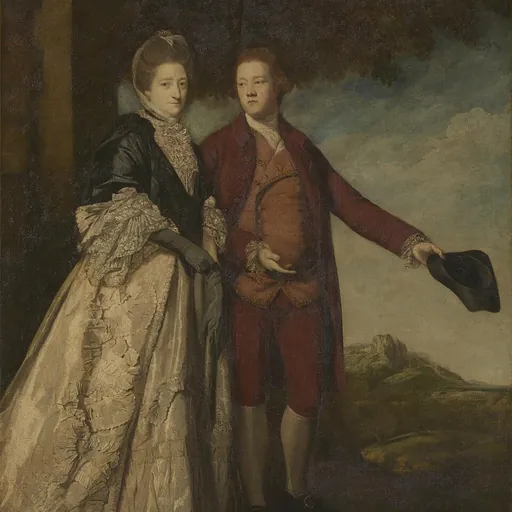
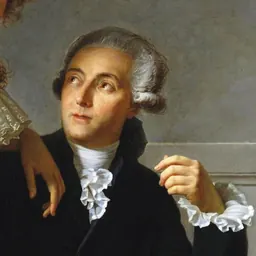
Patron of the arts Portrait of Williams-Wynn and his mother by Sir Joshua Reynolds, ca. 1768
Sir Watkin made a Grand Tour to Europe from June 1768, returning by February the next year for his wedding in April. In Rome Pompeo Batoni painted him with some companions, and a classical subject, Bacchus and Ariadne was commissioned later, in 1774. The Rococo silver-gilt toilet service he gave to his first wife, by the London goldsmith Thomas Heming, is now in the National Museum of Wales. The Neoclassical grave monument for her is by Joseph Nollekens, in St Mary's Church, Ruabon, Clwyd.
Sir Watkin played a significant role in the development of art in Wales, as an early patron of landscape painting there, which was to become the largest area of artistic activity in Wales. He brought both Richard Wilson and Paul Sandby to his seat at Wynnstay. Wilson was commissioned to produce two large landscapes Dinas Bran from Llangollen and View near Wynnstay which were displayed at the Royal Academy Exhibition of 1771. Sandby stayed six weeks in the summer of 1770, giving lessons to the family as well as painting, on his first visit to Wales. The next year Sandby returned and from 21 August to 4 September 1771 he and Sir Watkin toured through the mountains of northern Wales. From the sketches made on the tour Sandby published twelve aquatint Views in North Wales in 1776, and five of his Views in Wales in 1777. Matching sets from South Wales came from his tours there with Sir Joseph Banks, who commissioned the whole series. A more ambitious tour together, to Italy, was planned but cancelled after Sir Watkin's second marriage.
He supported the Concerts of Antient Music, and is caricatured by James Gilray in a depiction of King George III of Great Britain attending one he organised.
Personal life He was married twice, first in April 1769 to Lady Henrietta Somerset, daughter of Charles Somerset, 4th Duke of Beaufort. As Williams-Wynn was a minor (under 21) he had to get Parliamentary permission by a special Act for the marriage settlement. Lady Henrietta died very shortly afterwards in July 1769. Together, they had four sons and three daughters, including: Charlotte Williams-Wynn (1775–1819), who married Lt-Col William Shipley, MP for Flint Boroughs and St Mawes, and son of the Very Rev. William Davies Shipley. Sir Henry Williams-Wynn (1783–1856), who married Hon. Hester Frances Smith, daughter of Robert Smith, 1st Baron Carrington, in 1813.
Sir Watkin died on 24 July 1789.
Residence
Sir Watkin commissioned Robert Adam to build 20–21 St James's Square in London which was constructed between 1771 and 1775. Sir Joshua Reynolds received several commissions from Sir Watkin, some of which remain with the family. These include a portrait of him with his first wife in "Van Dyck" costume, and another of his second wife with her children, in around 1784, one with his mother (1768–69, National Gallery, London), one of Sir Watkin presiding over the Society of Dilettanti (1777, now on loan to Brooks's), and one of his eldest son as John the Baptist.
Coat of arms
Don’t just read it —
keep it.
Full-length biographies made to live with: read them, listen on the way to work, watch them tonight.
- E-book
- Audio
- Video
Instant download · yours to keep · every purchase keeps this site free
Important facts
People in Sir Watkin Williams-Wynn, 4th Baronet's life
Named in this biography and alive at the same time

Related people
Same field, nearest in time
Contemporaries
People whose lives overlapped Sir Watkin Williams-Wynn, 4th Baronet's



Frequently asked questions
Who was Sir Watkin Williams-Wynn, 4th Baronet?
Welsh politician 1749-1789
When was Sir Watkin Williams-Wynn, 4th Baronet born?
Sir Watkin Williams-Wynn, 4th Baronet was born on 23 September 1749.
When did Sir Watkin Williams-Wynn, 4th Baronet die?
Sir Watkin Williams-Wynn, 4th Baronet died on 24 July 1789.
What was Sir Watkin Williams-Wynn, 4th Baronet's occupation?
Sir Watkin Williams-Wynn, 4th Baronet was a politician, art collector and patron of the arts.
Sources & further reading
· Wikipedia: Sir Watkin Williams-Wynn, 4th Baronet
· DBpedia: Sir Watkin Williams-Wynn, 4th Baronet
Cite this page
APA: Biography.guide. (2026). Sir Watkin Williams-Wynn, 4th Baronet. https://biography.guide/sir-watkin-williams-wynn-4th-baronet/
MLA: "Sir Watkin Williams-Wynn, 4th Baronet." Biography.guide, https://biography.guide/sir-watkin-williams-wynn-4th-baronet/.
Chicago: "Sir Watkin Williams-Wynn, 4th Baronet." Biography.guide. https://biography.guide/sir-watkin-williams-wynn-4th-baronet/.
Data last updated: 2026-09-27 · Spot an error? Report a correction.
Portrait: Wikimedia Commons · author & licence
Page generated 2026-10-04 11:56 UTC