
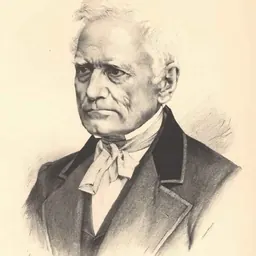
Sir Richard Temple, 1st Baronet
British politician
About Sir Richard Temple, 1st Baronet
Lived 1826 – 1902 (aged 76). Sir Richard Temple, 1st Baronet was a British politician, diplomat, indian Civil Service and beamter.
Sir Richard Temple, 1st Baronet (8 March 1826 – 15 March 1902), was a British colonial administrator in the 19th-century India, who served as Governor of Bombay from 1877 to 1880.
Early life Temple was the son of Richard Temple (1800–1874) and his first wife Louisa Anne Rivett-Carnac (d. 1837), a daughter of James Rivett-Carnac. His paternal ancestor, William Dicken of Sheinton, Shropshire, married in the middle of the 18th century the daughter and co-heiress of Sir William Temple, 5th Baronet (1694–1760), of the Temple baronets of Stowe. Their son assumed the surname Temple in 1796, and inherited the Temple manor-house and estate of The Nash, near Kempsey in Worcestershire. Richard Temple (born 1826) inherited the estate on his father's death in 1874. The British government, dogmatically committed to a laissez-faire economic policy, castigated Temple for interfering in the workings of the market. He was then appointed by the Viceroy of India as a plenipotentiary famine delegate to Madras during the famine of 1877 there. Seeing this appointment as an opportunity to "retrieve his reputation for extravagance in the last famine," Temple implemented new relief policies which ultimately failed to relieve widespread starvation. In 1877, a poor crop harvest in Britain raised prices of grain, while India exported twice as much wheat than the previous year. In addition to the colonial government's refusal to suspend taxation, this led to severe food shortages, particularly in areas supplied by railroads and granaries. Implementing what was known as the "Temple wage", which was not scientifically-derived, Temple tried to determine the minimum amount of food required by "men doing heavy labour" per day. In labour camps established for construction of railroads and canals, the diets of workers were just one pound of rice a day (unsupplemented by meat or vegetables) providing 1,627 calories a day- 2,200 calories less than recommended for Indian males doing heavy labour in the 21st century.
His services were recognised with a baronetcy in 1876. In 1877 he was made Governor of Bombay Presidency, and his activity during the Afghan War of 1878–80 was untiring.
In 1880, when Temple was nearing the end of his service in British India, it was proposed that a commemorative statue for his 33 years in the Indian Civil Service be erected. The standing marble statue was completed by Thomas Brock in 1884. It shows him carrying his cloak over his arm and an elaborate 19th-century dress uniform with swags, ties and medals. They are, in fact, the costume of a Grand Commander of the Star of India, the formal attire for Governors of the Presidencies. The statue was unveiled with much pomp at the North end of Bombay's Oval. It was moved in August 1965 to the grounds beside the Bhau Daji Lad Museum, Byculla, Bombay (Victoria and Albert Museum).
Five years later, in 1885, Temple was returned as a Conservative MP for the Evesham division of Worcestershire. Meanwhile, he produced several books on Indian subjects. In parliament, he was assiduous in his attendance, and he spoke on Indian subjects with admitted authority. He was not otherwise a parliamentary success, and to the public, he was best known from caricatures in Punch, which exaggerated his physical peculiarities and made him look like a lean and hungry tiger. In 1885 he became vice-chairman of the London School Board, and as chairman of its finance committee, he did useful and congenial work. In 1892 he changed his constituency for the Kingston division, but in 1895 he retired from parliament. In 1896 he was appointed a Privy Councillor.
Temple had kept a careful journal of his parliamentary experiences, intended for posthumous publication; and he self-published a short volume of reminiscences. He died at his residence at Hampstead on 15 March 1902, from heart failure.
Publications
Works by Temple include:
Temple also edited the 17th-century seaman Thomas Bowrey's A Geographical Account of Countries Round the Bay of Bengal, 1669 to 1679, published in 1905.
Family Temple was twice married. First, in 1849, to Charlotte Frances Martindale, daughter of Benjamin Martindale. She died in 1855, leaving him with two young sons and a daughter: She died in 1924, and they had a son from the marriage: Charles Lindsay Temple (1871–1929), later Lieutenant-Governor of Northern Nigeria
Arms
Don’t just read it —
keep it.
Full-length biographies made to live with: read them, listen on the way to work, watch them tonight.
- E-book
- Audio
- Video
Instant download · yours to keep · every purchase keeps this site free
Important facts
People in Sir Richard Temple, 1st Baronet's life
Named in this biography and alive at the same time



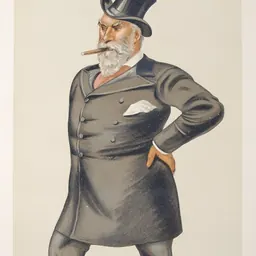




Related people
Same field, nearest in time



Contemporaries
People whose lives overlapped Sir Richard Temple, 1st Baronet's




Frequently asked questions
Who was Sir Richard Temple, 1st Baronet?
British politician (1826-1902)
When was Sir Richard Temple, 1st Baronet born?
Sir Richard Temple, 1st Baronet was born on 8 March 1826.
When did Sir Richard Temple, 1st Baronet die?
Sir Richard Temple, 1st Baronet died on 15 March 1902 in Hampstead.
What was Sir Richard Temple, 1st Baronet's occupation?
Sir Richard Temple, 1st Baronet was a politician, diplomat, indian Civil Service and beamter.
What nationality was Sir Richard Temple, 1st Baronet?
Sir Richard Temple, 1st Baronet was British.
Sources & further reading
· Wikipedia: Sir Richard Temple, 1st Baronet
· DBpedia: Sir Richard Temple, 1st Baronet
Cite this page
APA: Biography.guide. (2026). Sir Richard Temple, 1st Baronet. https://biography.guide/sir-richard-temple-1st-baronet/
MLA: "Sir Richard Temple, 1st Baronet." Biography.guide, https://biography.guide/sir-richard-temple-1st-baronet/.
Chicago: "Sir Richard Temple, 1st Baronet." Biography.guide. https://biography.guide/sir-richard-temple-1st-baronet/.
Data last updated: 2026-09-25 · Spot an error? Report a correction.
Page generated 2026-09-27 05:12 UTC