
About Thomas Brock
Lived 1847 – 1922 (aged 75). Thomas Brock was a British sculptor.
Sir Thomas Brock (1 March 184722 August 1922) was an English sculptor and medallist, notable for the creation of several large public sculptures and monuments in Britain and abroad in the late nineteenth and early twentieth centuries. Marjorie Trusted describes him as "the undisputed leading British sculptor of his day". His most famous work is the Victoria Memorial in front of Buckingham Palace, London.
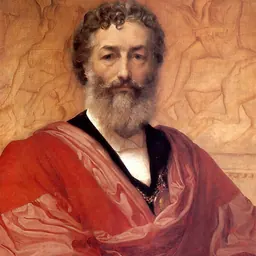
Biography Brock was born on 1 March 1847 in Worcester. In 1866 he became a pupil of the sculptor John Henry Foley and also enrolled in the Royal Academy Schools, where he won a gold medal for sculpture in 1869. He met and befriended Frederic, Lord Leighton, whose emphasis on realism and naturalism in sculpture led Brock to become part of the New Sculpture movement and to develop his talent for sympathetic and realistic portraiture. It was his completion of Foley's statue of Prince Albert for the Albert Memorial which first brought Brock to prominence and secured his position as an establishment sculptor. He also assisted in the casting of Lord Leighton's greatly influential 1877 sculpture An Athlete Wrestling with a Python.
Brock was elected an associate of the Royal Academy in 1883 and became a full member in 1891.
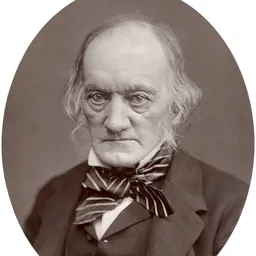
Brock's group The Moment of Peril (now in the garden of Leighton House) was followed by The Genius of Poetry, at the Carlsberg Brewery in Copenhagen. A plaster model for Eve was shown at the Royal Academy in 1898; a marble version (1900) is in the collection of the Tate and Brock also cast some smaller bronze replicas and other imaginative works that mark his development. His portrait works include busts, such as those of Lord Leighton and Queen Victoria, statues, such as Sir Richard Owen and Henry Philpott, bishop of Worcester, and sepulchral monuments such as that of Lord Leighton in St Paul's Cathedral. and according to legend King George V was so moved by the excellence of the memorial that he called for a sword and knighted Brock on the spot.
From 1914 to 1919 Brock returned to the post of president of the Society of British Sculptors.
1900–1909
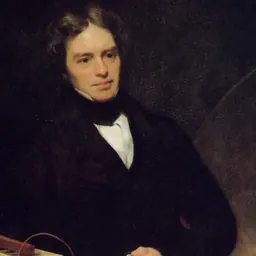
Other works Equestrian bronze A Moment of Peril, 1880, now in the collection of Tate Britain. Marble statue on a pedestal of Sorabjee Shapurjee Bengallee, 1898, south-east corner of the Oval, Fort, Mumbai Marble bust for India of Darasha Ruttonjee Chichgur, 1903, current location unknown Busts of Henry W. Longfellow at Grand Pre, Nova Scotia Busts of Michael Faraday and Frederic Leighton in the collection of the National Portrait Gallery in London.
Don’t just read it —
keep it.
Full-length biographies made to live with: read them, listen on the way to work, watch them tonight.
- E-book
- Audio
- Video
Instant download · yours to keep · every purchase keeps this site free
Important facts
People in Thomas Brock's life
Named in this biography and alive at the same time



Related people
Same field, nearest in time



Contemporaries
People whose lives overlapped Thomas Brock's




Frequently asked questions
Who was Thomas Brock?
British artist (1847–1922)
When was Thomas Brock born?
Thomas Brock was born on 1 March 1847 in Worcester.
When did Thomas Brock die?
Thomas Brock died on 22 August 1922 in London.
What was Thomas Brock's occupation?
Thomas Brock was a sculptor.
What nationality was Thomas Brock?
Thomas Brock was British.
Sources & further reading
Cite this page
APA: Biography.guide. (2026). Thomas Brock. https://biography.guide/thomas-brock/
MLA: "Thomas Brock." Biography.guide, https://biography.guide/thomas-brock/.
Chicago: "Thomas Brock." Biography.guide. https://biography.guide/thomas-brock/.
Data last updated: 2026-09-20 · Spot an error? Report a correction.
Page generated 2026-09-27 05:29 UTC