
About Richard Temple
Lived 1846 – 1912 (aged 66). Richard Temple was a British opera singer, music educator, singer, theatre manager and actor.
Richard Barker Cobb Temple (2 March 1846 – 19 October 1912) was an English opera singer, actor and stage director, best known for his performances in the bass-baritone roles in the famous series of Gilbert and Sullivan comic operas.
After an opera career in London and throughout Britain beginning in 1869, Temple joined the D'Oyly Carte Opera Company in 1877. There, he created most of the bass-baritone roles in the Savoy Operas, as follows: Sir Marmaduke in The Sorcerer (1877), Dick Deadeye in H.M.S. Pinafore (1878), the Pirate King in the London production of The Pirates of Penzance (1880), Colonel Calverley in Patience (1881), Arac in Princess Ida (1884), the title character in The Mikado, Sir Roderic in Ruddigore and Sergeant Meryll in The Yeomen of the Guard (1888). He also played the baritone roles of Strephon in the original production of Iolanthe (1882), and Giuseppe in the New York production of The Gondoliers (1890).
During the next two decades, Temple played in, or directed, a variety of comic operas, musical comedies and plays, and sang in concerts, both in London and on tour. He also taught acting and directed productions at music schools, primarily at the Royal College of Music.
Early life and opera career
Temple was born in London, the eldest son of Richard Cobb, a stockbroker from Yorkshire, and his wife, Eliza Barker. He worked as a bank clerk and cashier and began to sing and act as and amateur. In 1867 he participated in a charity concert for St Patrick’s Benevolent Fund alongside Rose Hersee, and the following year he performed in The Foster Sister at the Haymarket Theatre, produced by Thomas Coe, a noted acting teacher.
Temple made his professional stage debut at the Crystal Palace in May 1869 as Count Rodolfo in La sonnambula. He soon sang in Lucia di Lammermoor, played Pablo in The Rose of Castille and was the King in Maritana. Also in 1871, among other concert and opera roles, Temple toured with Fred Sullivan's Operetta Company, appearing as Sergeant Bouncer in Arthur Sullivan's Cox and Box, as Marquis in Punchinello by William Charles Levey, and Old Matthew in H. B. Farnie's Offenbach adaptation Breaking the Spell, among other roles, at Manchester and Liverpool. Arthur Sullivan was the musical director.
By this time, he was courting his frequent duet partner, Elizabeth Ellen "Bessie" Emmett (1846–1875), and the two married In 1872. Later the same year, he joined Rose Hersee's Royal National Opera at St James's Theatre. The following year he gave concerts in London and toured in opera before returning to London to play the role of Pippertrunk in Le Roi Carotte at the Alhambra Theatre, and Gérome, in L'œil crevé at the Opera Comique. and in the same role later at the Philharmonic Hall and Opera Comique. The following year, he played Pluto opposite Fred Sullivan's Mercury in the Victorian burlesque Ixion Re-wheeled at the Opera Comique and later took roles at the Alexandra Palace.
In 1875 he again appeared in Breaking the Spell. Later that year, Temple produced, directed, and appeared as Thomas Brown in, a revival of Arthur Sullivan's one-act comic opera The Zoo, at the Philharmonic Theatre, He also produced his own English version of Offenbach's Geneviève de Brabant as well as playing in various roles in London. Temple remained at the Opera Comique where, from October–December 1881, he appeared as King Portico in a revival of W. S. Gilbert and Frederic Clay's comic opera Princess Toto produced by John Hollingshead. He also gave "Richard Temple's Dramatic Recital" at Peckham in 1881, played in other operetta at the Opera Comique and, in Manchester, created the role of King James in The Lancashire Witches and played Abdallah in Solomon’s Lord Bateman. Next, Temple created the role of Arac in Gilbert and Sullivan's Princess Ida (1884) and revisited the role of Sir Marmaduke in the first revival of The Sorcerer (1884–85). He then created his most celebrated role, the Mikado of Japan in The Mikado (1885–87), whom, according to Jessie Bond, he played as "suave and oily". In 1887 he created the part of Sir Roderic Murgatroyd in Ruddigore (1887). After revivals of Pinafore, Pirates and Mikado, in which he repeated his original roles, Temple played Sergeant Meryll in The Yeomen of the Guard (1888–89), the final role he would create for Gilbert and Sullivan. In July 1890, he left the company again to pursue a directing career.
Temple was back with a D'Oyly Carte touring company briefly the following year, playing Pyjama in The Nautch Girl. Also in 1892, he was appointed to the Royal College of Music, where he directed student productions. and starred as Dick in Wapping Old Stairs at the Vaudeville Theatre in 1894, which he also directed and produced. At a later Steinway Hall recital he performed the then avant-garde Enoch Arden to Richard Strauss's music. Temple gave recitals in other venues, including the Queen's Hall. He also set himself up as a "musical and dramatic" reciter. The Gay Pretenders (1900), with George Grossmith senior and junior, and Frank Wyatt; and the captain in San Toy on tour in 1901. He also played Northumberland in Herbert Beerbohm Tree's production of William Shakespeare's Richard II at Her Majesty's Theatre in 1903, and that Christmas, he was in Little Hans Andersen as King of the Copper Castle, produced by William Greet with members of the Savoy company. In October 1908, he returned to the Savoy to give a few performances as Deadeye in Pinafore in place of Henry Lytton. In March 1909, he played Sergeant Meryll in Yeomen. He directed many student productions with Charles Villiers Stanford conducting, including Gluck's Orfeo, with the young Clara Butt (1893); the UK premiere of Léo Delibes' Le roi l'a dit (1895); Purcell's Dido and Aeneas (1895); Verdi's Falstaff (1896); Wagner's The Flying Dutchman (1898); Weber's Euryanthe (1900); Fidelio (1902); and Schumann's Genoveva, with the young George Baker (1910).
For the Royal Academy of Music, he directed Verdi's Un ballo in maschera in 1908. At the Academy, as Director of the Dramatic Class, his many students included Eva Turner and Darrell Fancourt, who later became well known as Temple's successor in the Gilbert and Sullivan bass-baritone roles. At the Royal Academy and the Royal College he taught many other students, including future Gilbert and Sullivan performers George Baker and Clara Dow, and Muriel Foster, who became known as an oratorio singer. Temple died at Charing Cross Hospital in London the following month at the age of 66. Temple is portrayed by Timothy Spall in the 1999 Mike Leigh film, Topsy-Turvy. His son Richard William Cobb Temple (1872–1954) became an actor in Britain and America. He was married to musical theatre star Evie Greene.
Recordings Temple made some records in 1902–03 for the Gramophone & Typewriter Company. His renditions of "A More Humane Mikado" and "O Better Far to Live and Die" appear on the Pearl CD, The Art of the Savoyard (GEMM CD 9991).
Don’t just read it —
keep it.
Full-length biographies made to live with: read them, listen on the way to work, watch them tonight.
- E-book
- Audio
- Video
Instant download · yours to keep · every purchase keeps this site free
Important facts
People in Richard Temple's life
Named in this biography and alive at the same time








Related people
Same field, nearest in time
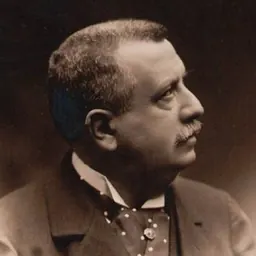

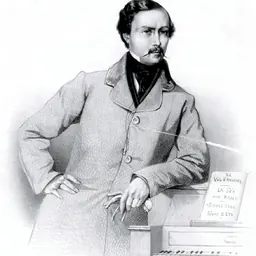
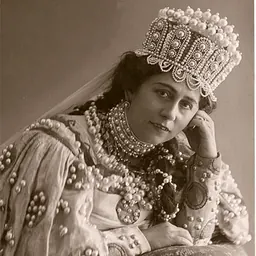
Contemporaries
People whose lives overlapped Richard Temple's
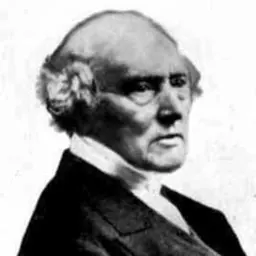


Frequently asked questions
Who was Richard Temple?
British opera singer and actor (1846-1912)
When was Richard Temple born?
Richard Temple was born on 2 March 1846.
When did Richard Temple die?
Richard Temple died on 19 October 1912 in London.
What was Richard Temple's occupation?
Richard Temple was an opera singer, music educator, singer, theatre manager and actor.
What nationality was Richard Temple?
Richard Temple was British.
Sources & further reading
· DBpedia: Richard Temple (bass-baritone)
Cite this page
APA: Biography.guide. (2026). Richard Temple. https://biography.guide/richard-temple/
MLA: "Richard Temple." Biography.guide, https://biography.guide/richard-temple/.
Chicago: "Richard Temple." Biography.guide. https://biography.guide/richard-temple/.
Data last updated: 2026-09-20 · Spot an error? Report a correction.
Page generated 2026-09-27 05:25 UTC