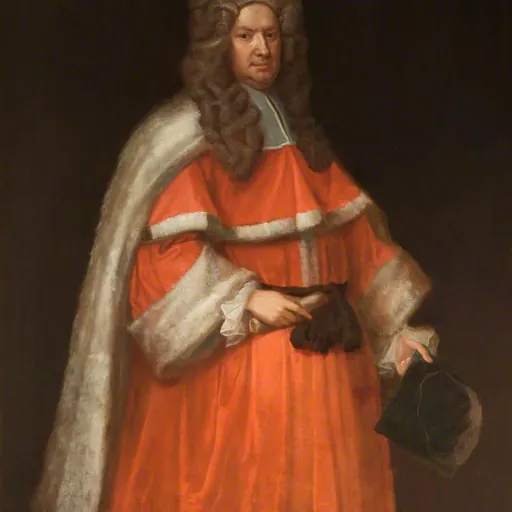
About Sir Richard Levinge, 1st Baronet
Lived 1656 – 1724 (aged 68). Sir Richard Levinge, 1st Baronet was a politician.
Sir Richard Levinge, 1st Baronet (2 May 1656 – 13 July 1724) was an Irish politician and judge, who played a leading part in Irish public life for more than 30 years.
Background
Levinge was born at Leek, Staffordshire, the second son of Richard Levinge of Parwich Hall, Derbyshire, Recorder of Chester, and Anne Parker, daughter of George Parker of Staffordshire and his wife Grace Bateman. The Levinges (the name is sometimes spelt Levin) were a long-established Derbyshire family with a tradition of public service. Through his mother he was a first cousin of Thomas Parker, 1st Earl of Macclesfield, Lord High Chancellor of Great Britain.
Career
He was educated at Audlem School, Derbyshire and St John's College, Cambridge. He entered the Inner Temple in 1671 and was called to the Bar in 1678. He was a Member of Parliament of the English House of Commons for Chester from 1690 to 1695. He was also, like his father, Recorder of Chester in 1686/7, but was summarily removed from this office by King James II of England.
He was one of the first to declare for William III of England at the Glorious Revolution, and was sent by the new Government to Ireland as Solicitor-General in 1689. In 1692 he was elected as a member of the Irish House of Commons for Belfast and for Blessington, but chose to sit for Blessington, a seat he held until 1695. During this time he served as Speaker of the Irish House of Commons. In politics he was a moderate Tory, noted throughout his career for his desire to conciliate: in an age of bitter political faction this earned him the uncharitable nickname "Tom Double". Although he supported the Penal Laws (no Irish officeholder then could do otherwise), he was very tolerant in religious matters and had several Roman Catholic friends, including his predecessor as Solicitor-General, Sir Toby Butler.
He later represented Longford Borough from 1698 to September 1713 and Kilkenny City from 1713 to November 1715 in the Irish Parliament. In 1713 he was also returned for Gowran, but chose to sit for Kilkenny.
He also served as Solicitor General for Ireland from 1689, from which office he was dismissed in 1695 following a quarrel with Henry Capell, 1st Baron Capell of Tewkesbury, the Lord Lieutenant of Ireland.
Levinge was created a Baronet, of High Park in the County of Westmeath, in the Baronetage of Ireland on 26 October 1704. He was once again a member of the Parliament of Great Britain for Derby from 1710 to 1711.
Family
He married firstly in 1683 Mary Corbin, daughter of Gawin Corbin, a wealthy London leather and linen merchant, and had three sons and three daughters. Henry Corbin, the prominent Virginia politician, was a close relative, possibly an elder brother, of Mary's father. Her portrait, by the Swedish painter Michael Dahl, still exists. She died in 1720.
He married secondly in 1723 (though by his own account he was already "old and sick") Mary Johnson, daughter of Robert Johnson, former Baron of the Court of Exchequer (Ireland) and his wife Margaret Dixon, daughter of Sir Richard Dixon, of Calverstown, County Kildare, and had one further son, also named Richard, who was born only a few months before his father's death. Margaret remarried in 1732 Charles Annesley, a grandson of the Earl of Anglesey, who died in 1746; she died in 1757.
Of the children of his first marriage, Richard and Charles both in turn inherited the baronetcy. Mary married Washington Shirley, 2nd Earl Ferrers, and had three daughters, including the noted religious leader Selina Hastings, Countess of Huntingdon. Dorothy married Sir John Rawdon, 3rd Baronet, and was the mother of John Rawdon, 1st Earl of Moira. After Rawdon's death, she remarried Charles Cobbe, Archbishop of Dublin, and had two more sons, Charles and Thomas. Richard Levinge (1724-1783), the son of the second marriage, lived mainly at Calverstown, presumably as a guest of his cousin Mr Justice Robert Dixon, the last of the Dixon family, and was MP for Duleek 1766–1776.
Sir Richard divided his time between his ancestral home, Parwich Hall, which he bought from his childless elder brother, and his newly acquired property Knockdrin Castle, County Westmeath. Most of his estates passed to his eldest son, who extensively rebuilt Parwich.
Don’t just read it —
keep it.
Full-length biographies made to live with: read them, listen on the way to work, watch them tonight.
- E-book
- Audio
- Video
Instant download · yours to keep · every purchase keeps this site free
Important facts
People in Sir Richard Levinge, 1st Baronet's life
Named in this biography and alive at the same time



Related people
Same field, nearest in time


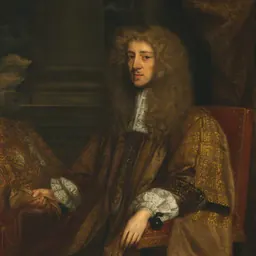

Contemporaries
People whose lives overlapped Sir Richard Levinge, 1st Baronet's


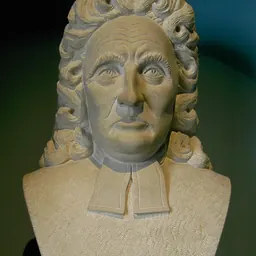
Frequently asked questions
Who was Sir Richard Levinge, 1st Baronet?
British politician
When was Sir Richard Levinge, 1st Baronet born?
Sir Richard Levinge, 1st Baronet was born on 2 May 1656.
When did Sir Richard Levinge, 1st Baronet die?
Sir Richard Levinge, 1st Baronet died on 13 July 1724.
What was Sir Richard Levinge, 1st Baronet's occupation?
Sir Richard Levinge, 1st Baronet was a politician.
Sources & further reading
· Wikipedia: Sir Richard Levinge, 1st Baronet
· DBpedia: Sir Richard Levinge, 1st Baronet
Cite this page
APA: Biography.guide. (2026). Sir Richard Levinge, 1st Baronet. https://biography.guide/sir-richard-levinge-1st-baronet/
MLA: "Sir Richard Levinge, 1st Baronet." Biography.guide, https://biography.guide/sir-richard-levinge-1st-baronet/.
Chicago: "Sir Richard Levinge, 1st Baronet." Biography.guide. https://biography.guide/sir-richard-levinge-1st-baronet/.
Data last updated: 2026-09-21 · Spot an error? Report a correction.
Portrait: Wikimedia Commons · author & licence
Page generated 2026-09-27 04:59 UTC