
About Sir James Wylie
Lived 1768 – 1854 (aged 85). Sir James Wylie was a Russian and British physician and surgeon, known for Russia.
Sir James Wylie, 1st Baronet (13 November 1768 – 11 February 1854 OS) was a Scottish physician known in Russia as Яков Васильевич Виллие (Yakov Vasil'evich Villie). From 1790 to 1829, he served in the Imperial Russian army as a battlefield surgeon in more than 50 battles; also from 1798 until 1854 physician to three tsars; and from 1808 to 1838 the president of Saint Petersburg's Imperial Medical and Surgical Academy. His name is inseparably connected with the creation of both battlefield medicine and a national corps of Russian-born military doctors within the Imperial Russia during the first half of the 19th century, plus transformation of its military medical training. He is well known within Russia.
Early life: 1768–1790 Wylie was born on 13 November 1768 at Kincardine-on-Forth, a Scottish seaport, one of eight children, he and four brothers surviving infancy.
He excelled at school;
His ambition in medicine, he was apprenticed to the local doctor. also likely by doyens of anatomy and botany. Discovering an aptitude for surgery, he undertook personal anatomy and surgery lessons.
Battlefield surgeon: 1790–1795 At the suggestion of John Rogerson, physician to Empress Catherine II, he moved to Russia in September 1790, passed the State Medical Collegium's examination for the right to practise medicine, and became physician to Prince Galitzin.
In December 1790 he was appointed Surgeon-in-Ordinary within the 33rd Eletsky regiment; stationed in Lithuania.
He participated in the 1792 Polish-Russian War and 1794 Kościuszko Uprising.
After five years in the army, he resigned when appointed physician to Count Stroganov; meanwhile also undertaking private practice: initially at Moscow, then at Saint Petersburg. He would become a close companion of the tsar. He also embalmed the tsar's distorted facial features to be presentable for public viewing,
Doctor to Tsar Alexander I: 1801–1825 Tsar Paul's son was crowned Alexander I: a good-natured, benevolent monarch. later upgraded to Body Surgeon and Physician.
In 1804, he was granted lifetime feudal ownership of a village and its serfs; it named Vileiskoe after his Russian name. Two grants near Saint Petersburg were still in place when he died; his will releasing those serfs from villeinage. and almost daily participated in patient care at a military hospital. He also proved a proficient administrator; Wylie even required to attend army deputy-commander Mikhail Kutuzov, his face grazed by a musket shot.
The coalition fell apart when Austria signed a peace treaty with France. He accordingly directed Russia's medical team at fourth-coalition battles; also tending the wounded of all ranks on the battlefield under cannon fire.
In 1808, Wylie was appointed manager of all army medicine, Land Forces Ministry; this recast in January 1812 as Director, Army Medical Department, War Ministry. The War Ministry immediately commenced massive increases in military capability.
Wylie did likewise for army medical capability, his task quantified to assembling medical services for an army of 300,000, with at least 500 doctors.
More than a quarter of a million took part. Wylie later rode in darkness with General Platov and his Cossack skirmishers on their bold extensive foray into the French lines. Afterwards, Wylie convinced army command to ban them within Russian armies; they also a hindrance and security risk.
Tsar Alexander knew that Europe's chance to be rid of Napoleon would slip away unless the army pursued him.
Major battles followed during 1813 at Lützen, Bautzen, Dresden, Kulm, Leipzig, and Hanau in Germany; then in France during early 1814 at Brienne, Bar-sur-Aube, Arcis-sur-Aube, Fere-Champenoise and Paris.
The bloodiest battle of the Napoleonic wars occurred at Leipzig in October 1813; and casualties were shockingly high; about 95,000 killed, wounded, or missing. Wylie later described taking charge of 40,000 wounded soldiers, including abandoned French. To accommodate them, 56 Leipzig buildings became makeshift hospitals.
The tsar then visited England. At Ascot races on 10 June; Wylie was knighted by the Prince Regent at the tsar's request. Nobody at the impromptu ceremony had a sword needed for the accolade except General Platov who offered his handsome scimitar. Platov presented this to Wylie, it now displayed within the Kremlin Armoury.
Later, while visiting a British warship, the tsar mentioned to the regent that he had made his own physician a baronet; whereupon the regent replied: "Well, I will make yours one"; telling Wylie to consider himself a baronet as a patent would be ordered. The tsar, who was designing a coat of arms for Wylie, sought permission to include supporters.
The coat of arms is indicative of the bearer's love of Russia, particularly its Cossacks. The shield shows a noble's open-faced helmet, the optional baronet's red left hand, the fox typically included on Wylie coats of arms, and Wylie's motto: Labore et Scientia. This took time. His baronetcy received State Council recognition in 1824 (Russia's sole baronet). The Diploma of Nobility was approved in 1847.
Final years attending the tsar: 1814–1825 Wylie's signature: prescription for Alexander I.The following nine years involved the tsar, with Wylie, at meetings with alliance partners about restoring European stability, viz: Second Treaty of Paris, Congress of Vienna, Quadruple Alliance, Quintuple Alliance, Congress System, and Congress of Verona.
Wylie's bond with the tsar was manifest when badly injured in an August 1823 carriage rollover. He was afterwards visited by a nephew who later recounted Sir James's comments about the tsar's response to the accident: " ...The attentions of H.I.M. to Sir James upon this occasion were such as can be forgotten neither by him nor me; they were really those of a brother to a brother".
That year, Wylie's clinical judgement and resolve were tested when erysipelas in the tsar's leg, injured in his own carriage rollover in 1818, began spreading, gangrene apparent.
Doctor to Tsar Nicholas I: 1826–1854 Tsar Alexander's brother was crowned Nicholas I. Wylie retained his positions; forging a close bond with him; likely helped by having healed his future mother-in-law, Queen Charlotte of Prussia, in 1808.
In 1843, he was appointed inaugural chairman of the academy's Scientific Committee. Lower ranks received little treatment; therefore more likely to succumb to wounds and diseases.
A key role of his 1806 appointment as Chief Military Medical Inspector Then, if required, the wounded were forwarded for treatment/evacuation along an echelon of hospitals. Army surgical instruments being inadequate, around 1806 Wylie established supply standards; embedding these within army supply tables and hospital standards. "Regulations for the delivery of mobile hospitals" (early 1812) ratified the above arrangements, treatment standards and hospital capacities. City civilian hospitals were included; Wylie authorised to assign soldiers there, conduct inspections, and require improvements. He insisted on strict hospital procedures against spread of contagious diseases, In 1810, Wylie, reported widespread malnutrition among rank-and-file soldiers; citing inability to afford supplementing their meagre army rations. Thereafter, infantry soldiers received three free days weekly to earn supplemental income. For mobile hospitals, he had readied bullock carts piled with tents, materiel stockpiles, and staff. Wylie vigorously developed the academy; "Academician of Imperial Medical-Surgical Academy" bestowed upon high-achieving professors (1809). Salaried students received free on-site accommodation and meals. Practical skills being paramount; Surgery, Ocular, and Therapeutic Measures clinics were established, with final-year surgery students required to perform four major surgeries including leg amputation. with bank interest provided to impoverished military doctors' sons studying at the academy (1841). Establishment of academy journal To maintain military academy graduates' awareness of advances in medical knowledge, in 1811 Wylie launched its journal; General Journal of Medical Sciences.
Creation of a national corps of Russian military doctors In both army and academy roles, Wylie gave Russian doctors preference over foreigners when addressing army doctor shortages and inadequacies. Essays On the use of arsenic in curing intermittent fevers (1794). Order of Saint Anna: 1st class 1814; with diamond badges 1821. Gold medal: 50 years' service to Russian medicine 1840. Brass medal: 225th anniversary of birth 1993. Honorary member (1800), and Dean (1810–1813), of State Medical Collegium. France: Knight: Legion of Honour 1814. Württemberg: Commander: Order of the Crown 1818.
A brother, Walter, was a shipowner whose journeys included Saint Petersburg; On one occasion, Tsar Alexander invited him to dine with them. Walter found himself having dinner on gold plate at the Imperial Palace with brother, tsar, and nobles.
In contrast, he is also described as "one of the most cultured people of his era, a polyglot, a bibliophile, and lover of literature"; on good terms with prominent figures in Russian literature and culture, authors, and journalists; dining with them each Wednesday.
Until his last days, Wylie's health remained sound; with excellent memory and lively interest in literature and current affairs. being interred at Saint Petersburg's Volkovo Lutheran Cemetery with full imperial honours; attended by tsar Nicholas and the entire Court.
Completed in 1859, a two-metre, bronze sculpture rests upon a pedestal of black Finland marble, This was backed by a smear campaign declaring Wylie an English spy.
At Kincardine-on-Forth, a plaque was unveiled in 2004 honouring one of its famous sons.
In 1809, Wylie purchased a home on Saint Petersburg's English Embankment; rebuilding it and residing there from 1838.
Don’t just read it —
keep it.
Full-length biographies made to live with: read them, listen on the way to work, watch them tonight.
- E-book
- Audio
- Video
Instant download · yours to keep · every purchase keeps this site free
Important facts
People in Sir James Wylie's life
Named in this biography and alive at the same time
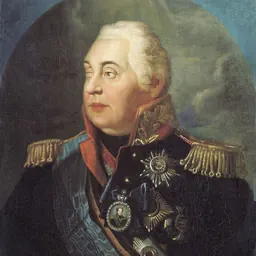
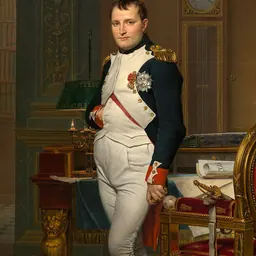
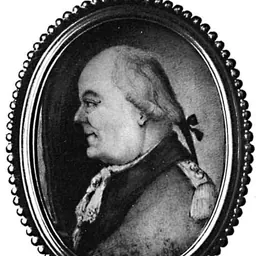

Related people
Same field, nearest in time

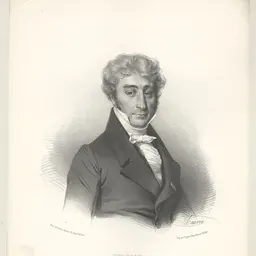



Contemporaries
People whose lives overlapped Sir James Wylie's





Frequently asked questions
Who was Sir James Wylie?
Scottish imperial physician and reformer in Russia
When was Sir James Wylie born?
Sir James Wylie was born on 20 November 1768 in Kincardine.
When did Sir James Wylie die?
Sir James Wylie died on 2 March 1854 in Saint Petersburg.
What was Sir James Wylie's occupation?
Sir James Wylie was a physician and surgeon.
What was Sir James Wylie known for?
Sir James Wylie was known for Russia.
What nationality was Sir James Wylie?
Sir James Wylie was Russian and British.
Sources & further reading
· DBpedia: Sir James Wylie, 1st Baronet
Cite this page
APA: Biography.guide. (2026). Sir James Wylie. https://biography.guide/sir-james-wylie/
MLA: "Sir James Wylie." Biography.guide, https://biography.guide/sir-james-wylie/.
Chicago: "Sir James Wylie." Biography.guide. https://biography.guide/sir-james-wylie/.
Data last updated: 2026-09-20 · Spot an error? Report a correction.
Page generated 2026-09-27 05:20 UTC