
About Sir Isaac Coffin, 1st Baronet
Lived 1759 – 1839 (aged 80). Sir Isaac Coffin, 1st Baronet was an American and British naval officer and politician.
Admiral Sir Isaac Coffin, 1st Baronet, (also Coffin-Greenly; 16 May 1759 – 23 July 1839) was an officer of the Royal Navy who served during the American War of Independence and the French Revolutionary and Napoleonic Wars.
Coffin was born in Boston and served in the navy on a number of ships during the War of Independence. He fought at Cape Henry with Arbuthnot and at St. Kitts with Hood, eventually being promoted to command a number of small ships on the American coast. Despite his rise through the ranks, he clashed occasionally with the naval hierarchy, with the first incident occurring while still a newly commissioned commander aboard . An incident over unqualified lieutenants led to his court-martial, though he was acquitted. A more serious incident occurred after the end of the war with America, when Coffin was particularly active off the Canadian coast. A charge was brought of issuing false musters, and though the practice was endemic in the navy, led to his dismissal from the ship. The First Lord of the Admiralty, Lord Howe, then intervened to have him dismissed from the Royal Navy entirely, a decision that was later overturned by an inquiry, which set an important precedent. Restored to his rank, Coffin commanded several ships during the opening years of the wars with France, but the recurrence of an old injury forced him to move ashore. He spent the rest of the war commanding a number of dockyards, continuing to rise through the ranks, and being created a baronet for his good service. Retiring from active naval service towards the end of the Napoleonic Wars Coffin briefly changed his surname to Coffin-Greenly before reverting it, entered politics, and died with the rank of admiral in 1839.
Family and early life
Isaac Coffin was born in Boston, Province of Massachusetts Bay, on 16 May 1759, into what would prove to be a strong American Loyalist family. He was the fourth and youngest son of the paymaster of the customs in the port, Nathaniel Coffin. His father descended from Tristram Coffin, who immigrated to Massachusetts from Devon in 1642. His mother was Elizabeth, the daughter of the merchant Henry Barnes, of Boston. He attended the Boston Latin School. He first appeared on the books of the 74-gun as an able seaman in October 1771, while Captain was at Boston under the command of Captain Thomas Symonds, and is recorded as having transferred to the brig under Lieutenant William Hunter at Rhode Island in May 1773. He later followed George Montagu aboard .
Commands
Royal Oak then returned to New York, but ran aground while passing from the North to the East River, and was badly damaged. She had to sail to Halifax for repairs, after which Arbuthnot returned to England. Royal Oak set sail to return New York in July, joining the fleet, now under Admiral Graves, on her journey.
His service aboard her was shortlived, for he and the entire ship's company volunteered to join Rear-Admiral Samuel Hood's flagship, the 90-gun . Coffin then went on to Jamaica where his friendship with Hood led to his promotion to post-captain on 13 June 1782 and an appointment to command the 74-gun . Despite the verdict, the court did not have the power to suspend appointments made by the commander in chief, and Coffin was forced to write to the Admiralty on 20 September 1782, requesting the lieutenants' commissions be suspended. He returned to service in May 1786 with an appointment to command the 28-gun . He was ordered to transport Lord Dorchester and his family to Quebec, and departed the Scilly Isles for the voyage across the Atlantic on 9 September. Coffin, an American loyalist who had been deprived of his patrimony by the outcome of the War of Independence, was granted the islands in 1798 for his good service. His attempts to attract settlers or evict the squatters who had arrived from Saint Pierre and Miquelon were however unsuccessful.
Dismissal from the service
While at Halifax with Thisbe, Coffin entered four boys, including two of Lord Dorchester's sons, onto the ship's books as captain's servants. In other words, Howe's decision to overrule the sentence imposed by the original court-martial was ruled invalid, and Coffin was reinstated in the service, with the payment of arrears in his wages. From the Nore he moved to Spithead, and then to Ceuta, where Alligator briefly carried the flag of Admiral Philip Cosby. Superseded by the arrival of , Alligator was sent to cruise off Western Ireland. Having done so, he transported armaments and stores to Guernsey in preparation for the expedition under the Earl of Moira. His business took him at times to Naples, Florence and Leghorn, and after the British evacuation of the island in 1796 he went from Elba to Lisbon, where he remained for two years. He so upset the dock workers that a threatening letter was sent after he ordered a worker to be pressed into the navy for insolence, eventually forcing him to reverse his decision. His reputation as an effective and energetic commissioner earned him the honour of being created a baronet "of the Magdelaine Islands in the Gulph of St. Lawrence, British North America" on 19 May that year, which was followed by being created admiral-superintendent at Portsmouth Dockyard. He was advanced to full admiral on 4 June 1814 and entered politics, being elected as Member of Parliament for Ilchester in 1818, and holding the seat until 1826.
Coffin was created a Knight Grand Cross of the Royal Guelphic Order in 1832. He was a personal friend of Lord Nelson, at whose 1805 funeral he was a pallbearer. He was also a friend of the Duke of Clarence (later William IV), and during the 1832 reform crisis was placed on the King's private list of those to be made peers. Elizabeth Coffin died on 27 January 1839, with Admiral Sir Isaac Coffin dying six months later on 23 July 1839, at the age of 80.
The Coffin School on Nantucket, established with funds provided by Sir Isaac Coffin, was established in 1827. Known as the Admiral Sir Isaac Coffin Lancasterian School, this educational institution was funded by Coffin for the purpose of "promoting decency, good order and morality, and for giving a good English education to youth". The school educated Nantucketers throughout the 19th century. The imposing Greek Revival building in which it was housed after 1854 (and which prominently bears Sir Isaac's name) functioned for a variety of educational purposes throughout the twentieth century and is now used to provide services to Nantucket youth.
Coffins were not named for him. The word coffin, first attested in English in 1380, derives from the Old French , from Latin , the latinisation of Greek κόφινος (kophinos), all meaning basket. The earliest attested form of the word is the Mycenaean Greek ko-pi-na, written in Linear B syllabic script. The modern French form, couffin, means cradle.
Don’t just read it —
keep it.
Full-length biographies made to live with: read them, listen on the way to work, watch them tonight.
- E-book
- Audio
- Video
Instant download · yours to keep · every purchase keeps this site free
Important facts
People in Sir Isaac Coffin, 1st Baronet's life
Named in this biography and alive at the same time

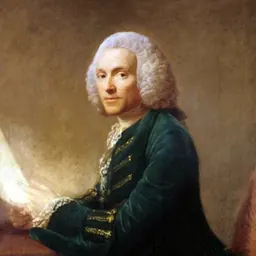
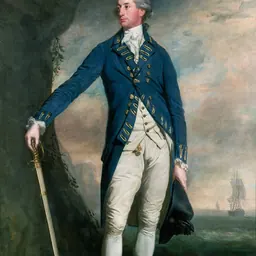



Related people
Same field, nearest in time





Contemporaries
People whose lives overlapped Sir Isaac Coffin, 1st Baronet's





Frequently asked questions
Who was Sir Isaac Coffin, 1st Baronet?
officer of the British Royal Navy (1759-1839)
When was Sir Isaac Coffin, 1st Baronet born?
Sir Isaac Coffin, 1st Baronet was born on 16 May 1759 in Boston.
When did Sir Isaac Coffin, 1st Baronet die?
Sir Isaac Coffin, 1st Baronet died on 23 July 1839.
What was Sir Isaac Coffin, 1st Baronet's occupation?
Sir Isaac Coffin, 1st Baronet was a naval officer and politician.
What nationality was Sir Isaac Coffin, 1st Baronet?
Sir Isaac Coffin, 1st Baronet was American and British.
Sources & further reading
· Wikipedia: Sir Isaac Coffin, 1st Baronet
· DBpedia: Sir Isaac Coffin, 1st Baronet
Cite this page
APA: Biography.guide. (2026). Sir Isaac Coffin, 1st Baronet. https://biography.guide/sir-isaac-coffin-1st-baronet/
MLA: "Sir Isaac Coffin, 1st Baronet." Biography.guide, https://biography.guide/sir-isaac-coffin-1st-baronet/.
Chicago: "Sir Isaac Coffin, 1st Baronet." Biography.guide. https://biography.guide/sir-isaac-coffin-1st-baronet/.
Data last updated: 2026-09-25 · Spot an error? Report a correction.
Page generated 2026-09-27 05:11 UTC