
Sir Henry Rawlinson, 1st Baronet
British politician
About Sir Henry Rawlinson, 1st Baronet
Lived 1810 – 1895 (aged 84). Sir Henry Rawlinson, 1st Baronet was a British linguist, archaeologist, anthropologist, politician, army officer and diplomat.
Sir Henry Creswicke Rawlinson, 1st Baronet (5 April 1810 – 5 March 1895) was a British East India Company army officer, politician, and Orientalist, sometimes described as the Father of Assyriology. His son, also Henry, was to become a senior commander in the British Army during the First World War.
Early life and army service Rawlinson was born on 5 April 1810 at the place now known as Chadlington, Oxfordshire, England. He was the second son of Abraham Tysack Rawlinson and elder brother of historian George Rawlinson. In 1827, having become proficient in Farsi, he was sent to Persia in company with other British officers to drill and reorganize the Shah's troops. Disagreements between the Persian court and the British government, also involving Russia, ended in the departure of the British officers.
Rawlinson began to study Persian inscriptions, more particularly those in the cuneiform character, which had been only partially deciphered by Grotefend and Saint-Martin. For two years from 1836, he was in Kermanshah in western Iran, near the great cuneiform inscription at Behistun, written in Old Persian, Elamite, and Babylonian (a later form of Akkadian) by Darius the Great between 522 and 486 BC. Rawlinson was the first Westerner to transcribe the Old Persian portion of the text. With his knowledge of Old Persian, he set about deciphering the Elamite and Babylonian sections.
Political career Rawlinson was appointed political agent at Kandahar in 1840, serving for three years. In 1844, for his service to the British Empire in the course of the Afghan War, he was made Companion of the Order of the Bath.
A chance encounter with the governor-general resulted in his appointment as political agent in Ottoman Arabia. Settling in Baghdad, he devoted himself to cuneiform studies, and in 1847 he was able to send to Europe a full and accurate transcript of the Behistun inscription, which he was also successful in deciphering and interpreting. Having collected a large amount of antiquarian and geographical information in the pursuit of various explorations, including visits with Sir Austen Henry Layard to the ruins of Nineveh, he returned to England on leave of absence in 1849.
He was elected a Fellow of the Royal Society in February 1850, praised as "The Discoverer of the key to the Ancient Persian, Babylonian, and Assyrian Inscriptions in the Cuneiform character. The Author of various papers on the philology, antiquities, and Geography of Mesopotamia and Central Asia. Eminent as a Scholar".
Remaining at home for two years, in 1851 he published his memoir on the Behistun inscription and was promoted to lieutenant-colonel. The British Museum took custody of his valuable collection of Babylonian, Sabaean and Sassanian antiquities, and made him a considerable grant to continue Layard's Assyrian and Babylonian excavations. In 1851, he returned to Baghdad, where his archaeological finds contributed greatly to the final decipherment and interpretation of the cuneiform character. Rawlinson's greatest contribution was the discovery that individual cuneiform signs had multiple readings depending on their context.
On his return to England, he received the distinction of Knight Commander of the Order of the Bath, and he was appointed a crown director of the East India Company.
The remaining forty years of his life were full of activity (political, diplomatic and scientific) and were spent mainly in London. From February to September 1858, he sat as member of parliament for Reigate, and he was appointed a member of the first India Council. He left again in 1859, when he was sent to Persia as envoy plenipotentiary, but returned after a year owing to his dissatisfaction with the position. He was MP for Frome from 1865 to 1868, and again served on the Council of India from 1868 until his death.
Attitudes concerning Russia
Rawlinson was one of the most important figures arguing that Britain must check Russian ambitions in South Asia. He was a strong advocate of the Forward Policy in Afghanistan and counselled the retention of Kandahar. He argued that Tsarist Russia would attack and absorb Kokand, Bukhara and Khiva (which occurred, and the regions are now parts of Uzbekistan) and warned that it would invade Persia (Iran) and Afghanistan as springboards to British India.
Don’t just read it —
keep it.
Full-length biographies made to live with: read them, listen on the way to work, watch them tonight.
- E-book
- Audio
- Video
Instant download · yours to keep · every purchase keeps this site free
Important facts
People in Sir Henry Rawlinson, 1st Baronet's life
Named in this biography and alive at the same time
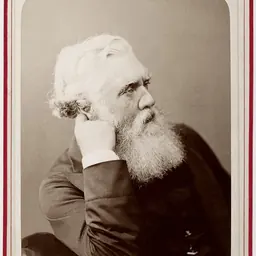

Related people
Same field, nearest in time
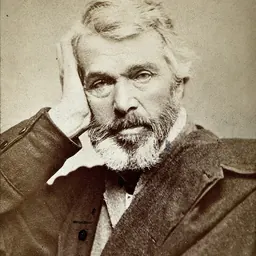
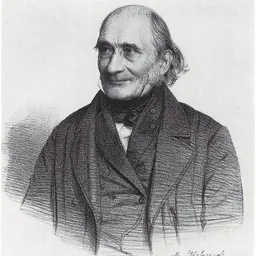

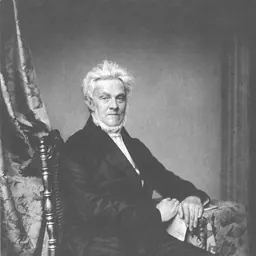
Contemporaries
People whose lives overlapped Sir Henry Rawlinson, 1st Baronet's






Frequently asked questions
Who was Sir Henry Rawlinson, 1st Baronet?
British politician (1810-1895)
When was Sir Henry Rawlinson, 1st Baronet born?
Sir Henry Rawlinson, 1st Baronet was born on 5 April 1810 in Chadlington.
When did Sir Henry Rawlinson, 1st Baronet die?
Sir Henry Rawlinson, 1st Baronet died on 5 March 1895 in London.
What was Sir Henry Rawlinson, 1st Baronet's occupation?
Sir Henry Rawlinson, 1st Baronet was a linguist, archaeologist, anthropologist, politician, army officer and diplomat.
What nationality was Sir Henry Rawlinson, 1st Baronet?
Sir Henry Rawlinson, 1st Baronet was British.
Sources & further reading
· Wikipedia: Sir Henry Rawlinson, 1st Baronet
· DBpedia: Sir Henry Rawlinson, 1st Baronet
Cite this page
APA: Biography.guide. (2026). Sir Henry Rawlinson, 1st Baronet. https://biography.guide/sir-henry-rawlinson-1st-baronet/
MLA: "Sir Henry Rawlinson, 1st Baronet." Biography.guide, https://biography.guide/sir-henry-rawlinson-1st-baronet/.
Chicago: "Sir Henry Rawlinson, 1st Baronet." Biography.guide. https://biography.guide/sir-henry-rawlinson-1st-baronet/.
Data last updated: 2026-09-20 · Spot an error? Report a correction.
Page generated 2026-09-27 05:31 UTC