
About Austen Henry Layard
Lived 1817 – 1894 (aged 77). Austen Henry Layard was a French and British anthropologist, diplomat, archaeologist, politician, assyriologist and writer.
Sir Austen Henry Layard (; 5 March 18175 July 1894) was a British Assyriologist, traveller, cuneiformist, art historian, draughtsman, collector, politician and diplomat. He was born to a mostly English family in Paris and largely raised in Italy. He is best known as the excavator of Nimrud and of Nineveh, where he uncovered a large proportion of the Assyrian palace reliefs known, and in 1851 the library of Ashurbanipal. Most of his discoveries are now in the British Museum. He made a large amount of money from his best-selling accounts of his excavations.
He had a political career between 1852, when he was elected as a Member of Parliament, and 1869, holding various junior ministerial positions. He was then made ambassador to Madrid, then Constantinople, living much of the time in a palazzo he bought in Venice. During this period he built up a significant collection of paintings, which due to a legal loophole he had as a diplomat, he was able to extricate from Venice and bequeath to the National Gallery (as the Layard Bequest) and other British museums.
Family Layard was born in Paris, France, to a family of Huguenot descent. His father, Henry Peter John Layard, of the Ceylon Civil Service, was the son of Charles Peter Layard, Dean of Bristol, and grandson of Dr Daniel Peter Layard, a physician. His mother, Marianne, daughter of Nathaniel Austen, banker, of Ramsgate, was of partial Spanish descent. His uncle was Benjamin Austen, a London solicitor and close friend of Benjamin Disraeli in the 1820s and 1830s. Edgar Leopold Layard the ornithologist was his brother.
On 9 March 1869, at St. George's Church, Hanover Square, Westminster, London, he married his first cousin once removed, Mary Enid Evelyn Guest (1843-1912). Enid, as she was known, was the daughter of Sir Josiah John Guest and his second wife, Lady Charlotte Elizabeth Bertie. Their marriage was reportedly a happy one, and they never had any children.
Biography Early life Much of Layard's boyhood was spent in Italy, where he received part of his schooling, and acquired a taste for the fine arts and a love of travel from his father; but he was at school also in England, France and Switzerland. After spending nearly six years in the office of his uncle, Benjamin Austen, he was tempted to leave England for Sri Lanka (Ceylon) by the prospect of obtaining an appointment in the Civil Service, and he started in 1839 with the intention of making an overland journey across Asia. which was illustrated by another folio volume, called A Second Series of the Monuments of Nineveh, was published in 1853. During these expeditions, often in circumstances of great difficulty, Layard despatched to England the splendid specimens which now form the greater part of the collection of Assyrian antiquities in the British Museum.
Apart from the archaeological value of his work in identifying Kuyunjik as the site of Nineveh, and in providing a great mass of materials for scholars to work upon, these two books of Layard were among the best written books of travel in the English language. ) declaring that in public appointments merit had been sacrificed to private influence and an adherence to routine. After being defeated at Aylesbury in 1857, he visited India to investigate the causes of the Indian Mutiny. He unsuccessfully contested York in 1859, but was elected for Southwark in 1860, and from 1861 to 1866 was Under-Secretary for Foreign Affairs in the successive administrations of Lord Palmerston and Lord John Russell.
Diplomatic career Layard resigned from office in 1869, on being sent as envoy extraordinary to Madrid. In 1877 he was appointed by Lord Beaconsfield Ambassador at Constantinople, where he remained until Gladstone's return to power in 1880, when he finally retired from public life. In 1878, on the occasion of the Berlin Congress, he was appointed a Knight Grand Cross of the Order of the Bath. In Venice he devoted much of his time to collecting pictures of the Venetian school, and to writing on Italian art. On this subject he was a disciple of his friend Giovanni Morelli, whose views he embodied in his revision of Franz Kugler's Handbook of Painting, Italian Schools (1887). He wrote also an introduction to Constance Jocelyn Ffoulkes's translation of Morelli's Italian Painters (1892–1893), and edited that part of Murray's Handbook of Rome (1894) which deals with pictures. In 1887 he published, from notes taken at the time, a record of his first journey to the East, entitled Early Adventures in Persia, Susiana and Babylonia. The late nineteenth century English novelist George Gissing thought it 'one of the most interesting books' vowing to 'read it again some day'. An abbreviation of this work, which as a book of travel is even more delightful than its predecessors, was published in 1894, shortly after the author's death, with a brief introductory notice by Lord Aberdare. Layard also from time to time contributed papers to various learned societies, including the Huguenot Society, of which he was first president.
Death
He died on 5 July 1894 at his residence 1 Queen Anne Street, Marylebone, London. After a post mortem autopsy his remains were cremated at the Woking Crematorium in Surrey. His ashes were interred in the cemetery of Canford Magna Parish Church in Dorset, England. His wife, Lady Layard, outlived him by 16 years, dying on 1 November 1912, in her Venetian palazzo, Ca’ Capello. Her ashes were interred near her husband’s at Canford Parish Church, adjacent to Canford Manor, on 13 December. There is also a marble memorial tablet to him in St Margaret's, Westminster, erected by Enid.
Publications
, 2 volumes (alt.) (alt.)
, 100 plates, From Drawings Made on the Spot. , 71 plates, A Second Series [..] including Bas-Reliefs from the Palace of Sennacherib and Bronzes from the Ruins of Nimroud. From drawings made on the spot during a second expedition to Assyria. (alt. plates only)
, abridged version of Nineveh and its remains (1849)
, abridged version of Nineveh and Babylon (1853)
, 2 volumes
, 2 volumes, biography
Don’t just read it —
keep it.
Full-length biographies made to live with: read them, listen on the way to work, watch them tonight.
- E-book
- Audio
- Video
Instant download · yours to keep · every purchase keeps this site free
Important facts
Family & relationships
People in Austen Henry Layard's life
Named in this biography and alive at the same time

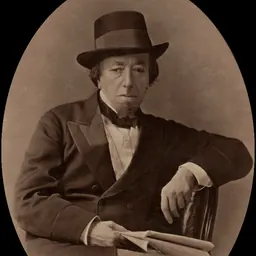


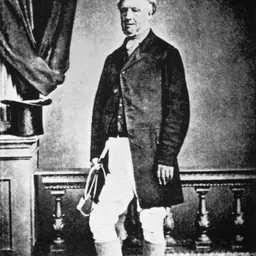


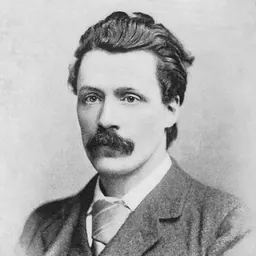
Related people
Same field, nearest in time
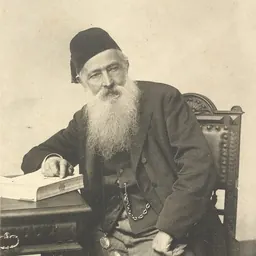


Contemporaries
People whose lives overlapped Austen Henry Layard's



Frequently asked questions
Who was Austen Henry Layard?
British politician (1817–1894)
When was Austen Henry Layard born?
Austen Henry Layard was born on 5 March 1817 in Paris.
When did Austen Henry Layard die?
Austen Henry Layard died on 5 July 1894 in London.
What was Austen Henry Layard's occupation?
Austen Henry Layard was an anthropologist, diplomat, archaeologist, politician, assyriologist and writer.
What nationality was Austen Henry Layard?
Austen Henry Layard was French and British.
Sources & further reading
· Wikipedia: Austen Henry Layard
· DBpedia: Austen Henry Layard
Cite this page
APA: Biography.guide. (2026). Austen Henry Layard. https://biography.guide/austen-henry-layard/
MLA: "Austen Henry Layard." Biography.guide, https://biography.guide/austen-henry-layard/.
Chicago: "Austen Henry Layard." Biography.guide. https://biography.guide/austen-henry-layard/.
Data last updated: 2026-09-27 · Spot an error? Report a correction.
Page generated 2026-09-27 05:17 UTC