
About Sir David Dale, 1st Baronet
Lived 1829 – 1906 (aged 76). Sir David Dale, 1st Baronet was a businessperson and sir David Dale.
Sir David Dale, 1st Baronet (1829–1906) was a British businessman, ironmaster and industrialist. For much of his business career associated with the companies largely controlled by the Pease family, he made his way in financial management and became a prominent figure in north-east England. From age 40 onwards, he was engaged in arbitration and labour issues, and received recognition with a baronetcy.
Background and early life He was born on 11 December 1829 at Berhampore, Murshidabad district, Bengal, the younger of two sons, in a family of three children, of David Dale of the East India Company's service. His father was a judge of the city court there. Dale's mother was Ann Eliza(beth) Douglas (1802–1879); the couple married at Calcutta in 1819. He had at some point acted as Political Resident to the Nawab of Bengal, with seat in the Murshidabad district, at Berhampore. He was the son of James Dale (1753–1819) of Glasgow and his wife Margaret Haddow of Lanark. James Dale was a manager at the New Lanark mills, agent and broker, the son of William Dale and his second wife Martha Dunlop, and a younger brother of David Dale the industrialist.
Maternal background Ann Douglas's father was the Rev. George Douglas, a Wesleyan Methodist minister, itinerant from 1796. He was resident in Aberdeen in 1798 and Peel, Isle of Man in 1801–1802; Ann was born in Ramsey, Isle of Man. their son Dr James Mellis worked for the East India Company. He published in 1824 an article on the disease now known as dengue, calling it "inflammatory fever", in Calcutta. He was guardian to Ann Douglas: "At a very early age, Miss Douglas went to Calcutta, under the guardianship of an uncle who held an important military appointment there[...]" and George Mellis Douglas (bapt. 1809 – 1864), father of Archibald Lucius Douglas and Campbell Mellis Douglas. James Douglas visited India in the early 1820s, travelling out on the Theodosia, and staying at the Wesleyan mission in Royapettah run by James Lynch (1775–1858), a friend of his father. He travelled back on the Competitor as a surgeon in 1823.
Siblings Dale's elder brother James Douglas Dale (1820–1865) joined the Indian army on the Madras establishment, and became lieutenant-colonel.
Family return to the United Kingdom David Dale senior died on board the Providence on 23 June 1830, during a voyage back to the United Kingdom with his wife and children. Ann Dale settled at Darlington, and in 1841 joined the Society of Friends there. Pease bought a house for her in 1854.
Career and the Pease business empire Dale's career began in 1846, as a clerk in the office of the Wear Valley Railway. In 1854 he was appointed through the influence of Joseph Pease as company secretary to the Middlesbrough and Guisborough Railway. That year, Dale went into partnership with William Bouch and became lessee of the Shildon locomotive works. The long arm of the Pease family was demonstrated when Dale's clerk at Shildon, John Anthony Thistlethwaite, had to leave the company because he was involved with the volunteer movement, incompatible with Quaker thinking.
The Consett Iron Company was the successor to a failed company; the Pease family was heavily involved in the restructuring, particularly through Joseph Whitwell Pease. Dale acted in the required liquidation. He also became, as in effect the Pease nominee, a director and manager of the new company. He shared the managing director position with Jonathan Priestman II;
Dale was also managing partner of J. W. Pease & Co., later Pease & Partners Ltd., and chairman of companies working iron ore mines near Bilbao. In 1881 he became a director of the North Eastern Railway Company, having previously served as director of the Stockton and Darlington railway.
On the formation of the Dunderland Iron Ore Company in 1902, Dale was appointed chairman. He was an active member of the Durham Coal Owners' Association and of the Cleveland Mine Owners' Association. The planned merger was not successful, being brought to an abrupt end by the banking collapse of Overend, Gurney and Company.
Dale retained an interest in Richardson, Denton, Duck & Co., shipbuilders and marine engineers, and Denton, Gray & Co. where the shipbuilder John Punshon Denton partnered the investor William Gray. Preoccupied by business interests, he declined to contest a seat in parliament. Dale helped to found the Iron and Steel Institute in 1869, and acted as its first treasurer until 1895, when he was elected president.
The reformer Henry Solly, who struggled to interest major employers as secretary of the Club Union, singled out Dale as especially helpful "as regarded practical co-operation".
Dale was appointed to royal commissions including those on trade depression (1885–6), and on mining royalties (1889–93). At the Berlin labour conference of 1890, set up by Kaiser Wilhelm II, Dale was one of the British representatives. chaired by Dale took in particular extended evidence from Keir Hardie in 1892. Later that year Dale engaged from the chair with Tom Mann's evidence on the eight hour day.
in 1895–6 Dale was involved in the short-lived Industrial Union of Employers and Employed. Dale and other representatives of employers were joined by the trade unionists Edward Trow and Charles Hobson, Trow being also a party to the arbitration board headed by Dale as a joint secretary, and a Darlington Liberal.
Later life and legacy
In 1888 Dale was High Sheriff of Durham. The University of Durham made him an honorary D.C.L. in 1895. He was created a baronet in 1896. Annie was the widow of Henry Whitwell of Kendal. They had a son, James Backhouse Dale, who succeeded to the baronetcy, and one daughter; The marriage brought Dale two step-children: On 2 August 1888 to Alice Frederica Milbank (d. 1902), daughter of Sir Frederick Milbank, 1st Baronet.
Don’t just read it —
keep it.
Full-length biographies made to live with: read them, listen on the way to work, watch them tonight.
- E-book
- Audio
- Video
Instant download · yours to keep · every purchase keeps this site free
Important facts
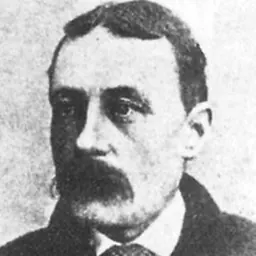
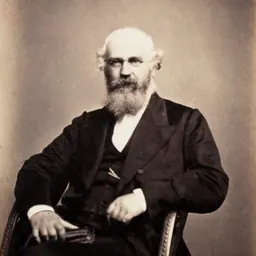
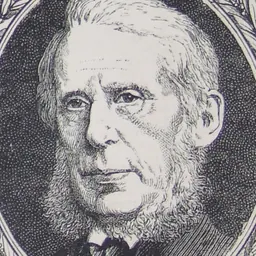
People in Sir David Dale, 1st Baronet's life
Named in this biography and alive at the same time





Related people
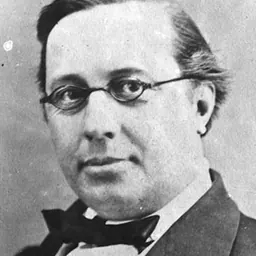
Same field, nearest in time
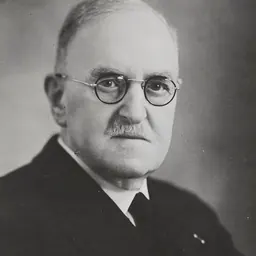
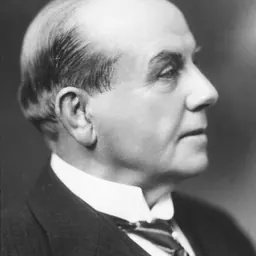

Contemporaries
People whose lives overlapped Sir David Dale, 1st Baronet's




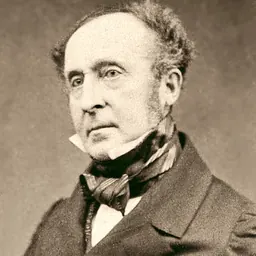
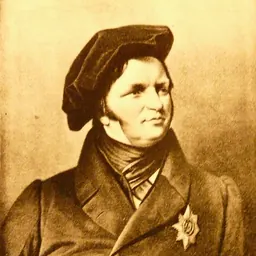
Frequently asked questions
Who was Sir David Dale, 1st Baronet?
British businessman (1829–1906)
When was Sir David Dale, 1st Baronet born?
Sir David Dale, 1st Baronet was born on 11 December 1829 in Murshidabad.
When did Sir David Dale, 1st Baronet die?
Sir David Dale, 1st Baronet died on 28 April 1906 in York.
What was Sir David Dale, 1st Baronet's occupation?
Sir David Dale, 1st Baronet was a businessperson and sir David Dale.
Sources & further reading
· Wikipedia: Sir David Dale, 1st Baronet
· DBpedia: Sir David Dale, 1st Baronet
Cite this page
APA: Biography.guide. (2026). Sir David Dale, 1st Baronet. https://biography.guide/sir-david-dale-1st-baronet/
MLA: "Sir David Dale, 1st Baronet." Biography.guide, https://biography.guide/sir-david-dale-1st-baronet/.
Chicago: "Sir David Dale, 1st Baronet." Biography.guide. https://biography.guide/sir-david-dale-1st-baronet/.
Data last updated: 2026-09-22 · Spot an error? Report a correction.
Page generated 2026-09-27 05:27 UTC