
Sir Charles Pole, 1st Baronet
British naval officer and colonial governor
About Sir Charles Pole, 1st Baronet
Lived 1757 – 1830 (aged 73). Sir Charles Pole, 1st Baronet was a British politician, naval officer and royal Navy.
Admiral of the Fleet Sir Charles Morice Pole, 1st Baronet, GCB (18 January 1757 – 6 September 1830) was a Royal Navy officer, colonial administrator and politician. As a junior officer he saw action at the siege of Pondicherry in India during the American Revolutionary War. After taking command of the fifth-rate HMS Success he captured and then destroyed the Spanish frigate Santa Catalina in the Strait of Gibraltar in the action of 16 March 1782 later in that War.
After capturing the French privateer Vanneau in June 1793, Pole took part in the siege of Toulon at an early stage of the French Revolutionary Wars. He went on to be governor and commander-in-chief of Newfoundland and then commanded the Baltic Fleet later in the War. He also served as a Lord Commissioner of the Admiralty on the Admiralty Board led by Viscount Howick during the Napoleonic Wars.
Early career Born the second son of Reginald Pole and Anne Pole (née Buller), Pole was educated at Plympton Grammar School before joining the Royal Naval Academy at Portsmouth in January 1770. He was appointed to the fifth-rate HMS Thames in 1772 and then transferred to the fourth-rate HMS Salisbury on the East Indies Station in December 1773. Promoted to lieutenant on 26 June 1777, he was assigned to the sixth-rate HMS Seahorse and then transferred to the fourth-rate HMS Rippon in 1778 and saw action at the siege of Pondicherry in India in October 1778 during the American Revolutionary War. He became commanding officer of the fifth-rate HMS Melampus in May 1790, in which he watched the French fleet at Brest, as a result of the Nootka Crisis.
While in command of HMS Melampus, Pole was involved in a fiery conflict between Lieutenant Richard Hancorn and Midshipman William Butterfield. Upon joining Melampus, Hancorn provoked the anger of the midshipmen by handing out harsh and unfair punishments for minor transgressions. Butterfield, in particular, was lashed to a grating and pulled to the top of the mizzen in a public display, because he had engaged in his ordinary duties without express permission. An explosive incident occurred soon after when Hancorn was followed by Butterfield and four other midshipmen and found himself challenged to five separate fights. He responded by reminding them that as a superior officer such behaviour was totally reprehensible, finally vacating the situation and prompting a further torrent of insults and hisses. He went on to be Captain of the Fleet in the Channel Squadron under Lord Bridport in March 1797. Promoted to vice-admiral on 1 January 1801, he became Commander-in-Chief of the Baltic Fleet, with his flag in the second-rate HMS St George in June 1801. and then became Member of Parliament for Newark in 1802.
Promoted to full admiral on 9 November 1805, Pole was present at the funeral of Lord Nelson in January 1806. He became a Lord Commissioner of the Admiralty on the Admiralty Board led by Viscount Howick in February 1806. He was also elected Member of Parliament for Plymouth in November 1806. However he stood down as a Lord Commissioner when the Second Portland Ministry took power in March 1807: in Parliament he became increasingly critical of the new Government particularly in relation to their handling of the raid on Copenhagen in 1807 (which led to the Anglo-Russian War) and the Convention of Sintra in 1808 (which allowed the French to evacuate their troops from Portugal). and advanced to Knight Grand Cross of the Order of the Bath on 20 April 1818. He became Sheriff of Hertfordshire in November 1824, and having been promoted to Admiral of the Fleet on 22 July 1830, he died at his home, Aldenham Abbey, on 6 September 1830.
Family In 1792 Pole married Henrietta Goddard; they had two daughters.
Don’t just read it —
keep it.
Full-length biographies made to live with: read them, listen on the way to work, watch them tonight.
- E-book
- Audio
- Video
Instant download · yours to keep · every purchase keeps this site free
Important facts
People in Sir Charles Pole, 1st Baronet's life
Named in this biography and alive at the same time
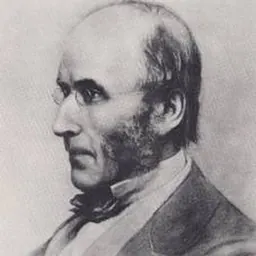

Related people
Same field, nearest in time

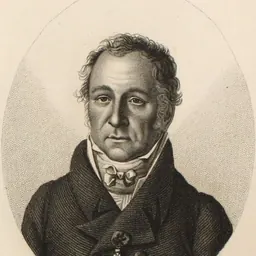


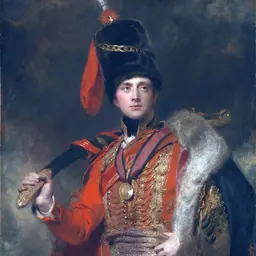
Contemporaries
People whose lives overlapped Sir Charles Pole, 1st Baronet's





Frequently asked questions
Who was Sir Charles Pole, 1st Baronet?
British naval officer and colonial governor (1757-1830)
When was Sir Charles Pole, 1st Baronet born?
Sir Charles Pole, 1st Baronet was born on 18 January 1757 in England.
When did Sir Charles Pole, 1st Baronet die?
Sir Charles Pole, 1st Baronet died on 6 September 1830 in Hertfordshire, Wall Hall Manor.
What was Sir Charles Pole, 1st Baronet's occupation?
Sir Charles Pole, 1st Baronet was a politician, naval officer and royal Navy.
What nationality was Sir Charles Pole, 1st Baronet?
Sir Charles Pole, 1st Baronet was British.
Sources & further reading
· Wikipedia: Sir Charles Pole, 1st Baronet
· DBpedia: Sir Charles Pole, 1st Baronet
Cite this page
APA: Biography.guide. (2026). Sir Charles Pole, 1st Baronet. https://biography.guide/sir-charles-pole-1st-baronet/
MLA: "Sir Charles Pole, 1st Baronet." Biography.guide, https://biography.guide/sir-charles-pole-1st-baronet/.
Chicago: "Sir Charles Pole, 1st Baronet." Biography.guide. https://biography.guide/sir-charles-pole-1st-baronet/.
Data last updated: 2026-09-20 · Spot an error? Report a correction.
Page generated 2026-09-27 05:23 UTC