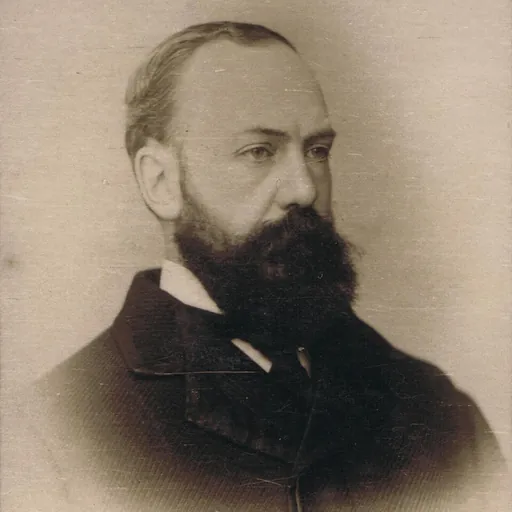
About Sir Charles Dilke, 2nd Baronet
Lived 1843 – 1911 (aged 67). Sir Charles Dilke, 2nd Baronet was a British politician, statistician, journalist, writer and barrister, known for Liberal Party (UK) and President of the Local Government Board.
Sir Charles Wentworth Dilke, 2nd Baronet (4 September 1843 – 26 January 1911) was a British Liberal and Radical politician and writer.
A prominent figure in late Victorian radical politics, he was an early supporter of republicanism and later a leading critic of Whig dominance within the Liberal Party in the United Kingdom. Dilke played an important role in the reform legislation of 1883–1885, supported organised labour and women's rights, and was widely read for his writings on international affairs.
Considered a likely future prime minister, his political career was effectively ended in 1885 by a highly publicised divorce scandal.
Background and education Dilke was the son of Sir Charles Dilke, 1st Baronet. Born in Chelsea in 1843, he was educated at Trinity Hall, Cambridge, where he was President of the Cambridge Union Society. His second wife was the author, art historian, feminist and trade unionist Emily Francis Pattison, née Strong (widow of Rev. Mark Pattison), subsequently known as Lady Dilke.
Despite being a radical, Dilke was also an imperialist, and argued for British imperial domination in his bestselling 1868 book, Greater Britain.
Political career, 1868–1886
Dilke became Liberal Member of Parliament for Chelsea in 1868, a seat he held until 1886.
In 1871, Dilke caused controversy when he criticised the British monarchy and argued that the United Kingdom should adopt a republican form of government. Following public criticism, he recanted. and was admitted to the Privy Council in 1882. In December of that year, he entered the cabinet as President of the Local Government Board, serving until 1885. A leading and determined radical within the party, he negotiated the passage of the Third Reform Act, which the Conservatives allowed through the House of Lords in return for a redistribution that they calculated to be marginally favourable to themselves. While the granting of the vote to agricultural labourers threatened the Conservative dominance of rural seats, many dual-member constituencies were abolished, with extra being created in suburbia, where Conservative support was growing. He also supported laws giving the municipal franchise to women, legalising trade unions, improving working conditions and limiting working hours, as well as being one of the earliest campaigners for universal schooling.
Crawford scandal
Dilke's younger brother, Ashton Wentworth Dilke, married Margaret "Maye" Eustace Smith, the eldest daughter of Liberal politician and shipowner Thomas Eustace Smith and his wife, Ellen, in 1876.
Charles Dilke was said to have become the lover of Ellen Smith, his brother's mother-in-law, He concluded, "I cannot see any case whatsoever against Sir Charles Dilke", dismissed Dilke from the suit with costs, and pronounced a decree nisi dissolving the Crawfords' marriage. Unfortunately, Dilke and his legal team had badly miscalculated, his legal advice being described as "perhaps the worst professional advice ever given". Though they had planned to subject Virginia to a searching cross-examination, Dilke, having been dismissed from the case, had no locus standi. As a consequence, it was Dilke who was subjected to severe scrutiny in the witness box by Henry Matthews. Matthews' attack was devastating, and Dilke proved an unconvincing witness. His habit of cutting pieces out of his diary with scissors was held up to particular ridicule, as it created the impression that he had cut out evidence of potentially embarrassing appointments. The jury found that Virginia had presented the true version of the facts and that the decree absolute should be granted. For a time it seemed that he would be tried for perjury.
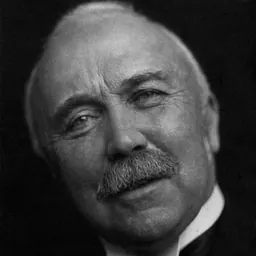
Matthews gained public acclaim, winning the seat of Birmingham East as a Conservative at the same election. Queen Victoria, who approved of his performance in the trial, demanded his inclusion in Lord Salisbury's cabinet and he was made Home Secretary. The Queen also asked in vain for Dilke to be stripped of his membership of the Privy Council. Hoping that he could be rehabilitated as a front-line politician, Dilke consulted Liberal leader Gladstone, who discouraged him, so Dilke did not pursue the offer. Three years later, however, Dilke accepted the invitation, against Gladstone's wishes and, at the 1892 general election, was duly elected as the MP for the Forest of Dean, which he held for the remainder of his life.
He hoped to be appointed Secretary of State for War in the Liberal Government formed in 1905, but it was not to be. Dilke attributed his exclusion to the incoming Prime Minister Henry Campbell-Bannerman's lingering resentment towards Dilke for his role in the 1895 "cordite vote", which had brought about the end of Lord Rosebery's administration.
Dilke was a shareholder in the 1906–7 Parkside development at 42 Knightsbridge.
Dilke died in 1911 at 76 Sloane Street, Chelsea, the same house in which he was born. He was cremated at Golders Green Crematorium and his ashes buried at Kensal Green Cemetery.
In popular culture Following his death in 1911, fundraising commenced to establish a local community hospital in his Forest of Dean constituency. The Dilke Memorial Hospital, Cinderford, was built in 1922 and still exists as a permanent memorial to the popular MP.
Interest in Dilke was revived by Dilke: A Victorian tragedy a 1958 non-fiction work by the Labour Party politician Roy Jenkins. A 1964 West End play The Right Honourable Gentleman, by Michael Dyne, covers the scandal that brought Dilke down.
Dilke is portrayed by Richard Leech in an episode of the 1975 ATV series Edward the Seventh.
The intrigues involving Sir Charles Dilke were depicted in the three-part ITV drama The Member For Chelsea written by Ken Taylor and made by Granada Television with Richard Johnson as Sir Charles. It was broadcast over three consecutive days, 24–26 August 1981. The narrative centred primarily on the activities of the three Smith sisters Virginia, Maye and Helen. In the drama the supposed affair Sir Charles has with Virginia, which brings about his political downfall, is an invention of hers to deflect her husband's suspicions away from her real lover.
In the 1994 film Sirens, detailing sexual licence in Australia in the 1930s, the local pub is called the "Sir Charles Dilke".
Arms
Don’t just read it —
keep it.
Full-length biographies made to live with: read them, listen on the way to work, watch them tonight.
- E-book
- Audio
- Video
Instant download · yours to keep · every purchase keeps this site free
Important facts
Family & relationships
People in Sir Charles Dilke, 2nd Baronet's life
Named in this biography and alive at the same time



Related people
Same field, nearest in time





Contemporaries
People whose lives overlapped Sir Charles Dilke, 2nd Baronet's

Frequently asked questions
Who was Sir Charles Dilke, 2nd Baronet?
British politician (1843-1911)
When was Sir Charles Dilke, 2nd Baronet born?
Sir Charles Dilke, 2nd Baronet was born on 4 September 1843 in London.
When did Sir Charles Dilke, 2nd Baronet die?
Sir Charles Dilke, 2nd Baronet died on 26 January 1911 in London.
What was Sir Charles Dilke, 2nd Baronet's occupation?
Sir Charles Dilke, 2nd Baronet was a politician, statistician, journalist, writer and barrister.
What was Sir Charles Dilke, 2nd Baronet known for?
Sir Charles Dilke, 2nd Baronet was known for Liberal Party (UK) and President of the Local Government Board.
What nationality was Sir Charles Dilke, 2nd Baronet?
Sir Charles Dilke, 2nd Baronet was British.
Sources & further reading
· Wikipedia: Sir Charles Dilke, 2nd Baronet
· DBpedia: Sir Charles Dilke, 2nd Baronet
Cite this page
APA: Biography.guide. (2026). Sir Charles Dilke, 2nd Baronet. https://biography.guide/sir-charles-dilke-2nd-baronet/
MLA: "Sir Charles Dilke, 2nd Baronet." Biography.guide, https://biography.guide/sir-charles-dilke-2nd-baronet/.
Chicago: "Sir Charles Dilke, 2nd Baronet." Biography.guide. https://biography.guide/sir-charles-dilke-2nd-baronet/.
Data last updated: 2026-09-23 · Spot an error? Report a correction.
Portrait: Wikimedia Commons · author & licence
Page generated 2026-09-27 05:06 UTC