
Sir Alexander Cockburn, 12th Baronet
British jurist and politician
About Sir Alexander Cockburn, 12th Baronet
Lived 1802 – 1880 (aged 78). Sir Alexander Cockburn, 12th Baronet was a British judge, politician and barrister.
Sir Alexander James Edmund Cockburn, 12th Baronet (24 December 1802 – 20 November 1880) was a British jurist and politician who served as the Lord Chief Justice for 21 years. He heard some of the leading causes célèbres of the nineteenth century.
In 1847, he decided to stand for parliament, and was elected unopposed as Liberal Member of Parliament for Southampton. His speech in the House of Commons on behalf of the government in the Don Pacifico dispute with Greece commended him to Lord John Russell, who appointed him Solicitor-General in 1850 and Attorney General in 1851, a post which he held till the resignation of the ministry in February 1852. to Alexander Cockburn and his wife Yolande, daughter of René Michel de Vignier de La Saline, vicomte de Vignier, of Santo Domingo. he was the fourth son of Sir James Cockburn, 8th Baronet (born c.1729, died July 1804), his three elder brothers having succeeded to the baronetcy, but died without heirs.
He was initially educated largely abroad and became fluent in French and familiar with German, Italian and Spanish. He was educated at Trinity Hall, Cambridge, gaining a first in Civil law in 1824–5 and graduating in 1829 with an LL.B. degree, and also being elected a fellow, and afterwards an honorary fellow. He entered the Middle Temple in 1825, and was called to the bar in 1829. He joined the western circuit and built up a substantial practice though he was sufficiently diffident about his success in London to devote little of his energies there, not even keeping his Chambers open. At the trial, Cockburn had made extensive and effective use of Isaac Ray's Treatise on the Medical Jurisprudence of Insanity. Cockburn quoted extensively from the book which rejected traditional views of the insanity defence based on the defendant's ability to distinguish "right from wrong" in favour of a broader approach based on causation. Cockburn displayed a mastery of the scientific evidence and was an innovator in exploiting forensic science in court. The winner of the 1844 Derby: In 1844, he appeared in Wood v. Peel to determine the winner of a bet (the Gaming Act 1845 deemed bets unenforceable in law) as to whether the Derby winner Running Rein was a four-year-old or a three-year-old. Running Rein could not be produced when the judge, Baron Alderson, demanded, and as a result Cockburn lost the case, while his strenuous advocacy of his client's cause had led him into making, in his opening speech, strictures on Lord George Bentinck's conduct in the case which should have been held back. Lieutenant Henry Hawkey: In 1846 Hawkey, an officer of the Royal Marines, was tried for murder at Winchester assizes after shooting James Alexander Seton in a duel; Cockburn secured Hawkey's acquittal. James Seton was the last British person to be killed in a duel in the United Kingdom. The Achilli trial: During the short administration of Lord Derby, Cockburn was engaged against Sir Frederic Thesiger Attorney General at the time, and for John Henry Newman, in the case of a friar named Giacinto Achilli who had accused Newman of libel. The jury who heard the case under Lord Campbell found that Newman's plea of justification was not proved except in one particular, a verdict which, together with the methods of the judge and the conduct of the audience, attracted considerable comment.
Cockburn shepherded through Parliament the Common Law Procedure Act 1852 and the Common Law Procedure Act 1854.
William Palmer: In his tenure as Attorney General from 1852 to 1856, he led for the crown in the trial of William Palmer of Rugeley in Staffordshire, an ex-medical man who poisoned a friend named Cook with strychnine in order to steal from his estate. Cockburn made an exhaustive study of the medical aspects of the case and won a conviction after a twelve-day trial, again demonstrating his skill with forensic science.
As judge (1856–1880) In 1856, he became Chief Justice of the Common Pleas. He inherited the baronetcy in 1858. In 1859, Lord Campbell became Lord Chancellor, and Cockburn became Lord Chief Justice of the Queen's Bench.
Cockburn always sought out the most sensational cases and was astute in rearranging his diary so that he could sit in any trial likely to attract the attention of the press.
Several Prime Ministers offered to nominate Cockburn for a peerage, and he finally accepted the offer in 1864. However, Queen Victoria refused, noting that "this peerage has been more than once previously refused upon the ground of the notoriously bad moral character of the Chief Justice".
In 1875, the three English common law courts (the Queen's Bench, the Court of Common Pleas, and the Court of the Exchequer) merged to become divisions of the new High Court of Justice. The head of each court (Lord Chief Justice Cockburn, Chief Justice of the Common Pleas Lord Coleridge, and Chief Baron of the Exchequer Sir Fitzroy Kelly) continued in post. After the deaths of Kelly and Cockburn in 1880, the three divisions were merged into a single division, with Lord Coleridge as Lord Chief Justice of England.
Martin v. Mackonachie: Cockburn sitting in the Queen's Bench division granted a writ to quash Lord Penzance's suspension of Alexander Heriot Mackonochie from his clerical office for breach of the Public Worship Regulation Act 1874. Cockburn's decision was overturned by the Court of Appeal. The Tichborne Case: Cockburn presided over the civil case in which Arthur Orton attempted to establish his identity as the missing baronet Sir Roger Tichborne. This trial collapsed after 103 days, the longest civil trial on record. Cockburn then presided over the subsequent trial of Orton for perjury, a famous trial that lasted 188 days, setting a record for criminal trials, of which Cockburn CJ's summing-up occupied eighteen. R v. Hicklin: He developed the Hicklin test for obscenity. The Alabama claims: He also played a role in the arbitration of the Alabama claims at Geneva in 1872, in which he represented the British government. He dissented from the majority view as to British liability for the actions of British-built privateer ships. He prepared the English translation of the arbitrators' award and published a controversial dissenting opinion in which he admitted British liability for the actions of the CSS Alabama, though not on the grounds given in the award, and discounted liability for the CSS Florida and CSS Shenandoah. Woodley v. Metropolitan District Railway Co.: Woodley was set to repair a wall in a darkened railway tunnel in which trains continued to run, without warning or dedicated lookout, and with barely sufficient clearance between train and wall for the workman to make himself safe when a train passed. Woodley was seriously injured when he reached across the rail for a tool and was struck by a passing train. Cockburn CJ held that the employer was not liable, invoking the principle of volenti non fit injuria. Lavinia Ryves's claim to be the daughter of Prince Henry, Duke of Cumberland and Strathearn, a claim that ultimately failed after Cockburn CJ told the jury in summing up that Ryves's evidence comprised "outrages on all probability". The trial of Michael Barrett for the Clerkenwell explosion. The trial of Boulton and Park for transvestism and "conspiring and inciting persons to commit an unnatural offence". The trial of Henry Wainwright for murder. The crime, in which Wainwright was arrested in possession of the dismembered body of his victim, was given more publicity at the time than those of Jack the Ripper. The Eastbourne manslaughter
Personality In personal appearance Cockburn was of small stature with a large head, but possessed a very dignified manner. He enjoyed yachting and other sport, and writing (he wrote an unpublished novel). Something of an adventurer in his youth, he was fond of socialising and womanising, fathering two illegitimate children. He "was also throughout his life addicted to frivolities not altogether consistent with advancement in a learned profession, or with the positions of dignity which he successively occupied." He lived for many years in some state at Wakehurst Place in Sussex. In his later years, he reminisced, "Whatever happens, I have had my whack". He once had to escape through the window of the robing room at Rougemont Castle, Exeter, to evade bailiffs.
He was a champion of the proper role of the advocate and on the occasion of a reception for Antoine Pierre Berryer in Middle Temple Hall, said:
Family and death Although Cockburn never married, he had one acknowledged illegitimate son and one illegitimate daughter by the unmarried Amelia (Emily) Godfrey (17 September 1818, baptised 11 October 1818 All Saints' Church, Epping), the daughter of William Daniel Leake Godfrey (1788–1868) and his wife Louisa Hannah (née Dalley, 1791–1852):
Louisa Charlotte Cockburn (3 August 1838 Stratford, Essex baptised 16 June 1839 All Saints' Church, West Ham, Essex – Isle of Wight 25 April 1869 ), who married at Chelsea, London, on 25 June 1863 to the Rev. Charles William Cavendish (Chiswick 24 September 1822 – Ryde, Isle of Wight 21 December 1890), rector of Little Casterton, Rutland, later a Catholic convert who became secretary of the Society for the Propagation of the Faith, and a grandson of George Cavendish, 1st Earl of Burlington, with issue: Louis Francis John Charles Raphael Cavendish (24 October 1864 – 31 December 1890 ), who never married Alexander Cockburn Dalton or Alexander Dalton (Alex) Cockburn (Sydenham bapt 10 Sep 1845 – Westminster 16 July 1887 and to whom Cockburn left the majority of his fortune. 1 =1. Alexander Cockburn, 12th Bart (1802–1880) 2 =2. Alexander Cockburn (1776–1852) 3 =3. Yolande de Vignier (1780–1810) 4 =4. James Cockburn, 8th Bart (1729–1804) 5 =5. Augusta Anne Ayscough (1749–1837) 6 =6. René Michel de Vignier de La Saline, vicomte de Vignier 8 =8. William Cockburn 9 =9. Frances Cockburn 10 =10. Francis Ayscough (1701–1763) 11 =11. Anne Lyttelton (1714–1776) 16 =16. Alexander Cockburn, 6th Bart (died 1739) 17 =17. Mary Ancrum 18 =18. James Cockburn (died 1718) 20 =20. Gabriel Ayscough 21 =21. Mary 22 =22. Thomas Lyttelton, 4th Bart (1686–1751) 23 =23. Christian Temple 32 =32. Archibald Cockburn, 4th Bart (died 1705) 33 =33. Marion Sinclair 36 =32. 37 =33. 44 =44. Charles Lyttelton, 3rd Bart (1628–1716) 45 =45. Anne Temple (died 1718) 46 =46. Richard Temple, 3rd Bart (1634–1697) 47 =47. Mary Knapp (died 1726)
Arms
Don’t just read it —
keep it.
Full-length biographies made to live with: read them, listen on the way to work, watch them tonight.
- E-book
- Audio
- Video
Instant download · yours to keep · every purchase keeps this site free
Important facts
People in Sir Alexander Cockburn, 12th Baronet's life
Named in this biography and alive at the same time
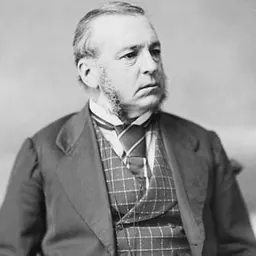
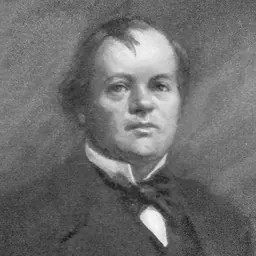
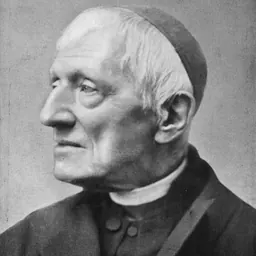


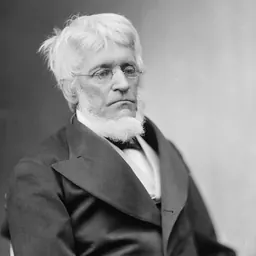
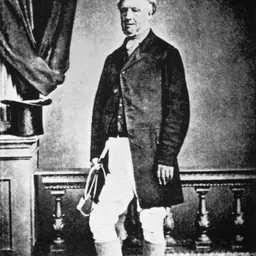
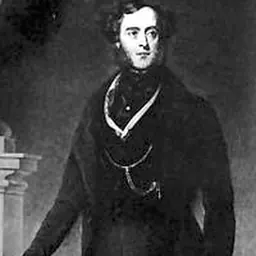
Related people
Same field, nearest in time
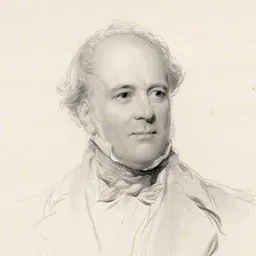


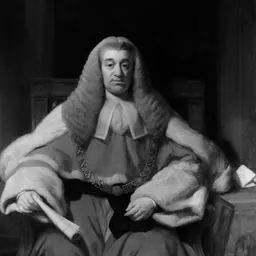
Contemporaries
People whose lives overlapped Sir Alexander Cockburn, 12th Baronet's





Frequently asked questions
Who was Sir Alexander Cockburn, 12th Baronet?
British jurist and politician (1802–1880)
When was Sir Alexander Cockburn, 12th Baronet born?
Sir Alexander Cockburn, 12th Baronet was born on 24 September 1802 in Altona.
When did Sir Alexander Cockburn, 12th Baronet die?
Sir Alexander Cockburn, 12th Baronet died on 20 November 1880 in Mayfair.
What was Sir Alexander Cockburn, 12th Baronet's occupation?
Sir Alexander Cockburn, 12th Baronet was a judge, politician and barrister.
What nationality was Sir Alexander Cockburn, 12th Baronet?
Sir Alexander Cockburn, 12th Baronet was British.
Sources & further reading
· Wikipedia: Sir Alexander Cockburn, 12th Baronet
· DBpedia: Sir Alexander Cockburn, 12th Baronet
Cite this page
APA: Biography.guide. (2026). Sir Alexander Cockburn, 12th Baronet. https://biography.guide/sir-alexander-cockburn-12th-baronet/
MLA: "Sir Alexander Cockburn, 12th Baronet." Biography.guide, https://biography.guide/sir-alexander-cockburn-12th-baronet/.
Chicago: "Sir Alexander Cockburn, 12th Baronet." Biography.guide. https://biography.guide/sir-alexander-cockburn-12th-baronet/.
Data last updated: 2026-09-20 · Spot an error? Report a correction.
Page generated 2026-09-27 05:17 UTC