
About Fitzroy Kelly
Lived 1796 – 1880 (aged 83). Fitzroy Kelly was a British judge, politician, jurist, public prosecutor general and prosecutor.
Sir Fitzroy Edward Kelly (9 October 1796 – 18 September 1880) was an English commercial lawyer, Tory politician and judge. He was the last Chief Baron of the Exchequer.
Background and education Kelly was born in London, the son of Robert Hawke Kelly (died in or before 1807), a captain in the Royal Navy. His mother was the novelist Isabella Kelly, daughter of Captain William Fordyce, Groom of the Privy Chamber to George III. In 1824, he was called to the bar by Lincoln's Inn, having already gained a reputation as a skilled special pleader.
Career
In 1834 Kelly was made a King's Counsel, remarkably after only ten years' call. A strong Tory, he was returned as Member of Parliament for Ipswich in 1835, but was unseated on petition. In 1837 however he again became member for that town. and in 1852 was elected member for Harwich, but with a vacancy suddenly occurring in East Suffolk, he preferred to contest that seat and was elected.
Most of his legal cases were of a commercial nature, but one was one of the great criminal poisoning crimes of the early Victorian period. In March 1845 Kelly defended John Tawell, the "Quaker murderer," was in fact no longer a member of the Quakers, though he did try to return to that group. Tawell had poisoned his mistress, Sarah Hart, and fled from Salt Hill in Aylesbury by train. However, a description of Tawell was sent to London by electric telegraph, and he was captured. Kelly did the best he could for his client, but he was not accustomed to criminal defence. His argument that Sarah Hart had eaten too many apple pips and been poisoned by the prussic acid in the pips led to the nickname "Apple-pip," which followed Kelly for the rest of his life. Despite his endeavours, his client was found guilty and hanged.
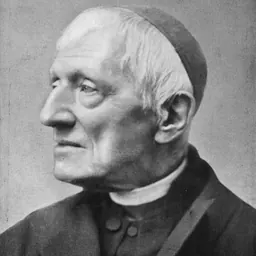
Kelly was Solicitor General in 1845 (when he was knighted) and again from February to December 1852, during which time he was junior to Attorney General Sir Frederic Thesiger in the prosecution of John Henry Newman for libel, the Achilli trial.
In 1854, Kelly was appointed to the Royal Commission for Consolidating the Statute Law, a royal commission to consolidate existing statutes and enactments of English law.
In 1858–1859 he was Attorney General in Lord Derby's second ministry. In 1866 he was raised to the bench as the last Chief Baron of the Exchequer and made a member of the Privy Council, entitling him to sit on the Judicial Committee of the Privy Council.
Kelly died at Brighton on 18 September 1880, aged 83.
Don’t just read it —
keep it.
Full-length biographies made to live with: read them, listen on the way to work, watch them tonight.
- E-book
- Audio
- Video
Instant download · yours to keep · every purchase keeps this site free
Important facts
People in Fitzroy Kelly's life
Named in this biography and alive at the same time



Related people
Same field, nearest in time

Contemporaries
People whose lives overlapped Fitzroy Kelly's





Frequently asked questions
Who was Fitzroy Kelly?
British politician
When was Fitzroy Kelly born?
Fitzroy Kelly was born on 9 October 1796 in London.
When did Fitzroy Kelly die?
Fitzroy Kelly died on 18 September 1880 in Brighton.
What was Fitzroy Kelly's occupation?
Fitzroy Kelly was a judge, politician, jurist, public prosecutor general and prosecutor.
What nationality was Fitzroy Kelly?
Fitzroy Kelly was British.
Sources & further reading
Cite this page
APA: Biography.guide. (2026). Fitzroy Kelly. https://biography.guide/fitzroy-kelly/
MLA: "Fitzroy Kelly." Biography.guide, https://biography.guide/fitzroy-kelly/.
Chicago: "Fitzroy Kelly." Biography.guide. https://biography.guide/fitzroy-kelly/.
Data last updated: 2026-09-20 · Spot an error? Report a correction.
Page generated 2026-09-27 05:20 UTC