
About Sigurd Agrell
Lived 1881 – 1937 (aged 56). Sigurd Agrell was a Swedish linguist, translator, poet, writer and slavist.
Per Sigurd Agrell (16 January 1881 in Värmland – 19 April 1937 in Lund) was a Swedish poet, translator, runologist and professor of Slavic languages at Lund University.
Biography Agrell's parents were Frans Vilhelm Agrell (1843–1900) and Ida Vendela Örtenholm (1851–1928). After graduating from secondary school in Norrmalm in 1898, he was admitted to Uppsala University, where he earned his licentiate degree in 1907. He then continued his academic career at Lund University, where he in 1908 defended his PhD thesis on aspect in Polish. He received his doctoral degree in 1909 and was later appointed associate professor (docent) at the same university.
Having taught at Lund University since 1908, Agrell became professor of Slavic languages in 1921. He translated a number of Russian books, such as Slavic legends, and Ivan Bunin's stories. His 1925 translation of Leo Tolstoy's Anna Karenina was for a long time the standard translation of this novel in Sweden. At first, however, it was criticized for being more personal and original that a previous translation by Walborg Hedberg. Alongside his work in Slavic languages, Agrell was also interested in runology, and published a number of papers in this field.
He began his poetic career as a 16-year-old secondary school student in Örebro, where he contributed with translations and own poems to Lingvo internacia, an Esperanto magazine that had been published in Uppsala since 1895. Among others, he translated poems by Swedish authors Erik Johan Stagnelius and Per Daniel Amadeus Atterbom.
During his studies in Uppsala, Agrell belonged, together with John Landquist, Sven Lidman and Harald Brising to Les quatre diables, a group of students with literary interests. Agrell wrote mainly symbolist poetry, with an emphasis on form, but his interest in writing diminished as modern free verse poetry gained popularity in Sweden. At the same time, he became more focused on his academic work.
He is perhaps most known for his work in runology, particularly for formulating the Uthark theory. He focused on the magical and mystical aspects of runes (gematria).
Agrell married Anna Elvira Osterman. He was father to military psychologist Jan Agrell and zoologist Ivar Agrell, and grandfather to historian Wilhelm Agrell. He died in 1937 and is buried at Norra kyrkogården in Lund.
Poem collections 1903 - Arabesker 1905 - Solitudo 1906 - Hundra och en sonett 1908 - Den dolda örtagården 1909 - Purpurhjärtat 1912 - Antika kaméer 1931 - Valda dikter
Selected works in philology 1908 - Aspektänderung und aktionsartbildung beim polnischen zeitworte 1913 - Intonation und auslaut im slavischen 1915 - Zur slavischen lautlehre 1917 - Slavische lautstudien
Selected works in runology 1927 - Runornas talmystik och dess antika förebild 1930 - Rökstenens chiffergåtor och andra runologiska problem (Available online via Projekt Runeberg) 1931 - Senantik mysteriereligion och nordisk runmagi: en inledning i den nutida runologiens grundproblem 1932 - Die spätantike Alphabet-Mystik und die Runenreihe 1934 - Lapptrummor och runmagi: tvenne kapitel ur trolldomsväsendets historia (Available online via Projekt Runeberg) 1936 - Die pergamenische Zauberscheibe und das Tarockspiel 1938 - Die Herkunft der Runenschrift
Don’t just read it —
keep it.
Full-length biographies made to live with: read them, listen on the way to work, watch them tonight.
- E-book
- Audio
- Video
Instant download · yours to keep · every purchase keeps this site free
Important facts
People in Sigurd Agrell's life
Named in this biography and alive at the same time

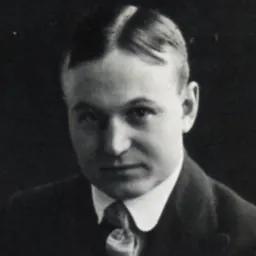
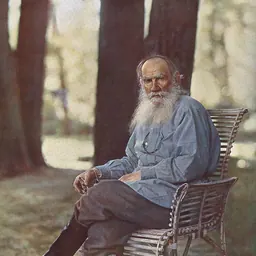

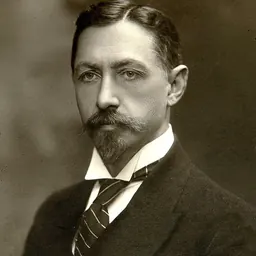
Related people
Same field, nearest in time

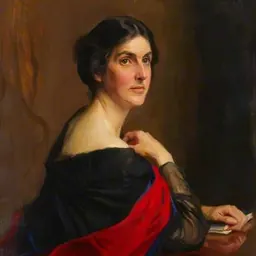
Contemporaries
People whose lives overlapped Sigurd Agrell's


Frequently asked questions
Who was Sigurd Agrell?
Swedish poet, translator and runologist (1881–1937)
When was Sigurd Agrell born?
Sigurd Agrell was born on 16 January 1881.
When did Sigurd Agrell die?
Sigurd Agrell died on 19 April 1937 in Lund Cathedral parish.
What was Sigurd Agrell's occupation?
Sigurd Agrell was a linguist, translator, poet, writer and slavist.
What nationality was Sigurd Agrell?
Sigurd Agrell was Swedish.
Sources & further reading
Cite this page
APA: Biography.guide. (2026). Sigurd Agrell. https://biography.guide/sigurd-agrell/
MLA: "Sigurd Agrell." Biography.guide, https://biography.guide/sigurd-agrell/.
Chicago: "Sigurd Agrell." Biography.guide. https://biography.guide/sigurd-agrell/.
Data last updated: 2026-09-20 · Spot an error? Report a correction.
Page generated 2026-09-27 05:33 UTC