
About Sibrandus Lubbertus
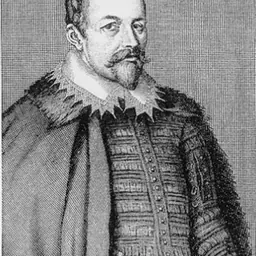
Lived 1556 – 1625 (aged 68–69). Sibrandus Lubbertus was a German and Dutch theologian and university teacher.
Sibrandus Lubbertus (c.1555–1625) (also referred to as Sibrand Lubbert or Sybrandus Lubbertus) was a Dutch Calvinist theologian and was a professor of theology at the University of Franeker for forty years from the institute's foundation in 1585. He was a prominent participant in the Synod of Dort (1618–1619). His primary works were to counter Roman Catholic doctrine (especially that championed by Robert Bellarmine) and to oppose Socinianism and Arminianism.
Life Lubbertus was born in Langwarden in 1555. He studied Divinity in Wittenberg in 1574 and in Geneva in 1576, where one of his professors was Theodore Beza. He also studied in Marburg in 1578 and at Neustadt an der Weinstraße in 1580, where one of his teachers was Zacharias Ursinus. He earned his doctorate in theology on 22 June 1587 in Heidelberg under Daniel Tossanus.
In 1601 Lubbertus wrote against Robert Bellarmine in De conciliis libri quinque, Scholastice & Theologice collati cum disputationibus Roberti Bellarmini.
Responsio ad Pietatem Hugonis Grotii Lubbertus is best known for his opposition to the position of Hugo Grotius, who defended the right of the civil authority to place whomever they wished into university faculty. Lubbertus held that professor Conrad Vorstius' views were so far outside the norm of Calvinism that they may be considered irreligion. Lubbertus was the lead voice calling for Vorstius' removal.
In order to gather international backing for their position, Lubbertus and Matthew Slade (a rector of the academy at Amsterdam, a member of the eldership in the English church at Amsterdam, and the son-in-law of Amsterdam minister Petrus Plancius) began a correspondence with English divines including George Abott, the Archbishop of Canterbury. Their outreach for support succeeded to the point that King James I of England became obsessed with the controversy.
Ecclesiologically King James liked the Remonstrant Johannes Wtenbogaert's Tractaet van't ampt ende authoriteyt which held that the state held complete authority over the Church (a position James held in his controversy over the Oath of Allegiance with the Jesuits). It was due to the Oath controversy that King James had produced A Premonition to alle Most Mighty Monarchs, Kings, Free Princes, and States of Christendom in 1609 as "a warning against papal pretensions to worldly power".
Joining Lubbertus's cause against Vorstius, King James produced his own volume on the matter in 1612 entitled His Maiesties Declaration concerning His Proceedings with the States general of the United Provinces of the Low Countreys, In the cause of D. Conradus Vorstius.
Lubbertus rose to the attention of the Dutch civil authorities who had sided with the Remonstrants with his publishing of a 900-page book Commentarii ad nonaginta errores Conradi Vorstii which opened with a dedicatory letter to George Abbot, the Archbishop of Canterbury. In the dedication he attacked the States of Holland and other authorities for appointing Vorstius to professor of Divinity at Leiden University and accused them of introducing Socianianism into the Dutch Church.
In response to Lubbertus' work against Vorstius, Hugo Grotius (a representative for Rotterdam and the acting Judge Advocate of Holland) wrote Ordinum Pietas in 1613. This caustic polemic not only attacked Lubbertus' views but called him out in print (such as listing a number of quotations of Church Fathers and then saying "What are you going to reply to this mass of examples - Sibrandus?"
One of the people who incited Lubbertus to write a response to Grotius's Ordinum Pietas was Johannes Althusius (whom Grotius oddly claimed as influential in his own thought).
In February 1614, Lubbertus, calling Ordinum pietas by Grotius "arrogantia", attacked its reasoning in Responsio Ad Pietatem Hugonis Grotii. Lubbertus and many of his fellow Counter-Remonstrants saw Grotius' multiple quotations and "display of academic erudition" as sophistry, though Grotius saw them as necessary to meet "thereby the scholarly expectations of his time." Lubbertus disputed Grotius competence to consider religious matters since he was a legal expert rather than a trained theologian. Grotius often focused on issues of procedure in the early Church rather than theological content.
Grotius had pointed out that the Anabaptists in Friesland were tolerated and Lubbertus and his supporters were not against toleration as a concept. Historian Hans W. Blom summarizes Lubbertus' view on tolerance, stating that he held one must accept toleration "because a person cannot be forced to believe against his own convictions, and...because there are times and circumstances that make tolerance a matter of practical necessity. ...[but this] did not include the freedom to make thoughts public. The public sermon leaves no room for heterodoxy. One cannot be a heretic with heretics and at the same time recognized by the orthodox as orthodox." Lubbertus accused Vorstius of using deceit to attain a position with the appearance of orthodoxy in order to covertly slip heretical works and ideas into his lesson plans.
Lubbertus called Grotius's selection of quotes from Church Fathers "unfortunate", joining Johannes Bogerman (another Ordinum pietas critic who wrote against it in his Annotationes) in feeling Grotius was disregarding the original context of the quotations to apply them to the current controversy. Lubbertus did not use as many sources as his opponent in his response to Grotius, basing his arguments "mainly on a collection of the acts of councils and a number of quotations of Augustine, and using Stephanus' Thesaurus for broader ancient material". In response to Lubbertus' book, Grotius anonymously published Bona Fides Sibrandi Lubberti in late 1614.
Later life Lubbertus was married to Truicken van Oosterzee (c. 1550-1625). He died in Franeker on 10 January 1625.
Don’t just read it —
keep it.
Full-length biographies made to live with: read them, listen on the way to work, watch them tonight.
- E-book
- Audio
- Video
Instant download · yours to keep · every purchase keeps this site free
Important facts
People in Sibrandus Lubbertus's life
Named in this biography and alive at the same time

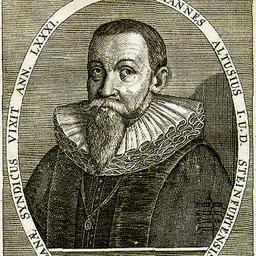

Related people
Same field, nearest in time
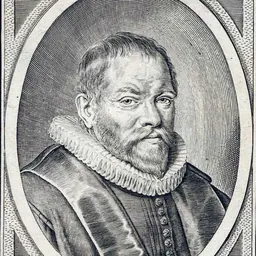
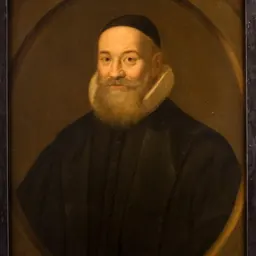

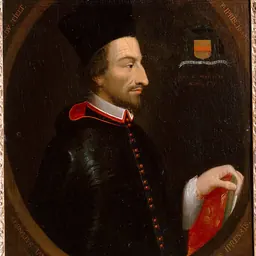
Contemporaries
People whose lives overlapped Sibrandus Lubbertus's

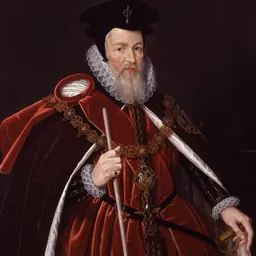

Frequently asked questions
Who was Sibrandus Lubbertus?
German theologian
When was Sibrandus Lubbertus born?
Sibrandus Lubbertus was born in 1556 in Butjadingen.
When did Sibrandus Lubbertus die?
Sibrandus Lubbertus died on 11 January 1625 in Franeker.
What was Sibrandus Lubbertus's occupation?
Sibrandus Lubbertus was a theologian and university teacher.
What nationality was Sibrandus Lubbertus?
Sibrandus Lubbertus was German and Dutch.
Sources & further reading
· Wikipedia: Sibrandus Lubbertus
· DBpedia: Sibrandus Lubbertus
Cite this page
APA: Biography.guide. (2026). Sibrandus Lubbertus. https://biography.guide/sibrandus-lubbertus/
MLA: "Sibrandus Lubbertus." Biography.guide, https://biography.guide/sibrandus-lubbertus/.
Chicago: "Sibrandus Lubbertus." Biography.guide. https://biography.guide/sibrandus-lubbertus/.
Data last updated: 2026-09-26 · Spot an error? Report a correction.
Page generated 2026-09-27 05:16 UTC