
Petrus Plancius
Dutch-Flemish astronomer, cartographer and clergyman
About Petrus Plancius
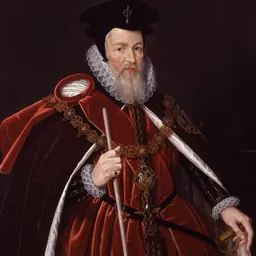
Lived 1552 – 1622 (aged 69–70). Petrus Plancius was a Dutch and Belgian astronomer, cartographer, theologian, cleric, instrument maker and geographer.
Petrus Plancius (; born Pieter Platevoet ; 1552 – 15 May 1622) was a Dutch-Flemish astronomer, cartographer and clergyman. Born in Dranouter, now in Heuvelland, West Flanders, he studied theology in Germany and England. At the age of 24 he became a minister in the Dutch Reformed Church.
Plancius fled from Brussels to Amsterdam to avoid religious persecution by the Inquisition after the city fell into Spanish hands in 1585. In Amsterdam he became interested in navigation and cartography and, having access to nautical charts recently brought from Portugal, he was soon recognized as an expert on safe maritime routes to India and the nearby "spice islands". This enabled colonies and port trade in both, including what would become the Dutch East Indies, named after the Dutch East India Company set up in 1602.
He saw strong potential in the little-mapped Arctic Sea and strongly believed in the idea of a Northeast Passage until the failure of Willem Barentsz's third voyage in 1597 seemed to preclude its viability.
Early life Petrus Plancius was born Pieter Platevoet in 1552 in Dranouter, now part of Heuvelland in West Flanders, then in the Habsburg Netherlands. He studied theology in Germany and England and later Latinized his name to Petrus Plancius, as was common among scholars of the period.
Career At the age of 24 he became a minister in the Dutch Reformed Church.
Plancius served Protestant congregations in several cities in the southern Netherlands, including Mechelen, Leuven and Brussels. These years coincided with the religious conflicts of the Dutch Revolt. When Brussels fell to Spanish forces in 1585 and Protestant worship was suppressed, he fled to Amsterdam, like many Protestant clergy and intellectuals from the southern Netherlands.
Southern constellations In 1589 Plancius collaborated with the Amsterdam cartographer Jacob van Langren on a 32.5-cm celestial globe. Based on the limited information then available about the southern sky, the globe showed Crux (the Southern Cross), Triangulum Australe (the Southern Triangle), and the Magellanic Clouds (Nubecula Major and Nubecula Minor). This was among the first European attempts to depict these features on a celestial globe.
In 1595 Plancius trained Pieter Dirkszoon Keyser, the chief pilot on the Hollandia, to make astronomical observations to fill in the blank area around the south celestial pole on European maps of the southern sky. Keyser died in Java the following year – the expedition had many casualties – but his catalogue of 135 stars, was delivered to Plancius when the remaining ships returned.
These stars appear as twelve new southern constellations, but the globe of 1598 is the first surviving source to plot their positions with reasonable accuracy.
The globe also includes Achernar, identified as Alpha Eridani.
These constellations, together with Columba illustrated by Plancius on his large wall map of the world of 1592, were incorporated in 1603 by Johann Bayer in his sky atlas, the Uranometria. This copy is not easily accessible to visitors. Plancius also published journals and navigational guides and developed a new method for determining longitude. He also promoted the Mercator projection for navigational maps.
In 1612 (or 1613) Plancius introduced the following eight constellations on a 26.5-cm celestial globe published in Amsterdam by Pieter van der Keere: Apes the Bee, Camelopardalis the Giraffe (often interpreted as a Camel),
Legacy The minor planet 10648 Plancius commemorates his contributions in celestial and terrestrial cartography.
Gallery
Don’t just read it —
keep it.
Full-length biographies made to live with: read them, listen on the way to work, watch them tonight.
- E-book
- Audio
- Video
Instant download · yours to keep · every purchase keeps this site free
Important facts
People in Petrus Plancius's life
Named in this biography and alive at the same time


Related people
Same field, nearest in time



Contemporaries
People whose lives overlapped Petrus Plancius's

Frequently asked questions
Who was Petrus Plancius?
Dutch-Flemish astronomer, cartographer and clergyman
When was Petrus Plancius born?
Petrus Plancius was born in 1552 in Dranouter.
When did Petrus Plancius die?
Petrus Plancius died on 15 May 1622 in Amsterdam.
What was Petrus Plancius's occupation?
Petrus Plancius was an astronomer, cartographer, theologian, cleric, instrument maker and geographer.
What nationality was Petrus Plancius?
Petrus Plancius was Dutch and Belgian.
Sources & further reading
Cite this page
APA: Biography.guide. (2026). Petrus Plancius. https://biography.guide/petrus-plancius/
MLA: "Petrus Plancius." Biography.guide, https://biography.guide/petrus-plancius/.
Chicago: "Petrus Plancius." Biography.guide. https://biography.guide/petrus-plancius/.
Data last updated: 2026-09-20 · Spot an error? Report a correction.
Page generated 2026-09-27 05:27 UTC