
About Shinzō Watanabe
Born 1935. Shinzō Watanabe is a Japanese mathematician and university teacher, known for Kunita-Watanabe inequality.
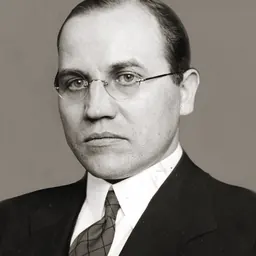
Shinzō Watanabe (渡辺 信三 Watanabe Shinzō, born 23 December 1935) is a Japanese mathematician, who has made fundamental contributions to probability theory, stochastic processes and stochastic differential equations. He is revered as a luminary in the field of modern probability theory and stochastic calculus. The pioneering book “Stochastic Differential Equations and Diffusion Processes” he wrote with Nobuyuki Ikeda has attracted a lot of researchers into the area and is known as the “Ikeda-Watanabe” for researchers in the field of stochastic analysis. He serves as the editor of Springer Mathematics.
Biography
Watanabe received his bachelor's degree from Kyoto University in 1958 and completed his Ph.D. under Kiyosi Itô in 1963. Watanabe subsequently became a professor at Kyoto University. After that, he moved to Ritsumeikan University and hold the full-time faculty position there until his retirement. He was also a visiting professor at Stanford University and participated in the organizing committees of international Japanese/Soviet seminars on probability theory. He has one daughter Shiori Watanabe.
Scientific contributions
Watanabe has made many important contributions to stochastic analysis and the theory of stochastic processes. In an important work with H. Kunita, he extended K. Ito's theory of stochastic integration, initially developed by Ito for Markov processes, to square integrable martingales. This theory, known as the Kunita-Watanabe extension is based on the crucial Kunita–Watanabe inequality for the stochastic integral.
Another important contribution of Watanabe has been to use the Malliavin calculus to establish a theory of generalized functionals on Wiener space, by analogy to Laurent Schwartz's theory of distributions, and apply this theory to obtain expansions of heat kernels.
Watanabe also made important contributions to the study of multidimensional diffusion processes with boundary conditions and continuous-time branching processes.
Awards and honours
In 1989 he received the Autumn Prize of the Mathematical Society of Japan.
In 1983 he was an invited speaker at the International Congress of Mathematicians in Warsaw (Excursion point processes and diffusion). In 1996 he received the Japan Academy Prize in Mathematics.
Selected publications
with Toshio Yamada:
Limit theorem for a class of branching processes, in: Markov processes potential theory, Proc. Symp. Univ. Wisconsin, Madison, 1967, 205-232
Don’t just read it —
keep it.
Full-length biographies made to live with: read them, listen on the way to work, watch them tonight.
- E-book
- Audio
- Video
Instant download · yours to keep · every purchase keeps this site free
Important facts
People in Shinzō Watanabe's life
Named in this biography and alive at the same time


Related people
Same field, nearest in time


Contemporaries
People whose lives overlapped Shinzō Watanabe's





Frequently asked questions
Who is Shinzō Watanabe?
Japanese mathematician
When was Shinzō Watanabe born?
Shinzō Watanabe was born on 23 December 1935.
What is Shinzō Watanabe's occupation?
Shinzō Watanabe is a mathematician and university teacher.
What is Shinzō Watanabe known for?
Shinzō Watanabe is known for Kunita-Watanabe inequality.
What nationality is Shinzō Watanabe?
Shinzō Watanabe is Japanese.
Sources & further reading
Cite this page
APA: Biography.guide. (2026). Shinzō Watanabe. https://biography.guide/shinzo-watanabe/
MLA: "Shinzō Watanabe." Biography.guide, https://biography.guide/shinzo-watanabe/.
Chicago: "Shinzō Watanabe." Biography.guide. https://biography.guide/shinzo-watanabe/.
Data last updated: 2026-09-20 · Spot an error? Report a correction.
Page generated 2026-09-27 05:29 UTC