
About Shinichiro Tomonaga
Lived 1906 – 1979 (aged 73). Shinichiro Tomonaga was a Japanese theoretical physicist, professor, physicist and researcher, known for Quantum electrodynamics, Schwinger–Tomonaga equation and Tomonaga–Luttinger liquid.
, usually cited as Sin-Itiro Tomonaga in English, was a Japanese physicist. He shared the 1965 Nobel Prize in Physics with Richard Feynman and Julian Schwinger "for their fundamental work in quantum electrodynamics (QED), with deep-ploughing consequences for the physics of elementary particles".
Biography Tomonaga was born in Tokyo in 1906. He was the second child and eldest son of a Japanese philosopher, Tomonaga Sanjūrō. He entered the Kyoto Imperial University in 1926. Hideki Yukawa, also a Nobel laureate, was one of his classmates during undergraduate school. During graduate school at the same university, he worked as an assistant in the university for three years. In 1931, after graduate school, he joined Nishina's group in RIKEN. In 1937, while working at Leipzig University (Leipzig), he collaborated with the research group of Werner Heisenberg. Two years later, he returned to Japan due to the outbreak of the Second World War, but finished his doctoral degree (Dissertation PhD from University of Tokyo) on the study of nuclear materials with his thesis on work he had done while in Leipzig.
In Japan, he was appointed to a professorship in the Tokyo University of Education (a forerunner of Tsukuba University). During the war he studied the magnetron, meson theory, and his super-many-time theory. In 1948, he and his students re-examined a 1939 paper by Sidney Dancoff that attempted, but failed, to show that the infinite quantities that arise in quantum electrodynamics (QED) can be canceled with each other. Tomonaga applied his super-many-time theory and a relativistic method based on the non-relativistic method of Wolfgang Pauli and Fierz to greatly speed up and clarify the calculations. Then he and his students found that Dancoff had overlooked one term in the perturbation series. With this term, the theory gave finite results; thus Tomonaga discovered the renormalization method independently of Julian Schwinger and calculated physical quantities such as the Lamb shift at the same time.
In 1949,
Recognition 1946 – Asahi Prize 1948 – Japan Academy Prize 1951 – Member of the Japan Academy
1964 – Lomonosov Gold Medal 1965 – Nobel Prize in Physics 1965 – elected to the United States National Academy of Sciences 1966 – elected to the American Philosophical Society
1975 – elected to the American Academy of Arts and Sciences
Selected publications Books
Articles
Tomonaga, S. "On a Relativistically Invariant Formulation of the Quantum Theory of Wave Fields." Prog. Theor. Phys. 1, 27–42 (1946). Koba, Z., Tati, T. and Tomonaga, S. "On a Relativistically Invariant Formulation of the Quantum Theory of Wave Fields. II." Prog. Theor. Phys. 2, 101–116 (1947). Koba, Z., Tati, T. and Tomonaga, S. "On a Relativistically Invariant Formulation of the Quantum Theory of Wave Fields. III." Prog. Theor. Phys. 2, 198–208 (1947). Kanesawa, S. and Tomonaga, S. "On a Relativistically Invariant Formulation of the Quantum Theory of Wave Fields. IV." Prog. Theor. Phys. 3, 1–13 (1948). Kanesawa, S. and Tomonaga, S. "On a Relativistically Invariant Formulation of the Quantum Theory of Wave Fields. V." Prog. Theor. Phys. 3, 101–113 (1948). Koba, Z. and Tomonaga, S. "On Radiation Reactions in Collision Processes. I." Prog. Theor. Phys. 3, 290–303 (1948). Tomonaga, S. and Oppenheimer, J. R. "On Infinite Field Reactions in Quantum Field Theory." Phys. Rev. 74, 224–225 (1948).
Don’t just read it —
keep it.
Full-length biographies made to live with: read them, listen on the way to work, watch them tonight.
- E-book
- Audio
- Video
Instant download · yours to keep · every purchase keeps this site free
Important facts
People in Shinichiro Tomonaga's life
Named in this biography and alive at the same time
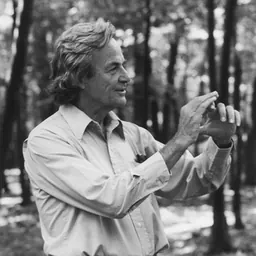
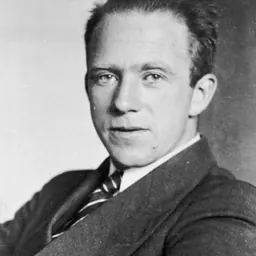



Related people
Same field, nearest in time
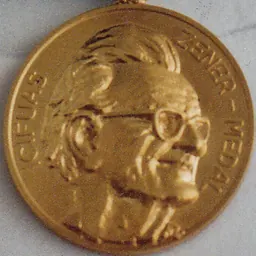
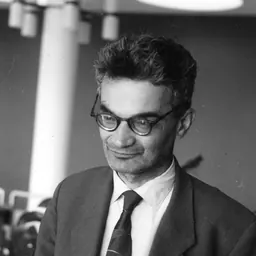

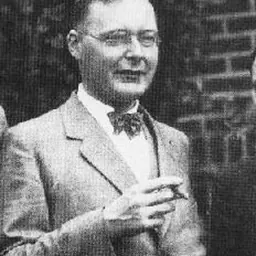
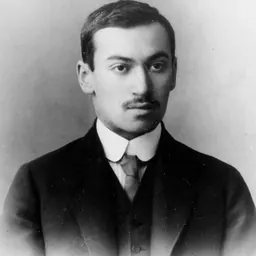

Contemporaries
People whose lives overlapped Shinichiro Tomonaga's
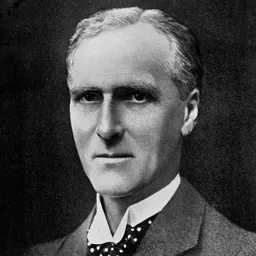
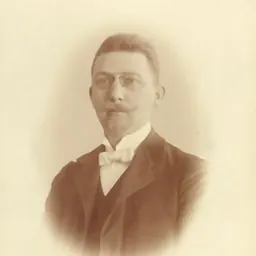
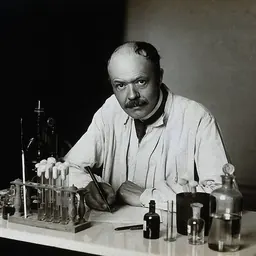
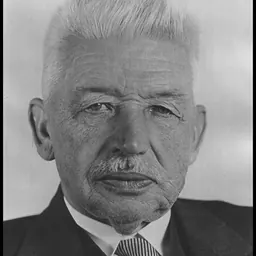
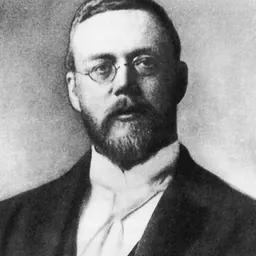
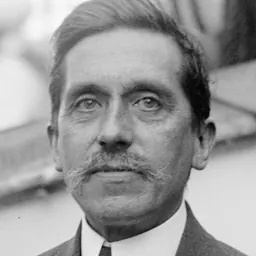
Frequently asked questions
Who was Shinichiro Tomonaga?
Japanese physicist (1906-1979)
When was Shinichiro Tomonaga born?
Shinichiro Tomonaga was born on 31 March 1906 in Tokyo.
When did Shinichiro Tomonaga die?
Shinichiro Tomonaga died on 8 July 1979 in Tokyo.
What was Shinichiro Tomonaga's occupation?
Shinichiro Tomonaga was a theoretical physicist, professor, physicist and researcher.
What was Shinichiro Tomonaga known for?
Shinichiro Tomonaga was known for Quantum electrodynamics, Schwinger–Tomonaga equation and Tomonaga–Luttinger liquid.
What nationality was Shinichiro Tomonaga?
Shinichiro Tomonaga was Japanese.
Sources & further reading
· Wikipedia: Shinichiro Tomonaga
· DBpedia: Shin'ichirō Tomonaga
Cite this page
APA: Biography.guide. (2026). Shinichiro Tomonaga. https://biography.guide/shinichiro-tomonaga/
MLA: "Shinichiro Tomonaga." Biography.guide, https://biography.guide/shinichiro-tomonaga/.
Chicago: "Shinichiro Tomonaga." Biography.guide. https://biography.guide/shinichiro-tomonaga/.
Data last updated: 2026-09-20 · Spot an error? Report a correction.
Page generated 2026-09-27 05:32 UTC