
About Sherwood F. Moran
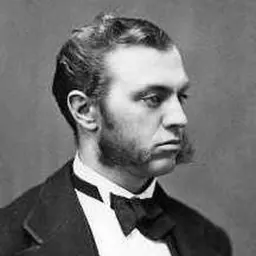
Lived 1885 – 1983 (aged 97). Sherwood F. Moran was an American military personnel.
The gravestone of Sherwood F. Moran, his wife Ursul Reeves Moran, and her sister Grace Reeves. Sherwood Ford Moran (8 October 1885 – 7 February 1983) was a United States Marine major who after serving as a Congregational missionary in Japan fought in the Second World War as an interrogator of PoWs and soon after became known for his memorandum on the efficacy of humane forms of interrogation.
Biography In 1885, Sherwood F. Moran was born in Covington, Kentucky, to William Joel Moran and Margaret Ford. His father was a military clerk of Northern (non-Catholic) Irish descent. In 1914, Moran graduated from Oberlin College with a bachelor's in philosophy. In 1915, he married Ursul Mildred Reeves. In 1916, he graduated from Union Theological Seminary, after two years of study, with a Congregational ordination. In the same year, he also attained a master's in philosophy from Columbia University.
A detailed family-authored biography of Moran draws on recorded interviews he gave in his last decade, https://davidrmoran.wordpress.com/.
Suggestions for Japanese interpreters based on work in the field Moran wrote a memo in 1943 regarding the best ways to interrogate Japanese prisoners-of-war during the Second World War. The memo was "relatively unknown outside the Marine Corps until the summer of 2003, when it (was) included in the archives of the Marine Corps Interrogator Translator Teams Association." The work argued for treating prisoners with humanity and respect, as that would be more effective than forms of interrogation involving torture.
In his work, Moran prefers the term "interviewers" to "interrogators", and suggests that the interviewer must be constantly aware of his attitude to the prisoner. He further writes that a superior or demeaning attitude breeds nothing but antagonism and resistance. He encourages the interviewer to be able to speak the language of his captives, without translators. While on the outside Moran's techniques seem to be chitchat, the interviewer must be constantly aware of the goals: "Deep human sympathy can go with a business-like, systematic, and ruthlessly persistent approach.”
The Marine Corps Interrogator Translator Teams Association (MCITTA), a group of active-duty and retired Marine intelligence personnel, calls Moran's report one of the "timeless documents" in the field and says it has long been "a standard read" for insiders. MajGen Michael E. Ennis, former director of Marine Corps Intelligence, says Moran's reports are the "gold standard" of interrogation techniques, owing to their actionable results in theater. They remain studied and in use today. The findings after the Abu Ghraib scandals indicated that, as predicted by Moran's findings, those who extracted the most useful information were those who were nice to their subjects.
Don’t just read it —
keep it.
Full-length biographies made to live with: read them, listen on the way to work, watch them tonight.
- E-book
- Audio
- Video
Instant download · yours to keep · every purchase keeps this site free
Important facts
Related people
Same field, nearest in time




Contemporaries
People whose lives overlapped Sherwood F. Moran's

Frequently asked questions
Who was Sherwood F. Moran?
American military personnel
When was Sherwood F. Moran born?
Sherwood F. Moran was born on 8 October 1885.
When did Sherwood F. Moran die?
Sherwood F. Moran died on 7 February 1983.
What was Sherwood F. Moran's occupation?
Sherwood F. Moran was a military personnel.
What nationality was Sherwood F. Moran?
Sherwood F. Moran was American.
Sources & further reading
· Wikipedia: Sherwood F. Moran
Cite this page
APA: Biography.guide. (2026). Sherwood F. Moran. https://biography.guide/sherwood-f-moran/
MLA: "Sherwood F. Moran." Biography.guide, https://biography.guide/sherwood-f-moran/.
Chicago: "Sherwood F. Moran." Biography.guide. https://biography.guide/sherwood-f-moran/.
Data last updated: 2026-09-20 · Spot an error? Report a correction.
Page generated 2026-09-27 05:20 UTC