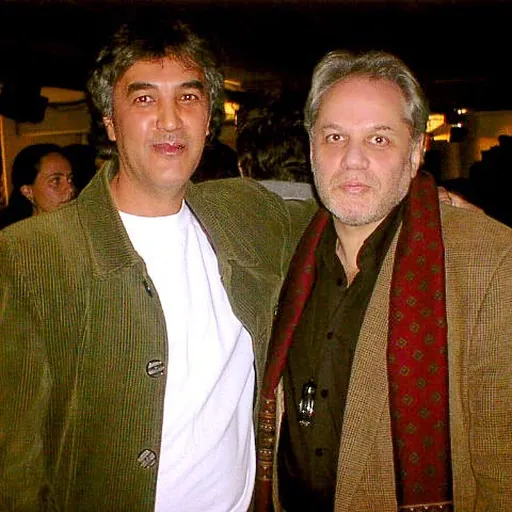
About Shamshad Abdullaev
Lived 1957 – 2024 (aged 66). Shamshad Abdullaev was a Russian, Uzbek and Soviet poet, essayist and writer.
Shamshad Majitovich Abdullaev (, 1 November 1957, Fergana, Uzbek Soviet Socialist Republic – 23 October 2024, Almaty, Kazakhstan) was an Uzbek poet, essayist, writer, and translator who wrote in Russian. He was the founder of the Fergana Poetry School.
From 1991 to 1995, Abdullaev was also the final editor‑in‑chief of the Tashkent‑based poetry journal Star of the East (Zvezda Vostoka). His first poetry collection, entitled The Gap, was published in Saint Petersburg, Russia, by the local magazine Mitin. The Gap received critical acclaim and won Abdullaev the prestigious Andrei Bely Prize in 1994.
Abdullaev was a contributor to Words Without Borders, where he published several of his poems: 'On the Death of Jean Vigo', 'Midday 1975', and 'Family', all originally written in Russian.
Early life Abdullaev was born on 1 November 1957 in Fergana, then part of the Uzbek Soviet Socialist Republic. He attended the local Fergana Pedagogical Institute, graduating in 1979 with a degree in Russian literature.
Career
Early career Abdullaev attended the Fergana Pedagogical Institute from 1975 to 1979, where he specialised in Russian literature. In the early 1990s, he moved to Tashkent shortly before the collapse of the Soviet Union and found employment at a local paper, Star of the East (Zvezda Vostoka). Founded in 1932 by the Uzbek Communist Party, the magazine published literary and poetic anthologies by Uzbek writers. In 1991, Abdullaev became the editor‑in‑chief of the magazine's poetry section. The magazine experienced modest local success; however, Abdullaev's work soon began gaining international recognition.
In 1992, Abdullaev published his first collection of poems, Intermediate (Russian: Промежуток). The book, which incorporates strands of modernism with utopianism as well as Soviet and Central Asian mythological symbolism, received widespread acclaim in Uzbekistan, Russia, and much of the post‑Soviet world, where it was lauded for its use of modernism in a distinctly Central Asian style.
In 2015, Abdullaev participated in 'Your Language My Ear', an international poetry symposium dedicated to Russian poetry in translation, held at the University of Pennsylvania. He appeared alongside Polina Barskova, Keti Chukhrov, Alexandra Petrova, and Aleksandr Skidan, as well as a number of other important translators. Several of Abdullaev's poems translated at this event have since been published in English.
In April 2017, Abdullaev collaborated with Words Without Borders' online magazine to release three new poems, translated by Alex Cigale and Dana Golin, respectively.
Despite being located in Uzbekistan, the school primarily publishes poetry in Russian. Abdullaev said that the reason he did not publish more poems in the Uzbek language was because he viewed his poems as forms of intercultural dialogue between post‑Soviet peoples. His poems can be best described as contrasting the cultures, customs, and nuances of Central Asia with distinctively Western principles and theories, in the hope of creating a dialogue between the two different cultures. The declarative function of the Fergana School is to start a 'neutral dialogue' between East and West with poetry that speaks to both sides.
Reception
Abdullaev's poetry in particular has received praise outside Russia. It has been described as 'cinematic', 'utopian', and 'avant‑garde'.
However, Abdullaev's work has also generated considerable controversy within Uzbekistan. It was heavily criticised by the Uzbek government, particularly during the presidency of Islam Karimov. In the 1990s, the government‑backed writers' union accused Abdullaev of attempting to hinder the development of the Uzbek language through his use of Russian, as well as undermining Central Asian culture. on 23 October 2024, at the age of 67.
Honours and awards Andrei Bely Prize (1994) Znamya Prize (1998) Russian Prize of the Boris Yeltsin Centre (2006, 2013) Joseph Brodsky Memorial Fellowship Fund, American Academy in Rome (resident, 2015)
Don’t just read it —
keep it.
Full-length biographies made to live with: read them, listen on the way to work, watch them tonight.
- E-book
- Audio
- Video
Instant download · yours to keep · every purchase keeps this site free
Important facts
People in Shamshad Abdullaev's life
Named in this biography and alive at the same time
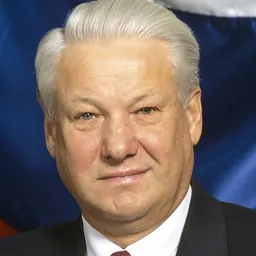
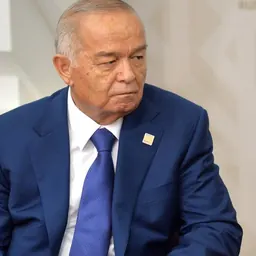



Related people
Same field, nearest in time
Contemporaries
People whose lives overlapped Shamshad Abdullaev's

Frequently asked questions
Who was Shamshad Abdullaev?
Soviet poet
When was Shamshad Abdullaev born?
Shamshad Abdullaev was born on 1 November 1957 in Fergana.
When did Shamshad Abdullaev die?
Shamshad Abdullaev died on 23 October 2024 in Almaty.
What was Shamshad Abdullaev's occupation?
Shamshad Abdullaev was a poet, essayist and writer.
What nationality was Shamshad Abdullaev?
Shamshad Abdullaev was Russian, Uzbek and Soviet.
Sources & further reading
· Wikipedia: Shamshad Abdullaev
Cite this page
APA: Biography.guide. (2026). Shamshad Abdullaev. https://biography.guide/shamshad-abdullaev/
MLA: "Shamshad Abdullaev." Biography.guide, https://biography.guide/shamshad-abdullaev/.
Chicago: "Shamshad Abdullaev." Biography.guide. https://biography.guide/shamshad-abdullaev/.
Data last updated: 2026-09-23 · Spot an error? Report a correction.
Portrait: Wikimedia Commons · author & licence
Page generated 2026-09-27 05:08 UTC